
High-Potassium Fertiliser: When Your Plants Actually Need One
Potassium has a reputation problem. Spend five minutes on a gardening forum and someone will tell you that “potash” is the secret to more flowers, and that you can’t really overdo it. Neither part of that is quite right. Potassium does an enormous amount of work inside a plant — just not always the job people assume, and not at every stage of growth.
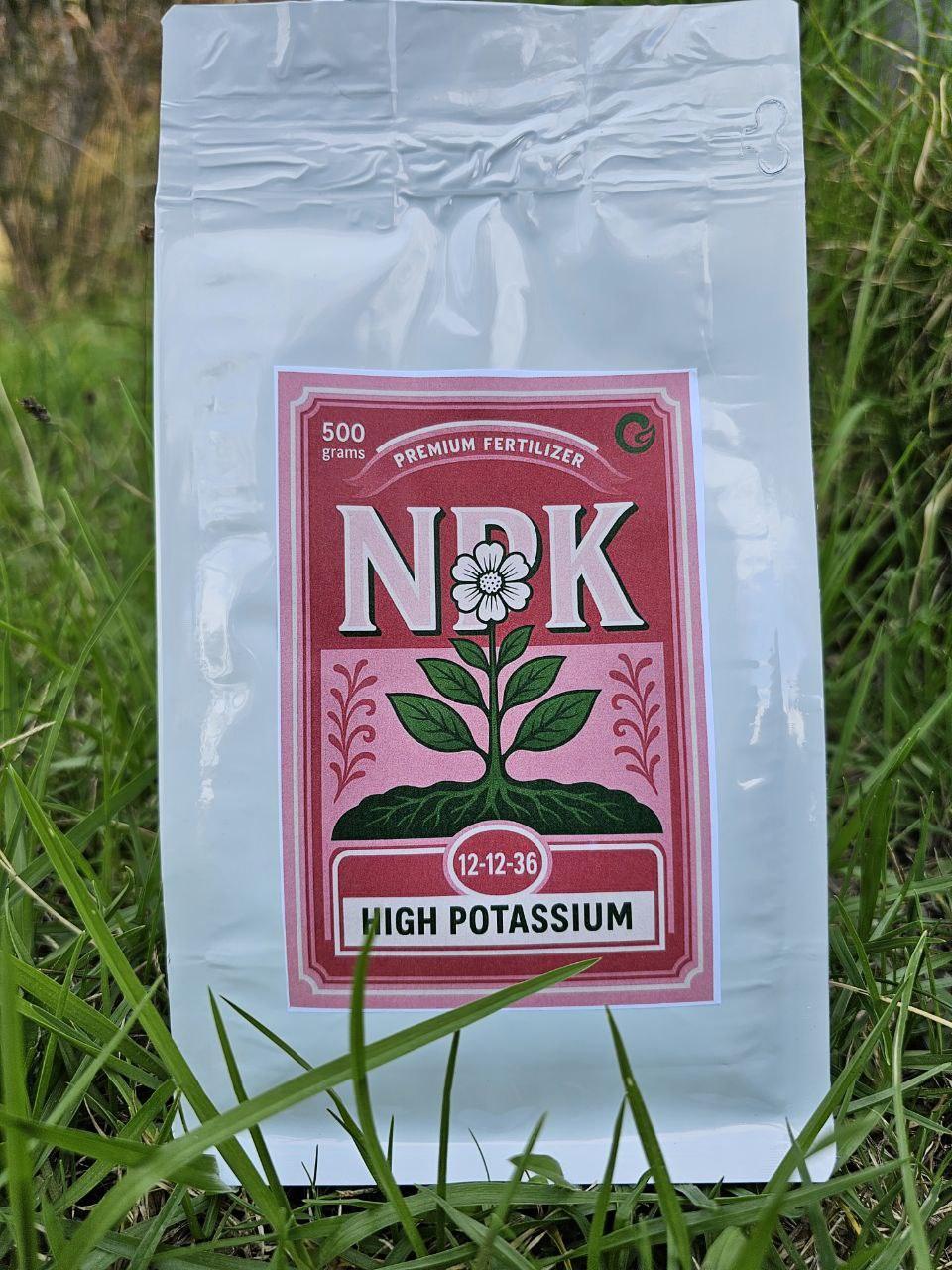
This guide explains what potassium actually does, when a high-potassium fertiliser such as Green Pick’s NPK 12-12-36 genuinely earns its place in your garden, and when your time and money are better spent on something else entirely.
Quick answer: Potassium doesn’t trigger flowering — that’s driven by light, temperature and plant hormones. But once a plant is already flowering and setting fruit, potassium becomes one of the most important nutrients it needs, improving fruit size, sweetness, disease resistance and drought tolerance. A high-potassium fertiliser is worth using from fruit-set through to harvest, during hot or dry spells, or where symptoms point to a genuine deficiency — not as a default feed for seedlings, lawns or leafy greens.
Jump to:
- What “high-potassium” actually means on a label
- What potassium actually does inside your plants
- The “potassium makes plants flower” myth
- Signs your plant might actually need more potassium
- When a high-potassium fertiliser helps (and when it doesn’t)
- Comparing your options: SOP, MKP, or a blended NPK
- Getting NPK 12-12-36 right: application basics
- Quick notes for common Australian garden plants
- Frequently Asked Questions
- Shop Green Pick’s NPK 12-12-36
What “high-potassium” actually means on a fertiliser label
The three numbers on any fertiliser — its NPK — show the guaranteed percentage of nitrogen (N), phosphorus (P) and potassium (K) by weight. What trips a lot of gardeners up is that phosphorus and potassium are conventionally listed as their oxide forms, P2O5 and K2O, rather than as pure elemental phosphorus or potassium. Nitrogen is the exception — it’s always shown as-is.
To convert an oxide figure to the actual elemental content, you multiply P2O5 by roughly 0.436 and K2O by roughly 0.83. Here’s what that looks like for Green Pick’s NPK 12-12-36:
| Nutrient | As shown on the bag | Elemental equivalent |
|---|---|---|
| Nitrogen (N) | 12% | 12% |
| Phosphorus (as P2O5) | 12% | ≈5.2% elemental P |
| Potassium (as K2O) | 36% | ≈29.9% elemental K |
This matters for two reasons. First, it’s why a “36” on the bag doesn’t mean over a third of the product is pure potassium metal — it’s a standard, internationally recognised way of expressing nutrient content, not a marketing trick. Second, it means comparing two fertilisers side by side only works properly if you know which convention each one is using (Garden Superstore has a clear breakdown of the maths if you want to run your own numbers).
The ratio itself is the other thing worth reading. NPK 12-12-36 works out to roughly a 1:1:3 ratio of N to P to K — a lot more potassium than nitrogen or phosphorus, compared with an all-purpose formula like NPK 20-20-20 (an even 1:1:1) or a root-and-bud formula like NPK 10-52-10, which leans heavily toward phosphorus instead.
What potassium actually does inside your plants
Potassium’s real job is mostly about movement and regulation rather than growth itself:
- Water regulation: potassium ions control the opening and closing of stomata, the pores on leaves that manage water loss and gas exchange — sometimes nicknamed “the poor man’s irrigation” because well-supplied plants handle dry spells noticeably better.
- Enzyme activation: more than fifty plant enzymes rely on potassium to function, including those driving photosynthesis and respiration.
- Cell wall strength: potassium supports cell wall thickening, which translates into sturdier stems and better resistance to fungal and bacterial disease.
- Fruit quality: potassium helps move sugars and starches from leaves into developing fruit. A controlled study on potted apple trees found that potassium fertilisation was associated with greater fruit mass and higher soluble solid (sugar) levels at harvest compared with untreated trees.
None of that is trivial — but notice that “causing flowers to form” isn’t on the list. That’s the part worth unpacking properly, because it changes how you should actually use a product like this.
The “potassium makes plants flower” myth
This is repeated constantly in gardening advice, and it’s mostly folklore. Flower initiation — the point where a plant switches from vegetative growth to producing buds — is governed primarily by day length, temperature and internal plant hormones, not by nutrient levels. Horticultural science writer Dr Adam Dimech has documented this in detail, tracing the claim through decades of gardening media and pointing out how little direct evidence supports it. A genuinely healthy plant that simply hasn’t started flowering yet won’t be coaxed into bud by extra potash; the more useful questions are usually about light, pruning, plant maturity or the season.
Where the story changes is after flowering starts. Once a plant is setting fruit, its potassium demand rises sharply, and running short during that window has a real, measurable cost: smaller fruit, lower sugar content, weaker stress tolerance and more disease pressure. That’s a genuinely different claim from “potassium makes plants flower” — and it’s the actual reason a high-potassium formula like NPK 12-12-36 is built for the flowering-to-fruiting stage rather than for coaxing a reluctant plant into bud in the first place.
Signs your plant might actually need more potassium
Because potassium is mobile within a plant, it gets pulled from older leaves to support new growth when supply runs short — which is why deficiency symptoms typically show up on the oldest leaves first, according to Australian soil fertility research. Watch for:
- Yellowing that starts at the margins of older leaves and progresses to scorching or browning at the edges and tips
- Weak, thin stems that are more prone to flopping or breaking
- Fruit that stays undersized or fails to sweeten despite otherwise good care
- Increased susceptibility to fungal disease on an otherwise well-watered plant
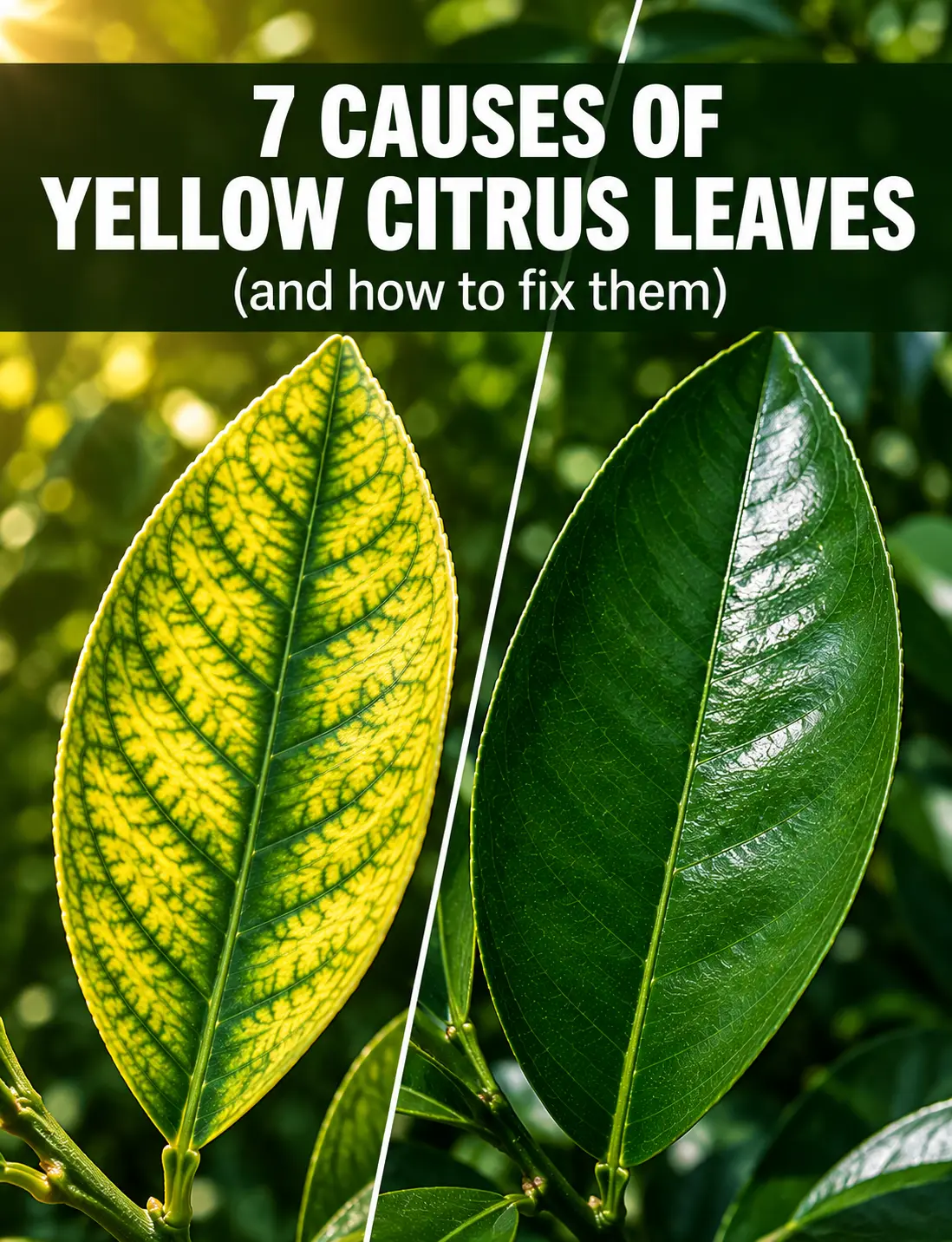
The catch is that several unrelated problems produce similar-looking symptoms. GreenPick’s own guides on calcium deficiency and on yellow citrus leaves both cover cases where the obvious-looking cause turns out to be something else entirely — magnesium, iron, watering, or root issues rather than potassium. If you’re not confident the pattern matches, a soil or leaf tissue test is a cheap way to avoid feeding the wrong problem.
When a high-potassium fertiliser makes sense — and when it doesn’t
Good timing for a high-potassium feed:
- Fruit is already setting on tomatoes, capsicums, chillies or cucurbits
- Citrus, stone fruit or berries are heading toward ripening
- Roses and flowering ornamentals have buds forming or opening
- You’re heading into a hot, dry stretch and want to support stress tolerance
- A soil test or clear symptom pattern points to an actual shortfall
When it’s probably not the right tool:
- Seedlings and young transplants still building root systems — phosphorus matters more here (see NPK 10-52-10)
- Lawns and leafy vegetables in an active leafy-growth phase, where nitrogen is the priority (see GreenPick’s nitrogen guide)
- A healthy plant that simply hasn’t started flowering — see the myth above
- Soil that’s already well supplied with potassium; testing beats guessing
It’s also worth knowing that potassium, calcium and magnesium compete for the same uptake pathways in plant roots. Consistently over-applying potassium can measurably reduce a plant’s ability to take up magnesium, and to a lesser extent calcium, even when there’s enough of those nutrients in the soil. This is well documented in agricultural nutrition research and is one good reason to stick to label rates rather than assuming more is automatically better. If plants develop the pale, interveinal yellowing typical of magnesium deficiency after a heavy potassium feeding season, GreenPick’s Magnesium Sulphate guide is the more direct fix — not more potash.
Comparing your options: sulphate of potash, MKP, or a blended NPK
Australian gardeners generally reach for one of three products when they need more potassium. They’re not interchangeable — each suits a slightly different situation.
| Product | Analysis | Best used for | Keep in mind |
|---|---|---|---|
| Sulphate of Potash (SOP) | 0-0-51 K2O + 18% S | Topping up potassium alone when nitrogen and phosphorus are already adequate | Supplies no N or P — needs pairing with another feed |
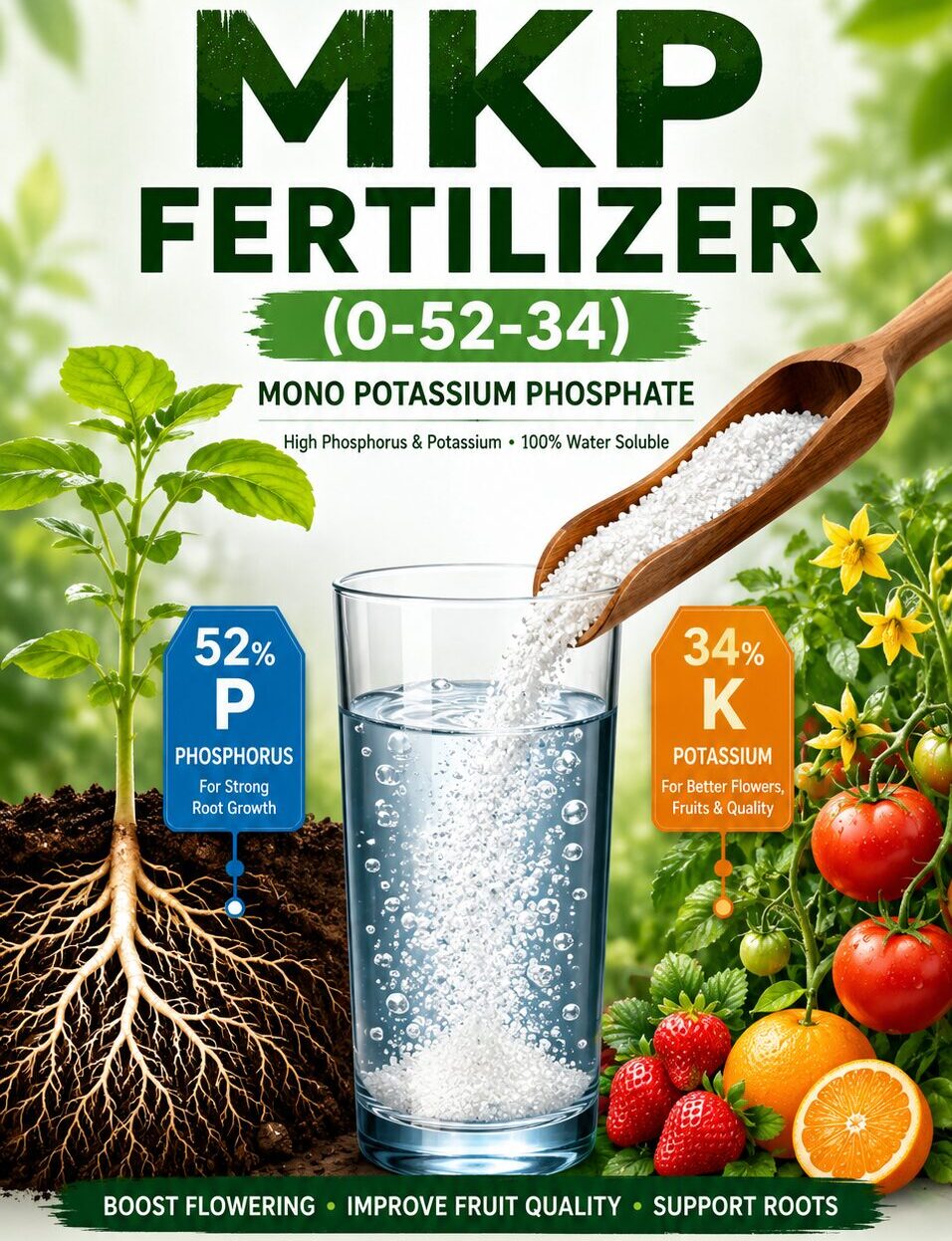
| MKP (Mono Potassium Phosphate) | 0-52-34 | Bud formation and early flowering, where phosphorus demand is high | No nitrogen — better as a short, targeted phase than a long-term feed |
| NPK 12-12-36 | 12-12-36 | A single, complete feed through flowering, fruit set and ripening | Not built as a general leafy-growth or seedling feed |
For most home gardeners who just want one product to reach for once flowering and fruiting begins, a blended fertiliser like NPK 12-12-36 removes the guesswork of juggling separate bags — you get a baseline of nitrogen and phosphorus alongside the potassium lift. If you’re already running a complete feeding program and need to correct a potassium shortfall specifically, without adding more N or P on top, straight Sulphate of Potash is the more surgical option. And if the priority is bud formation earlier in the season rather than fruit finishing, MKP’s heavier phosphorus lean is worth considering instead. GreenPick’s full fertiliser guide maps out where each product fits across a whole season.
One more practical note: because chloride can be a genuine problem for a handful of sensitive plants — avocados, blueberries and some citrus among them — it’s worth checking the potassium source in any blended fertiliser you use on these crops specifically. Green Pick’s SOP and NPK 12-12-36 are both formulated to be chloride-free, which suits sensitive plantings, though it’s always reasonable to confirm this with any supplier if it matters for your particular garden.
Getting NPK 12-12-36 right: application basics
NPK 12-12-36 is fully water-soluble, so it works as a soil drench, a foliar spray, or through fertigation and hydroponic systems. As a general pattern, it’s best introduced once fruit is setting and continued through to ripening, and it’s a reasonable choice as a “finishing” feed on fruit trees heading toward harvest or as extra support through a hot, dry stretch.
Start on the lower end of any rate and watch how plants respond before increasing strength — with potassium, there’s little extra benefit past a certain point, and overshooting mostly just risks the magnesium and calcium competition mentioned earlier. It’s also worth avoiding a direct tank mix with calcium-rich products like Calcium Nitrate without jar-testing first, since the two can react in solution.
For exact rates by plant type, pot size and growing method, GreenPick’s Smart Fertigation Planner set this out properly rather than relying on a one-size-fits-all number here.
Quick notes for common Australian garden plants
- Tomatoes and capsicums: once the first trusses set fruit, shifting some feeds toward a higher-potassium formula supports flavour and reduces soft or split fruit. Keep an eye on calcium too — blossom end rot is a separate, very common issue in the same crops, covered in GreenPick’s Calcium Nitrate guide.
- Citrus and stone fruit: extra potassium in the lead-up to harvest supports fruit size and sweetness. If it’s the leaves causing concern rather than the fruit, it’s worth ruling out iron deficiency first — see why citrus leaves turn yellow.
- Roses and flowering ornamentals: a potassium lift once buds are forming can support bloom size, colour intensity and a longer flowering run — though light, pruning and overall plant health still do most of the work in how many blooms you get in the first place.
Frequently Asked Questions
Does potassium make plants flower more?
What's the difference between NPK 12-12-36 and Sulphate of Potash?
Can I use a high-potassium fertiliser on all my plants?
How do I know if my plant actually has a potassium deficiency?
Is NPK 12-12-36 safe for chloride-sensitive plants like citrus and avocados?
How often should I apply a high-potassium fertiliser during flowering and fruiting?
Shop Green Pick’s NPK 12-12-36
If your plants are already flowering or setting fruit — or a soil test and leaf pattern point to a genuine potassium shortfall — NPK 12-12-36 gives you nitrogen, phosphorus and a strong potassium lift in one water-soluble, chloride-free formula. It isn’t a shortcut to more flowers on a plant that isn’t ready to bloom, but for supporting fruit size, sweetness and stress resistance once the season’s underway, it’s a straightforward, well-matched choice.
Sources & further reading
- Dr Adam Dimech — Potassium and Flowering: The Potassium Myth
- Soil Quality Australia — Potassium Fact Sheet
- Potassium fertilization and sugar/acid metabolism in apple fruit — peer-reviewed study
- Garden Superstore Australia — Oxide to Elemental NPK Conversion
- K+S — Potassium and Magnesium Nutrient Interactions