
Welcome to your guide on Magnesium Sulphate (Epsom Salt) – a fast-acting magnesium supplement designed to correct deficiencies, restore healthy green growth, and support optimal plant performance.
Magnesium is a critical secondary nutrient that plays a central role in chlorophyll production — the process that gives plants their green colour and drives photosynthesis. Without sufficient magnesium, plants struggle to produce energy, leading to poor growth, yellowing leaves, and reduced yields.
Magnesium Sulphate provides a highly soluble and readily available source of both magnesium and sulphur, making it an effective solution for quickly correcting nutrient imbalances and improving plant vitality.
In this guide, we’ll explore why magnesium matters, when to use Magnesium Sulphate, and how to apply it correctly for the best results.
Why Choose Magnesium Sulphate?
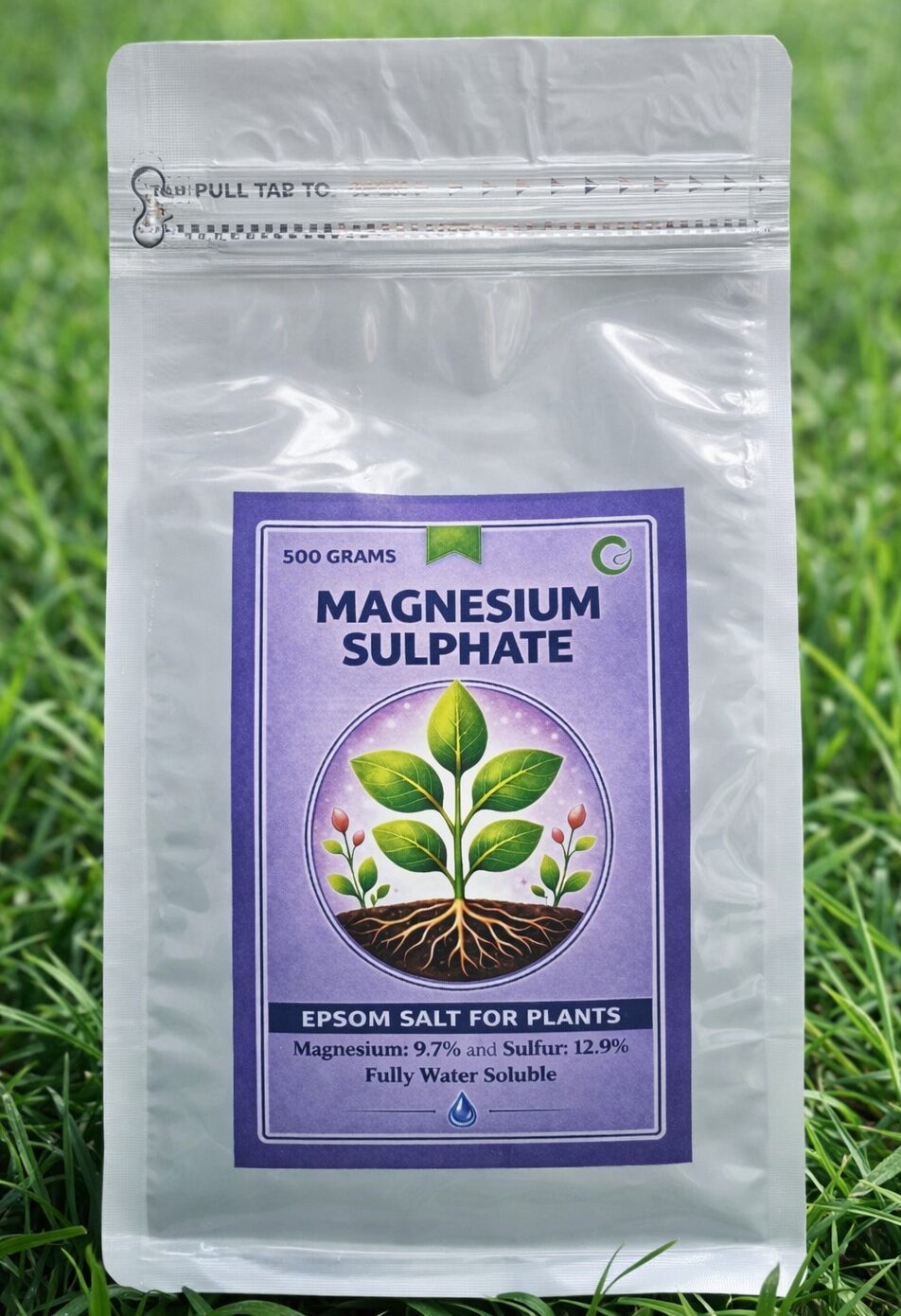
Magnesium Sulphate typically contains:
- ~9.5–10% Magnesium (Mg)
- ~12–13% Sulphur (S)
It is highly water-soluble, allowing for rapid uptake through both roots and leaves, making it ideal for quick correction of deficiencies.
Unlike general fertilisers, Magnesium Sulphate is best used as a targeted nutrient supplement rather than a complete feeding solution.
Key Benefits
🌿 Corrects Magnesium Deficiency Fast
Quickly addresses interveinal yellowing (yellow leaves with green veins), restoring healthy green colour.
🌱 Boosts Photosynthesis
Magnesium is the core element in chlorophyll, helping plants produce energy more efficiently.
🍃 Improves Nutrient Uptake
Supports better utilisation of nitrogen and phosphorus, enhancing overall plant growth.
🌼 Supports Flowering & Yield
Healthy magnesium levels contribute to improved flowering, fruit set, and crop quality.
💧 Highly Water Soluble
Ideal for soil application, foliar feeding, and fertigation systems.
When to Use Magnesium Sulphate
Magnesium Sulphate is most effective when plants show signs of deficiency or during periods of high nutrient demand.
Use it in the following situations:
Visible Magnesium Deficiency – Yellowing between leaf veins, especially on older leaves.
Fast-Growing Crops – Vegetables, fruiting plants, and high-demand crops often benefit from supplemental magnesium.
Sandy or Leached Soils – Magnesium is easily lost from light soils due to rainfall or irrigation.
High Potassium Feeding Programs – Excess potassium can limit magnesium uptake, requiring supplementation.
Lawns & Turf – Helps restore deep green colour and improve overall lawn health.
How to Apply Magnesium Sulphate
⚠️ Application rates vary depending on plant type and severity of deficiency. Avoid overuse, as excess magnesium can interfere with other nutrients.
🌱 Foliar or Soil Application (General Use)
- Dissolve 10 g per litre of water and apply around the base of plants
OR - Apply 20–50 g per m² and water in well
- Repeat every 3-4 weeks if needed
🪴 Potted Plants
- Mix 1 teaspoon (~5 g) per litre of water
- Apply once every 3-4 weeks
👉 Avoid frequent overuse in pots to prevent salt buildup.
🌾 Lawns
- Apply ~20 g per m², dissolved in water or spread evenly and watered in
- Helps improve lawn colour and recovery from stress
🚜 Large-Scale Use
- Apply 25–50 kg per hectare depending on soil conditions
- Foliar spray: 0.5% solution (5 g per litre)
Why Growers Use Magnesium Sulphate
✔ Fast-acting magnesium source
✔ Corrects visible deficiencies quickly
✔ Supports chlorophyll production and plant energy
✔ Highly water-soluble and easy to apply
✔ Suitable for soil, foliar, and fertigation use
✔ Ideal supplement alongside regular fertilisers
Frequently Asked Questions
1. Is Magnesium Sulphate a complete fertiliser?
No. It is a targeted supplement used to correct magnesium deficiency, not a full nutrient solution.
2. How do I know if my plants need it?
Look for yellowing between leaf veins, especially on older leaves, while veins remain green.
3. Can I use it with other fertilisers?
Yes. It works well alongside most fertiliser programs, especially those high in nitrogen or potassium.
4. Is it safe for all plants?
Yes, when used at recommended rates. Avoid excessive application.
5. Can Magnesium Sulphate cause calcium deficiency?
If overused, yes. Excess magnesium can compete with calcium uptake, potentially leading to calcium deficiency symptoms even when calcium is present in the soil.
Shop Magnesium Sulphate Today
Restore your plants’ natural green colour and vitality with a fast-acting magnesium boost. Premium Magnesium Sulphate with FREE Australia-wide shipping. 🌱