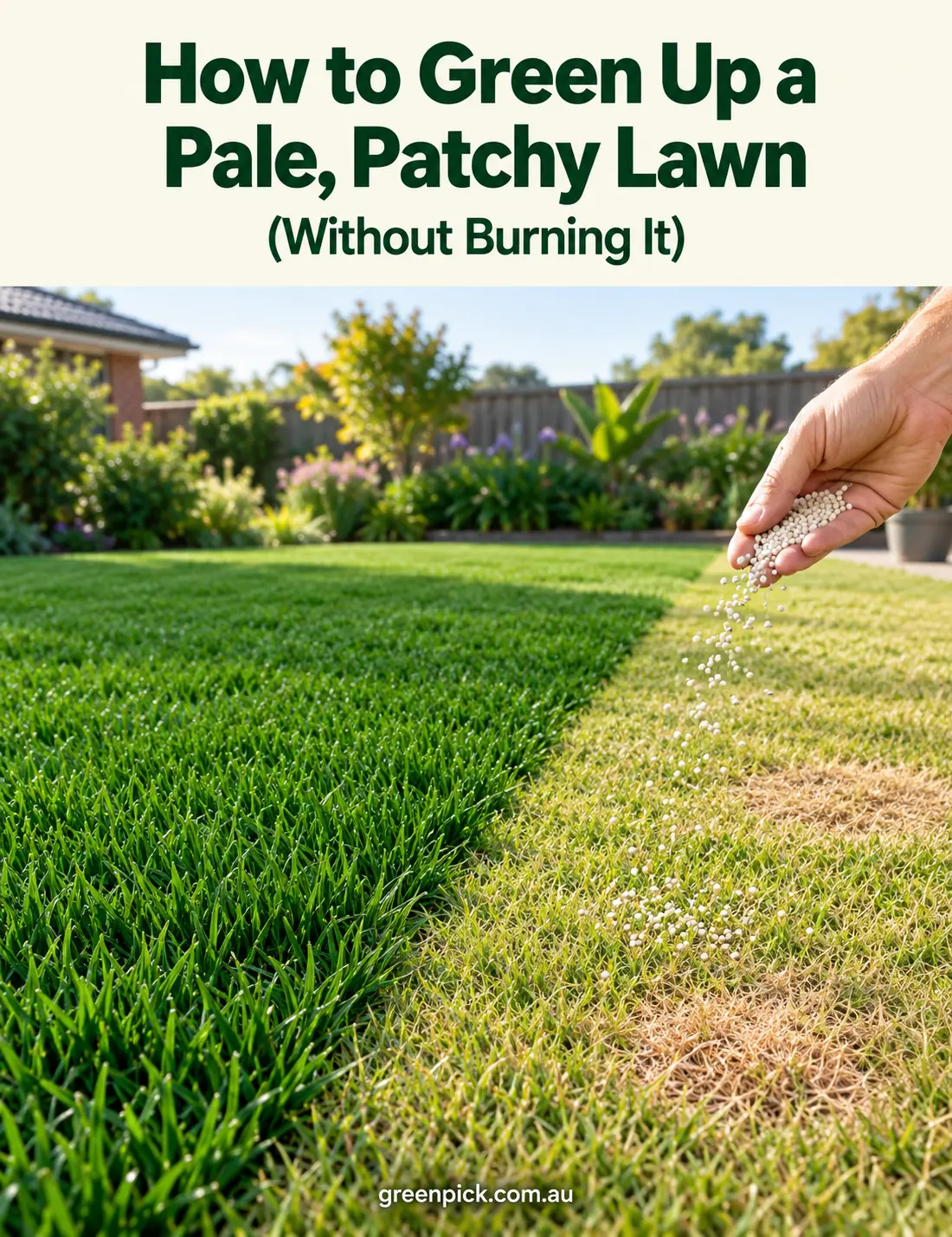

From the kitchen window, a pale lawn and a patchy lawn look like the same problem. Up close, they’re usually two different ones, and only one of them is fixed by a bag of fertiliser.
Pale, yellow-green grass that’s growing slowly is almost always hungry. Warm-season lawns like buffalo, couch and kikuyu come into spring short of nitrogen, and a well-timed feed brings the colour back.
Patches are trickier. Bare or straw-coloured spots usually come from dry, water-repellent soil, lawn grubs, dog wee or shade, and no fertiliser fixes those on its own. Here’s how to tell which one you’ve got, and how to feed your lawn back to thick and green without burning it.
What’s wrong with your lawn?
Pick the description that best matches. You’ll see the likely cause, and whether feeding will fix it.
Your answer will appear here.
Feeding: fixes it
Likely hungry. Pale, slow grass is short of nitrogen, and warm-season lawns are at their hungriest as they start growing again in spring. Feed with urea and sulphate of potash, like our Lawn Root & Shoot Repair Kit, water it in, and use the calculator below for the dose.
Feeding: needs iron, not nitrogen
Could be iron. In alkaline soil, iron gets locked up and new blades come through yellow. More nitrogen won’t fix it, but a chelated iron such as our Iron Chelate will. Our guide to yellow leaves with green veins explains why.
Feeding: helps after the fix
Likely water-repellent soil. A waxy coating on the soil stops water soaking in, so these patches stay dry even after rain. Apply a soil wetting agent and water deeply but less often. Feed once water soaks in again.
Feeding: won’t fix it
Likely lawn grubs. Curl grubs eat the roots, which is why the turf lifts like carpet, and armyworm caterpillars strip the leaves. Pour a bucket of soapy water over the edge of a patch at dawn or dusk. If grubs come up within about 10 minutes, treat them first, then feed to help the lawn fill back in.
Feeding: won’t fix it
Likely dog wee. Urine is a concentrated hit of salts and nitrogen: the centre burns, and the ring around it gets over-fed. Water the spot heavily as soon as you can after the dog’s been, and don’t fertilise it. The grass around it usually grows back in.
Feeding: won’t fix it
Probably too much shade. Grass needs sun to turn fertiliser into growth, so extra feed under trees mostly goes to waste. Raise the mowing height, thin out overhanging branches, or consider a more shade-tolerant grass.
Symptoms can overlap, so treat this as a starting point.
Why a hungry lawn goes pale
Nitrogen is the nutrient grass uses most, and it’s what keeps it green. When it runs short, the whole lawn fades to a washed-out yellow-green, and you mow less often because it’s barely growing.
Spring is when it shows. Warm-season grasses switch back into growth once the soil warms to around 14°C, according to Lawn Solutions Australia, and they’re hungry when they do. Heavy rain washes nitrogen out of sandy soil, and catching your clippings takes a little more away with every mow.
One exception: if the yellowing is worst on new growth, and you’re on limey soil or near concrete paths, the problem may be iron rather than nitrogen. In alkaline soil, iron gets locked up, and more nitrogen won’t fix it. Our guide to yellow leaves with green veins explains how that works.
Urea greens a lawn fastest, and burns it fastest too
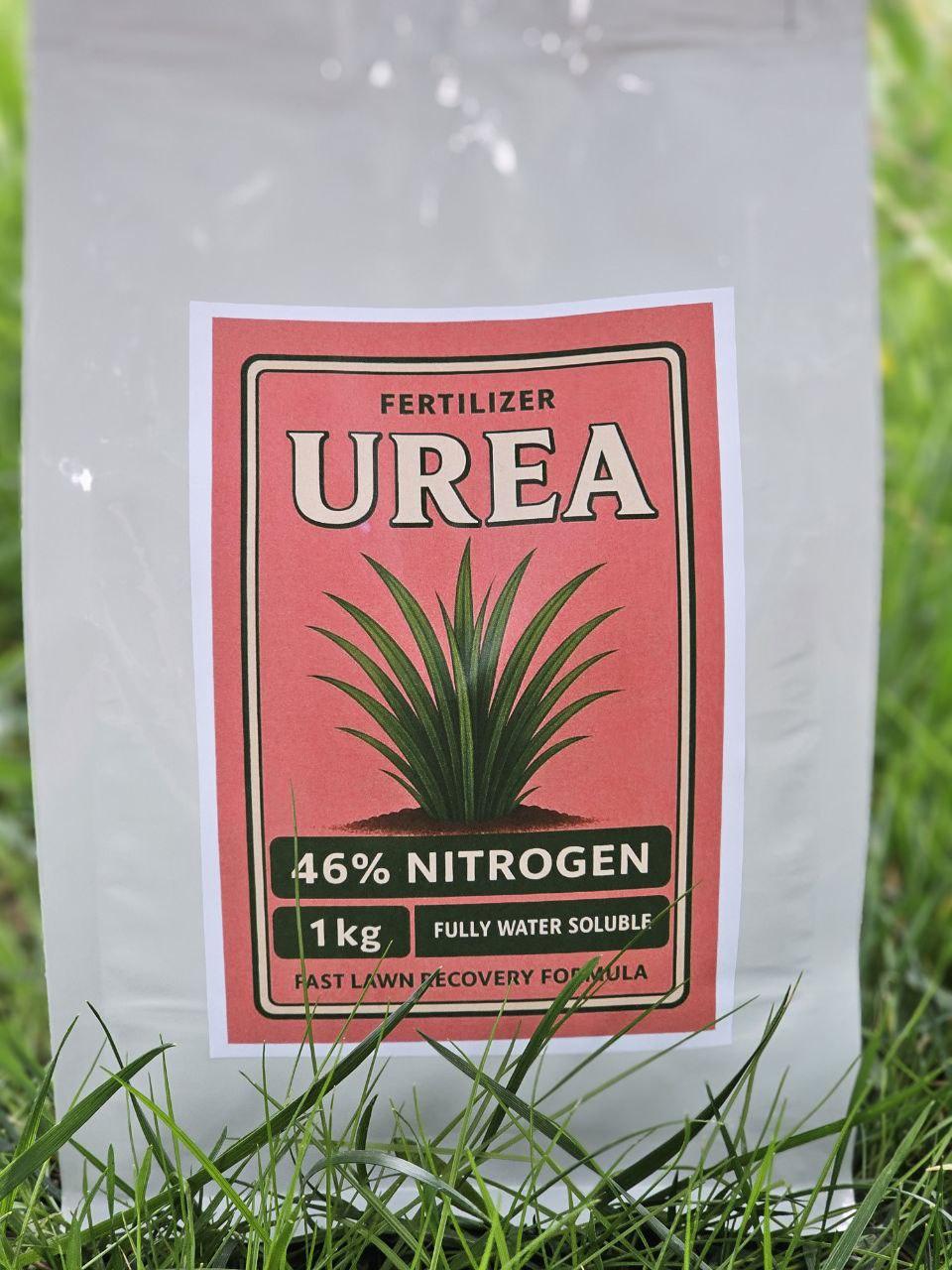
Urea is 46% nitrogen, the most concentrated common solid fertiliser, and it works quickly. That’s why it’s the go-to for a fast green-up. It’s also why it burns lawns when it’s overdone.
Part of the problem is salt. On the standard salt index, urea scores about 74, against about 43 for sulphate of potash. Drop too much in one spot, or spread it on a hot day, and the grass goes yellow in stripes or patches.
University of California turf guidelines set the limit at no more than 1 pound of nitrogen per 1,000 square feet in each feed. In metric, that’s about 10 g of urea per square metre, the same rate as our urea guide. Treat it as a ceiling, not a target. The same guidelines suggest smaller, regular feeds, because quick-release nitrogen lasts about four to six weeks.
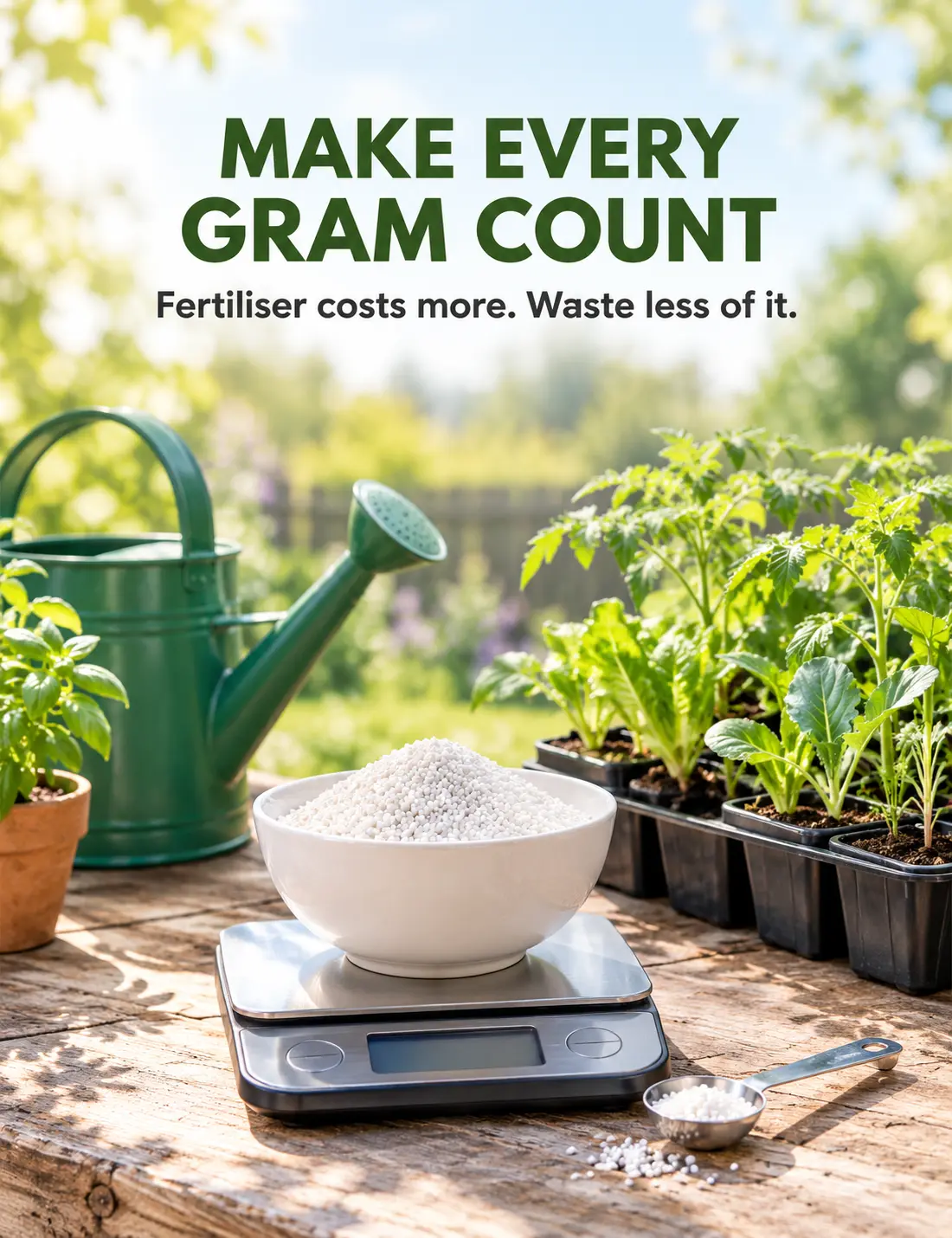
Water it in straight away. Urea left on the surface can lose nitrogen to the air as ammonia gas, and Montana State University researchers found it took about 12 mm of water in one go to move it safely into the soil. Our article on getting more from every gram of fertiliser covers how much goes missing when you don’t.
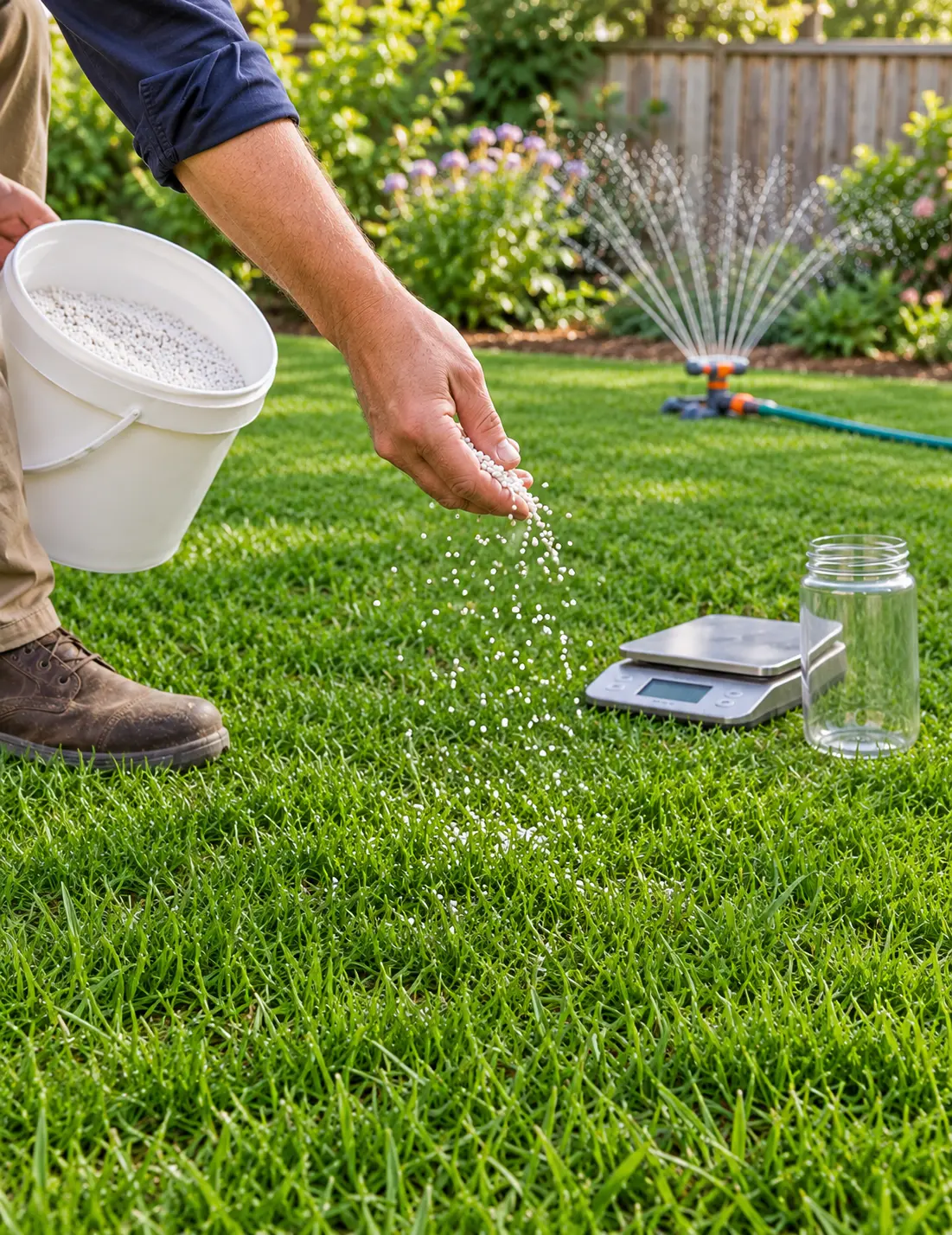
A few habits keep it safe. Spread on dry grass, so the granules fall through to the soil. Walk half the dose one way and half across, so you don’t get stripes. And skip feeding during heatwaves or when the lawn is already drought-stressed.
Why potassium belongs in the mix
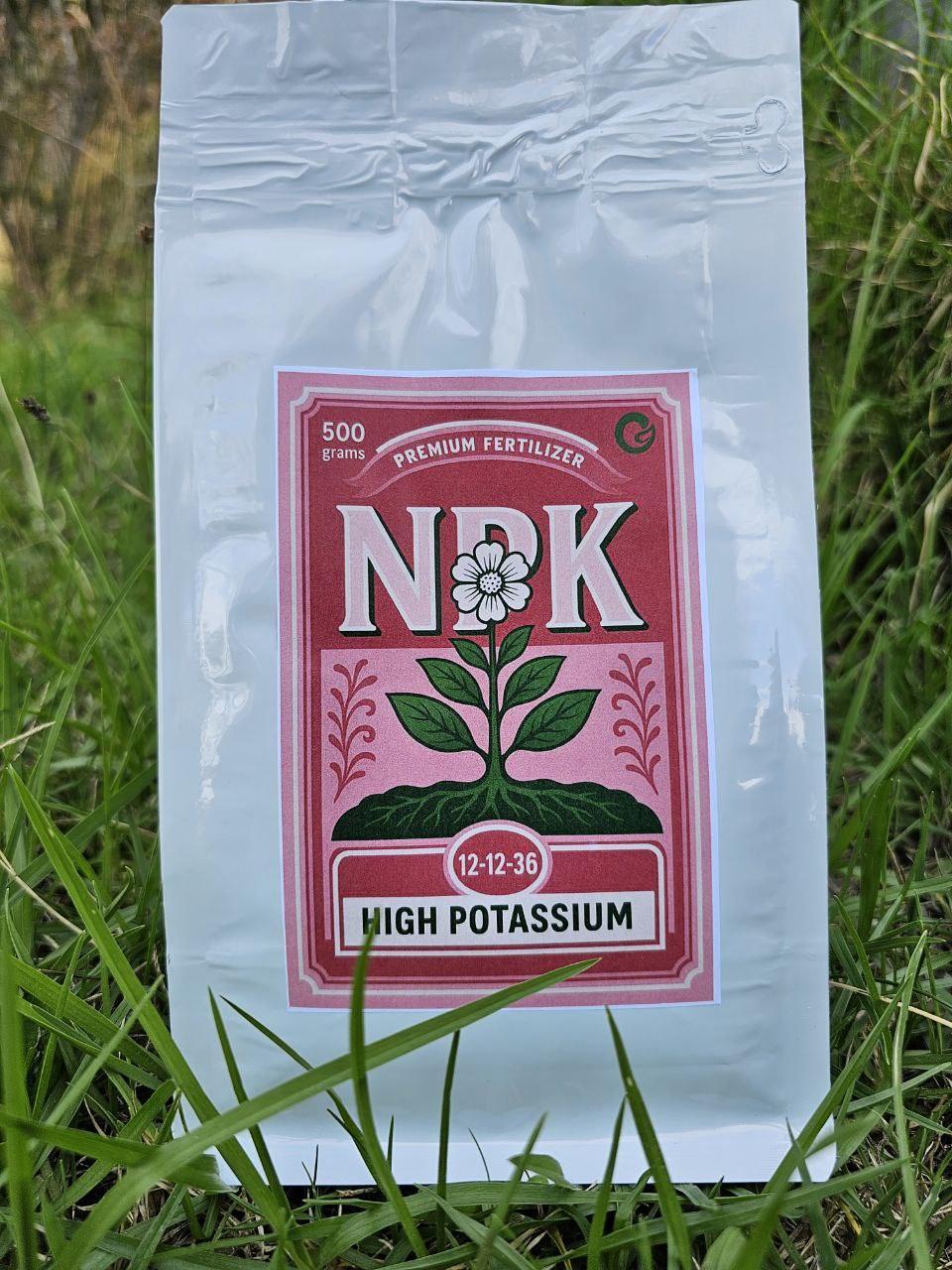
Nitrogen buys colour. Potassium buys toughness. LSU AgCenter turf specialists note that potassium affects how much water grass uses and how well it tolerates drought, heat, cold and wear. That’s exactly what a lawn needs heading into an Australian summer, and it’s why good lawn fertilizer carries potassium as well as nitrogen.
Sulphate of potash (SOP) is a gentle way to supply it. It’s chloride-free, and its salt index is about a third of muriate of potash, 43 against 120.
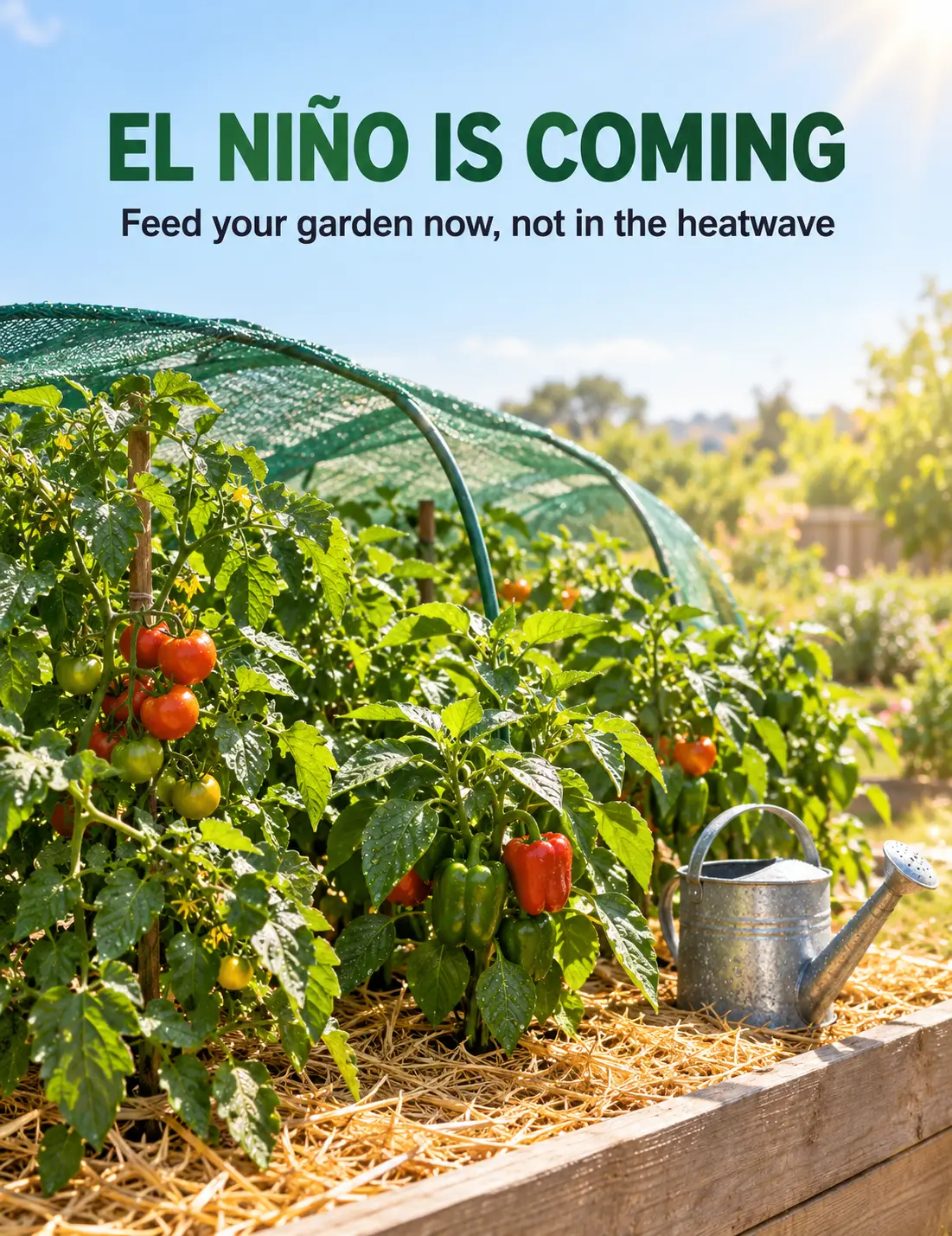
That’s the thinking behind our Lawn Root & Shoot Repair Kit: a kilo of urea for fast colour and a kilo of SOP for toughness, mixed in equal parts. If you’re expecting a hot, dry season, our guide to preparing your garden for El Niño has more on heat-proofing.
How much does your lawn need?
Pick the feed and slide to your lawn size. Amounts are for one feed of equal parts urea and sulphate of potash.
Main feed: 10 g of urea and 10 g of sulphate of potash per m², or 2 kg of the 50/50 mix in total.
Weigh doses on kitchen scales. Spread on dry grass, half walking one way and half walking across, then water in straight away with about 12 mm, which is 12 litres per square metre. A straight-sided container on the lawn shows when you’re there.
When the patches aren’t hunger
Dry patch. If water beads on the surface or runs off instead of soaking in, the soil has turned water-repellent. Lawn Solutions Australia explains that breaking-down organic matter leaves a waxy coating that stops water getting in, and that long dry spells make it worse. A soil wetting agent fixes it, and deep, less frequent watering keeps it fixed.
Lawn grubs. Patches that stay brown while the rest of the lawn greens up, turf that rolls back like carpet, birds pecking and small moths at dusk all point to lawn grubs: African black beetle larvae or armyworm caterpillars. For a quick check, pour a bucket of soapy water over the edge of a patch at dawn or dusk and watch for about 10 minutes. Treat the grubs first; feeding comes after.
Dog wee. Round straw-coloured spots with a lush dark-green ring are classic urine damage. According to University of Maryland Extension, the salts burn the centre and the nitrogen over-feeds the ring. Water the spot heavily as soon as you can after the dog’s been, and the grass around it will usually grow back in.
Shade. Thin grass under trees isn’t hungry, it’s short of light. Raise the mowing height, thin out overhanging branches, or consider a more shade-tolerant grass.
A simple feeding plan
For warm-season lawns, this is all most backyards need. The autumn feed matters more than people think: Lawn Solutions Australia notes it helps the lawn repair after summer, before it slows down for winter.
| When | What to do | Why |
|---|---|---|
| Mid to late spring | Main feed, once you’ve mown a few times | The grass is growing again, so it can use the nitrogen |
| Every 4 to 6 weeks in summer | Top-up feed if the colour fades. Skip heatwaves and dry spells | Quick-release nitrogen lasts about 4 to 6 weeks |
| Early autumn | Main feed | Helps the lawn repair summer damage before winter |
| Winter | Don’t feed while the lawn is dormant | It can’t use the nitrogen, so most of it goes to waste |
Fescue and ryegrass lawns are different. They grow best in cooler weather, so give them their main feeds in autumn and spring, and go easy in summer heat.
Feed the hunger, fix the rest
A pale lawn is the easy one. Feed it little and often, water it in, and it’ll green up. Patches need a diagnosis first, because no fertiliser fixes grubs, dog wee or dry soil on its own.
Ready to start? Our Lawn Root & Shoot Repair Kit has both halves of the job in one box. Not sure what your garden needs? Try Find My Fertiliser.
Sources and further reading
- Lawn Solutions Australia. Giving your lawn a boost: spring fertilising.
- Lawn Solutions Australia. How to plan a lawn care schedule.
- Lawn Solutions Australia. How to identify lawn grubs.
- Lawn Solutions Australia. Do you need a hydration solution for your lawn? Wetting agents.
- University of California IPM. Fertilizer amount for lawns.
- LSU AgCenter. Louisiana home lawn series: potassium (PDF).
- Spectrum Analytic. Calculating salt index.
- Montana State University. Urea volatilization: what we learned.
- University of Maryland Extension. Dog urine damage to lawns.