MKP Fertiliser (Mono Potassium Phosphate): Benefits, Uses, Price & Buying Guide

MKP Fertiliser (Mono Potassium Phosphate): Benefits, Uses, Price & Buying Guide
If you’re looking for a high-quality phosphorus and potassium fertiliser, MKP fertiliser — also known as Mono Potassium Phosphate — is one of the best choices for improving flowering, fruit development and root growth.
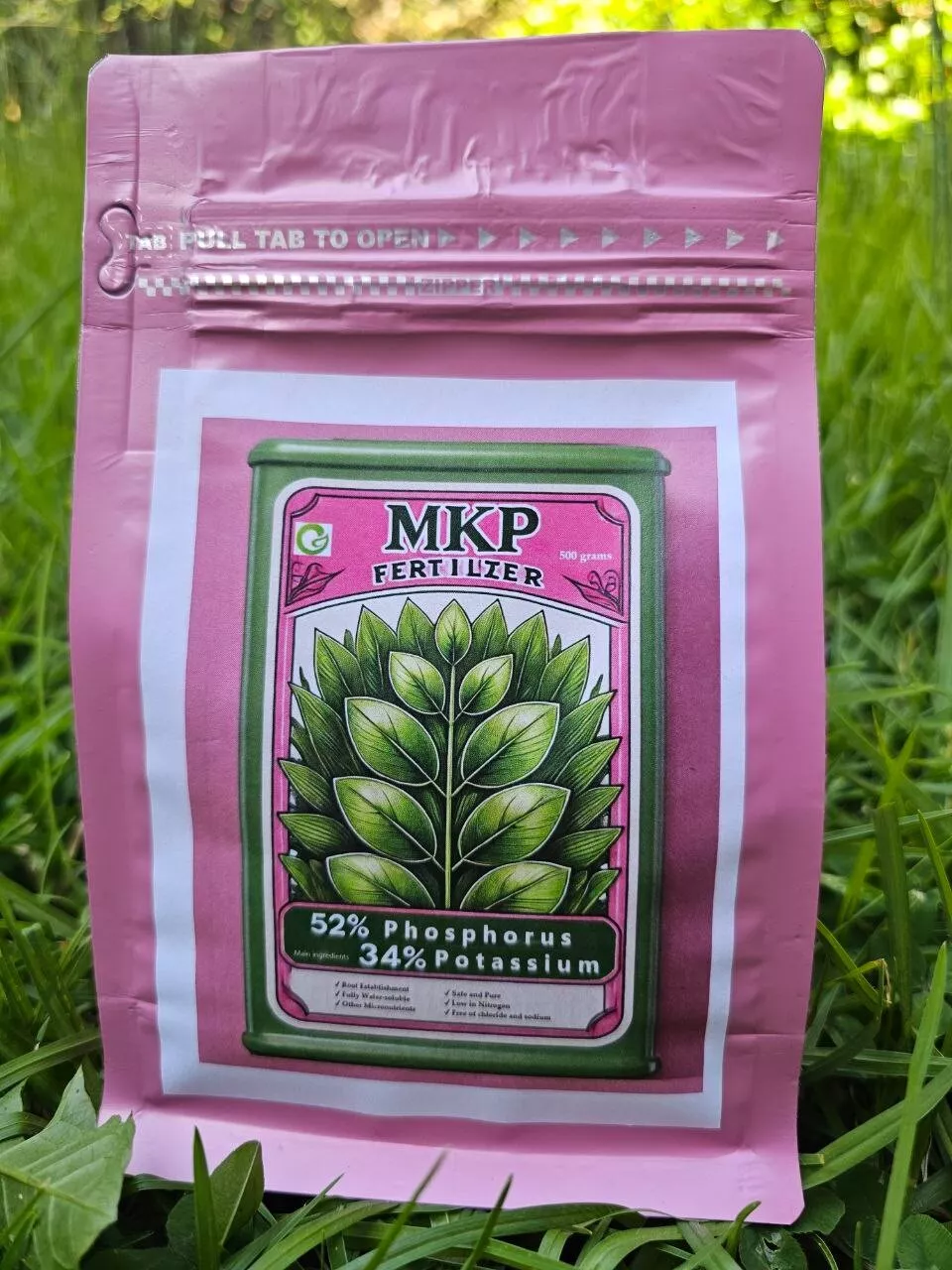
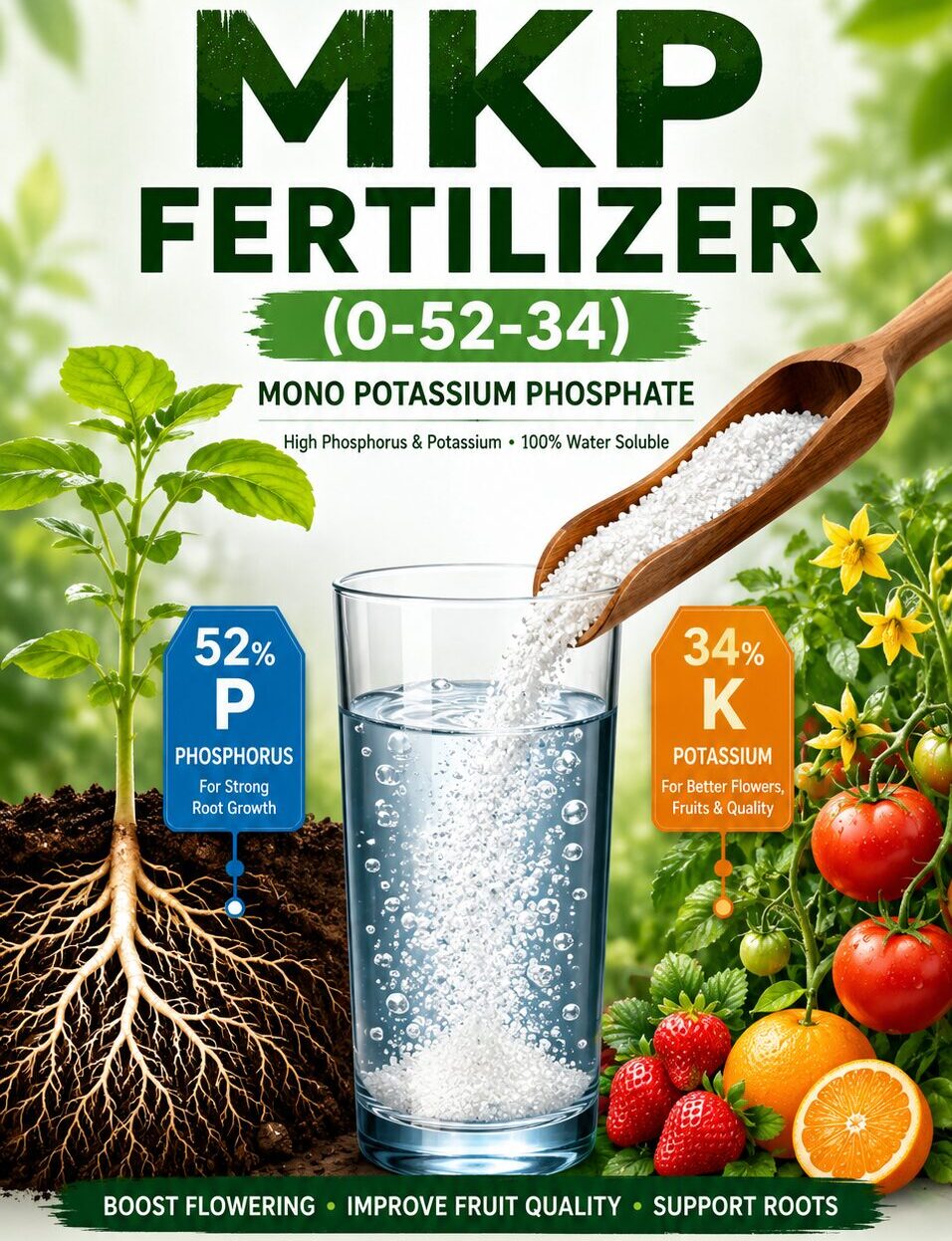
Quick Note: MKP (Mono Potassium Phosphate) is a fully water-soluble fertiliser containing 52% phosphorus and 34% potassium with zero nitrogen. It is commonly used during flowering and fruiting to improve flower production, fruit quality and root development. It is suitable for fertigation, hydroponics and foliar spraying.
This guide explains what MKP fertiliser is, when to use it, its benefits, application rates, methods, and how to choose the right product in Australia. It’s also one of the fertilisers we get asked about most at Green Pick — so we’ve included answers to the questions we hear regularly from our customers.
What is MKP Fertiliser?
MKP (Mono Potassium Phosphate) is a highly concentrated, fully water-soluble fertiliser. Here’s a quick reference summary:
| Property | MKP |
|---|---|
| Chemical name | Mono Potassium Phosphate |
| Formula | KH₂PO₄ |
| NPK ratio | 0-52-34 |
| Phosphorus (P₂O₅) | 52% |
| Potassium (K₂O) | 34% |
| Nitrogen | 0% |
| Water soluble | Yes — completely |
| Best for | Flowering & fruiting |
| Suitable for hydroponics | Yes |
| Chloride free | Yes |
MKP is sold under its NPK ratio of 0-52-34 (sometimes listed as 0-52-34.5 depending on the manufacturer). Because it contains zero nitrogen, MKP is ideal when plants require phosphorus and potassium without encouraging excessive leafy growth.
This is NOT a 10-52-10 fertiliser: MKP is sometimes confused with 10-52-10 fertiliser, but these are different products. A true 10-52-10 fertiliser contains 10% nitrogen, whereas MKP contains none. See our 10-52-10 Fertiliser Here.
It dissolves quickly in water, making it suitable for:
- Fertigation
- Hydroponics
- Foliar spraying
- Drip irrigation
- Soil application after dissolving
Benefits of MKP Fertiliser
MKP provides several important benefits throughout the growing season.
✔️ Encourages Strong Root Development
The high phosphorus content supports healthy root establishment, particularly after transplanting or during early growth stages. We often recommend MKP to customers who have just transplanted seedlings into their hydroponic system or garden beds — the phosphorus hit gives roots something to chase.
✔️ Improves Flowering
Phosphorus promotes flower initiation, making MKP popular among vegetable growers, fruit producers and ornamental gardeners. In our experience, tomato and capsicum growers in particular notice a meaningful difference in flower set when they switch to MKP at the right stage — it’s one of those results that tends to convert a first-time buyer into a repeat customer.
✔️ Produces Better Fruit Quality
Potassium contributes to fruit size, colour, sweetness and shelf life — qualities that matter in commercial and home production alike. We often hear from strawberry and citrus growers that fruit colour and skin firmness improve noticeably when MKP is introduced correctly during fruit development.
✔️ Fully Water Soluble
Unlike many granular fertilisers, MKP dissolves completely in water, making it ideal for modern irrigation systems and fertigation programs.
✔️ Suitable for Hydroponics
Its high purity means it can be safely used in hydroponic nutrient programs when mixed correctly, with no inert fillers or residues.
✔️ Chloride Free
MKP contains no chloride, making it suitable for chloride-sensitive crops such as strawberries, avocados, and some citrus varieties where excess chloride can cause leaf tip burn.
What Plants Can Use MKP?
MKP is suitable for many crops including:
- Tomatoes
- Capsicum
- Cucumbers
- Strawberries
- Citrus
- Grapes
- Avocados
- Mangoes
- Roses
- Orchids
- Hydroponic vegetables
- Flowering ornamentals
When Should You Apply MKP?
MKP is commonly applied during:
- Early root establishment
- Before flowering
- Flower initiation
- Fruit set
- Fruit development
It is generally less suitable during periods when plants require high nitrogen for leafy vegetative growth.
Fertiliser by Growth Stage
Understanding which fertiliser to use at each growth stage is key to getting the most from MKP. The diagram below shows when to switch from a nitrogen-rich program to MKP as your crop transitions from vegetative growth into flowering and fruiting.
How to Apply MKP Fertiliser — Rates & Methods
MKP can be applied using several methods. Use our Fertigation Planner and adjust based on your crop, soil type and growth stage.

Note: Always dissolve MKP fully in water before applying. Start at the lower end of the range for sensitive crops or young seedlings.
Fertigation
Ideal for drip irrigation and commercial production. MKP dissolves rapidly and flows cleanly through drip lines without clogging emitters. Many of our commercial customers specifically choose MKP over other phosphorus sources for this reason — they’ve had bad experiences with lower-purity products leaving sediment in their systems, and the clean dissolution of quality MKP is something they genuinely notice.
Foliar Spray
A diluted solution can be sprayed directly onto leaves for rapid nutrient uptake. Particularly effective during flowering when roots may be under stress. We generally advise customers to spray early in the morning so the solution absorbs before the heat of the day — in warmer Australian climates, mid-day foliar spraying can cause leaf scorch even at correct dilution rates.
Hydroponics
Widely used in hydroponic nutrient formulations because of its purity and complete solubility. Combine carefully with other nutrients — see mixing notes in the FAQ below.
Common Mistakes When Using MKP
These are the errors we see most often from customers, both beginners and experienced growers:
- Applying during vegetative growth. MKP has zero nitrogen, so applying it too early — when plants still need nitrogen to build canopy — starves them of a critical nutrient. Wait until flower initiation before switching to MKP.
- Mixing with calcium nitrate concentrate. This is the most common technical mistake. Combining MKP and calcium nitrate in the same concentrated stock solution causes calcium phosphate to precipitate out, forming a white sludge that blocks drip emitters. Always keep them in separate tanks.
- Spraying during hot afternoons. Foliar applications in mid-day heat cause rapid evaporation, leaving concentrated salt deposits on leaves. This leads to tip burn or scorch, especially on thin-leafed plants. Spray at dawn or dusk.
- Not dissolving completely before applying. MKP dissolves well but needs adequate water and agitation. Adding powder directly to a drip line without pre-dissolving it in water first risks blockages and uneven distribution.
- Using excessive concentration. More is not better. High-concentration MKP applications can cause osmotic stress, drawing water out of root cells rather than into them. Stick to recommended rates and increase frequency rather than concentration if you want to push more phosphorus and potassium.
MKP vs MAP
Many growers compare MKP with MAP (Mono Ammonium Phosphate). Here’s how they differ:
| Feature | MKP | MAP |
|---|---|---|
| NPK ratio | 0-52-34 | 11-52-0 |
| Nutrients supplied | Phosphorus + Potassium | Phosphorus + Nitrogen |
| Nitrogen content | None | Yes (approx. 11%) |
| Best growth stage | Flowering and fruiting | Early vegetative growth |
| Suitable for hydroponics | Excellent | Less common |
| Water solubility | Complete | Complete |
| Chloride free | Yes | Yes |
| Common use | Horticulture, hydroponics, orchards | Broadacre farming, pastures |
One of the most common questions we receive at Green Pick is whether MKP should simply replace MAP altogether. The answer is no — they serve different purposes. We generally recommend MAP during early vegetative growth when nitrogen demand is high, and MKP once plants begin flowering or setting fruit. Using MKP too early, before the plant is ready to flower, is one of the more common mistakes we see from newer growers.
MKP Fertiliser Price in Australia
MKP fertiliser price in Australia varies depending on:
- Product purity — food-grade or technical-grade MKP
- Pack size — larger packs offer a lower cost per kilogram
- Brand and origin — imported vs locally distributed
- Freight and handling — particularly for remote locations
Indicative MKP Fertiliser Pricing (Green Pick)
| Pack size | Price incl. postage | Product price |
|---|---|---|
| 500 g | $22.95 | ~$12 |
| 5 kg | $129.90 | ~$99 |
Note: Prices are indicative and subject to change. Visit the Green Pick product page for current pricing and available pack sizes.
Buying from a specialist fertiliser supplier like Green Pick often provides better value, higher purity and more consistent quality than small retail packs from garden centres. We’ve had customers come to us after purchasing cheap MKP elsewhere, only to find it clumped in the bag, dissolved poorly, or contained visible impurities. With a product like MKP where purity directly affects solubility, the cheapest option rarely ends up being the most economical one.
Where to Buy MKP Fertiliser in Australia
When purchasing MKP fertiliser in Australia, look for products that are:
- 100% water soluble — no insoluble residues
- High purity — food-grade or technical-grade specification
- Free-flowing — no caking or clumping in the bag
- Compatible with fertigation and hydroponics — verified purity levels
- Packed in moisture-resistant resealable bags — essential for long shelf life in Australian conditions
- From a reputable supplier — with clear product specifications and traceability
What to Watch Out For
Cheaper, low-purity MKP can contain contaminants that clog drip lines, cause precipitation in nutrient tanks, or reduce the effectiveness of your fertiliser program. Always ask for a specification sheet or certificate of analysis (COA) if you’re buying in bulk. At Green Pick, we can provide product specifications on request — it’s something we encourage, because growers who understand what they’re applying get better results.
Buy MKP Fertiliser Online — Green Pick
At Green Pick, we supply premium-quality MKP fertiliser suitable for home gardeners, commercial growers and hydroponic systems throughout Australia.
Our MKP is:
- Fully water soluble with no residue
- High phosphorus (52% P₂O₅)
- High potassium (34% K₂O)
- Fast dissolving — suitable for all irrigation systems
- Chloride free
- Available in multiple pack sizes to suit any scale
- Shipped Australia-wide with fast dispatch
Browse our MKP product page to see current pricing, pack sizes and place your order online.
Frequently Asked Questions
Is MKP fertilizer the same as Mono Potassium Phosphate?
Is MKP the same as 10-52-10 fertilizer?
Is MKP chloride free?
Is MKP suitable for hydroponics?
Why choose Green Pick for MKP fertilizer?
At Green Pick, we focus on premium water-soluble fertilisers for Australian growers. Our products are selected for high purity, excellent solubility and reliable performance in gardens, orchards, hydroponics and commercial farming.
Whether you’re growing vegetables, fruit trees, flowers or hydroponic crops, our MKP fertiliser provides an efficient source of phosphorus and potassium to support healthy growth and high-quality yields. We ship Australia-wide and offer multiple pack sizes to suit home gardeners through to large commercial operations.