
Why High-Purity Potassium Humate Matters: The Science Behind Humic Acid, Soil Health & Plant Performance
Healthy plants begin with healthy soil. While traditional fertilisers provide essential nutrients such as nitrogen, phosphorus, and potassium, modern agriculture increasingly recognises the importance of improving soil structure, nutrient availability, and biological activity.
Potassium humate is one of the most widely used forms of humic substances because it combines the benefits of humic acid with naturally occurring potassium.
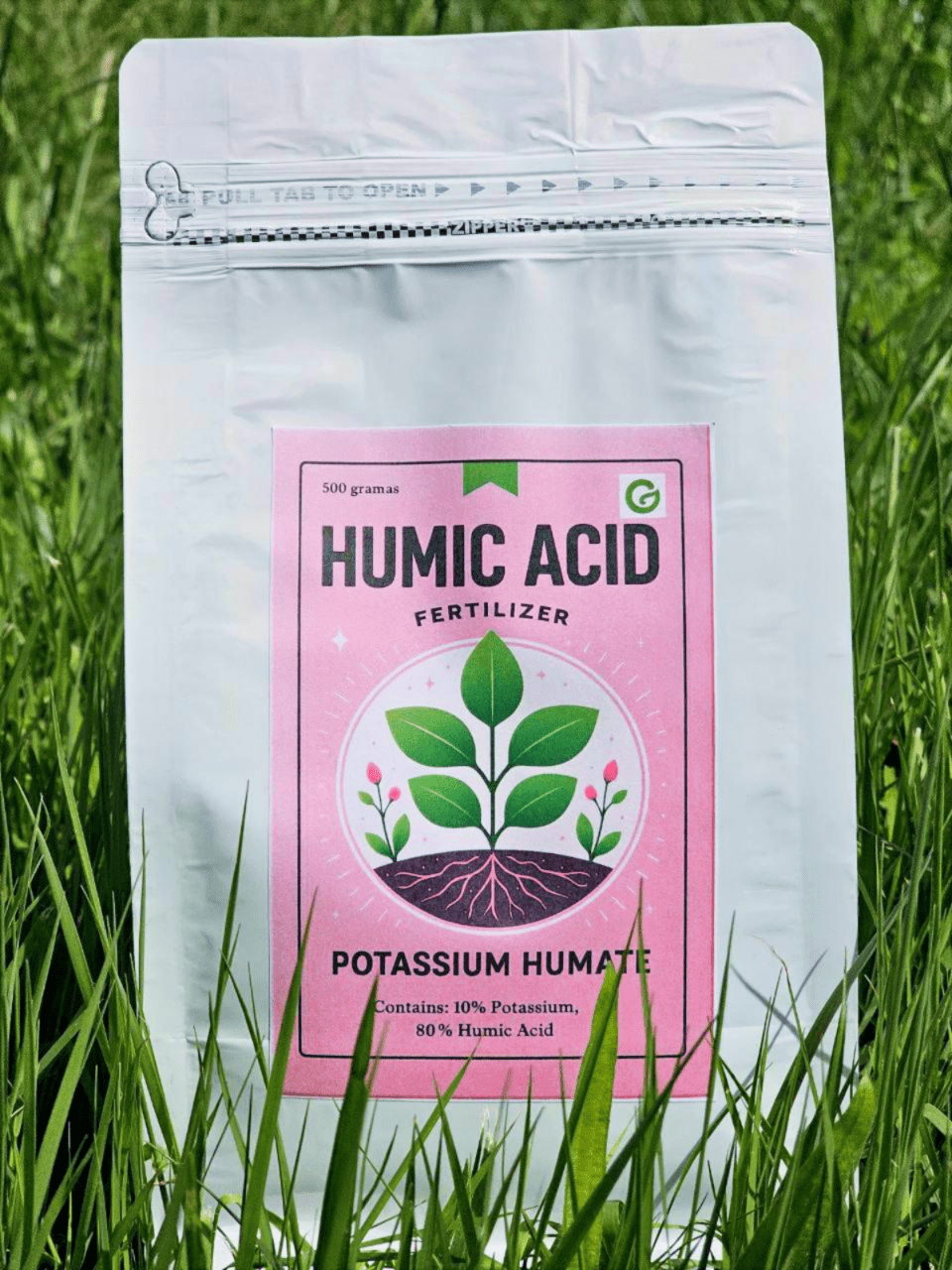
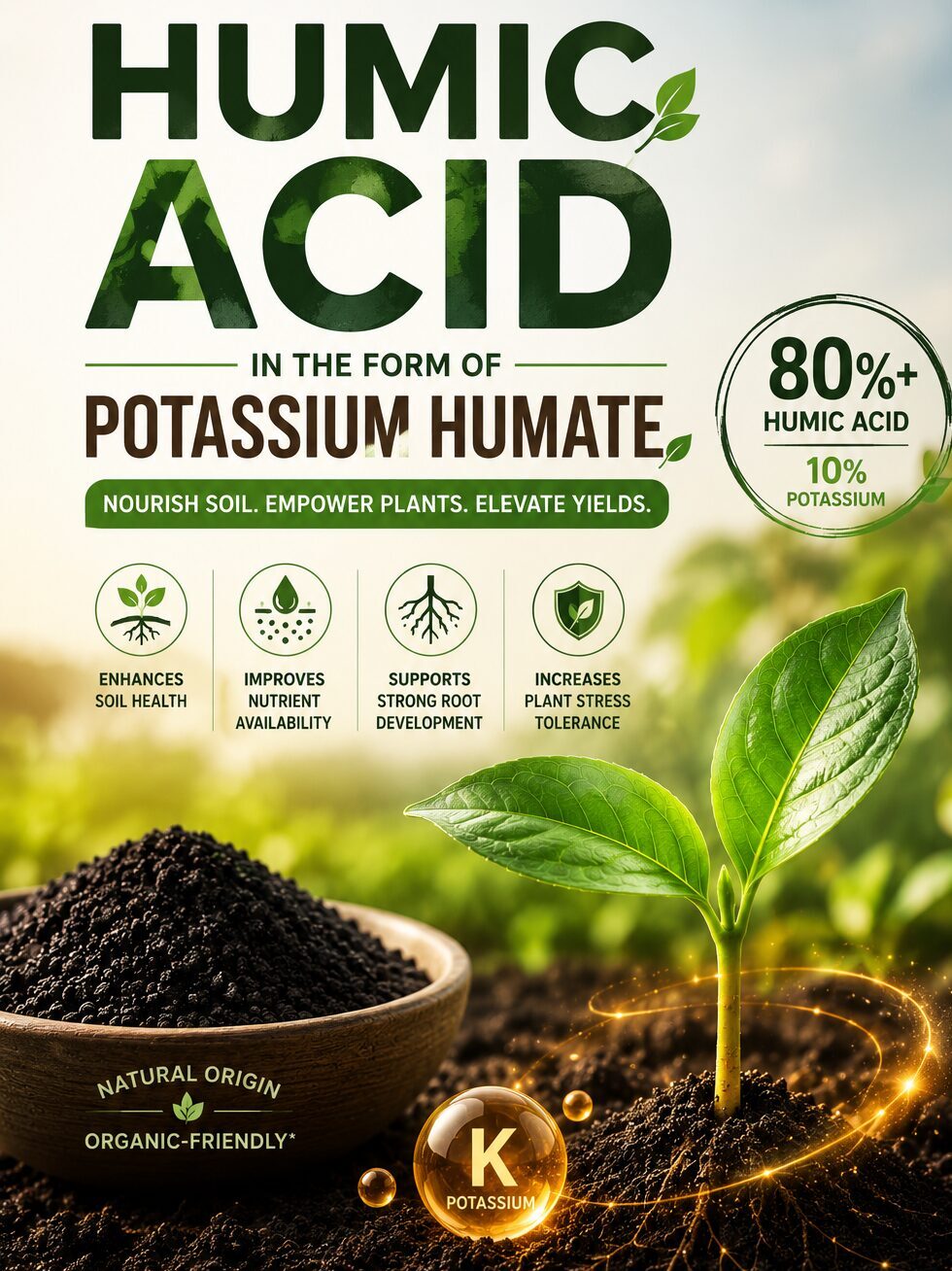
Our premium Potassium Humate contains 80%+ humic acid and approximately 10% potassium, providing a concentrated soil-conditioning solution designed for growers seeking higher-quality inputs and more efficient nutrient management.
What Is Humic Acid?
Humic acid is a naturally occurring organic substance formed through the decomposition of plant and animal matter over long periods. It belongs to a group of compounds known as humic substances, which include:
- Humic acid
- Fulvic acid
- Humin
Humic acid is valued because of its ability to interact with soil minerals, water, and plant roots. Rather than acting like a conventional fertiliser that simply supplies nutrients, humic acid works mainly as a soil conditioner and nutrient efficiency enhancer.
The Chemistry Behind Humic Acid
Humic acid is made up of complex organic molecules containing functional groups such as:
- Carboxyl groups
- Phenolic groups
- Hydroxyl groups
These chemical structures allow humic acid molecules to bind with minerals and nutrients. This process is known as chelation and complexation. In simple terms, humic acid helps hold nutrients in forms that are easier for plants to access.
What Is Potassium Humate?
Potassium humate is a potassium salt of humic acid. It is produced by reacting humic substances with potassium compounds, creating a more soluble and plant-available form. Compared with raw humic materials, potassium humate is commonly preferred because it:
- Dissolves more easily
- Mixes well in agricultural applications
- Provides potassium alongside humic acid
- Is suitable for fertigation and soil applications
Humic Acid vs Potassium Humate: What Is the Difference?
Humic acid is the active organic component. Potassium humate is a practical agricultural form that delivers humic acid together with potassium.
The potassium component provides an additional benefit because potassium plays important roles in:
- Water regulation inside plants
- Stress tolerance
- Enzyme activation Fruit quality
- Overall plant development
This makes potassium humate a multifunctional input rather than simply a nutrient source.
Why Humic Acid Content Matters
Not all humic products are the same. Many products on the market contain lower concentrations such as:
- 60% humic acid
- 65% humic acid
- 70% humic acid
- +80% humic acid
Higher concentration products provide a greater proportion of active humic material per kilogram. Our premium Potassium Humate is among the best products in the market with the highest purity of humic acid. This means more active humic substance in each application.
- Higher humic acid concentration can provide advantages including:
- More efficient application
- Less product required to deliver humic compounds
- Greater consistency
- Better value per unit of active ingredient
When comparing products, looking only at the bag size can be misleading. The percentage of active humic acid is what determines the actual humic content delivered to soil.
Is Humic Acid a Fertiliser or a Soil Conditioner?
Humic acid is best described as a soil conditioner and plant-supporting input. Unlike conventional fertilisers, it does not primarily work by supplying large amounts of NPK nutrients. Instead, humic acid helps improve the environment where plants grow.
It can support:
- Better nutrient availability
- Improved soil structure
- Enhanced root-zone conditions
- More efficient fertiliser use
Potassium humate provides both soil-conditioning benefits and a source of potassium.
Does Humic Acid Provide Fast or Slow Release Benefits?
Humic acid is not typically considered a fast-release fertiliser. Its benefits are generally longer-term because humic molecules interact with soil particles and organic matter. However, potassium humate is highly useful because it dissolves readily and can begin interacting with the soil soon after application.
Think of it as:
Fast availability + longer-term soil improvement
The potassium component becomes available relatively quickly, while the humic fraction continues supporting soil processes.
Benefits of Potassium Humate for Soil
Improves Soil Structure
Humic substances can help improve soil aggregation. Better soil structure may support:
- Improved aeration
- Better water movement
- Healthier root environments
Supports Nutrient Efficiency
Humic acid can bind nutrients and reduce losses caused by leaching or poor availability. This may help plants use fertilisers more efficiently.
Helps Root Development
A healthy root zone is essential for plant growth. Humic substances are commonly used to support stronger root systems and improved establishment.
Supports Stress Tolerance
Plants growing under challenging conditions may benefit from improved soil conditions. Humic acid applications are commonly used in soils affected by:
- Low organic matter
- Poor structure
- Salinity concerns
- Heavy cultivation
Plants That Benefit From Potassium Humate
Potassium humate is widely used across many growing systems, including:
Vegteables (Tomatoes, Cucumbers, Peppers, Leafy vegetables), Fruits (Grapes, Citrus, Berries, Orchard corps), Ornamentals (flowers, shrubs, garden plants), Turf and Lawns, and Broadacre Agriculture. But each plant, soil condition and contexts may require different instructions of use. So, we strongly recommend using our instruction of using Humic Acid, or using our Smart Fertigation Planner Tool:

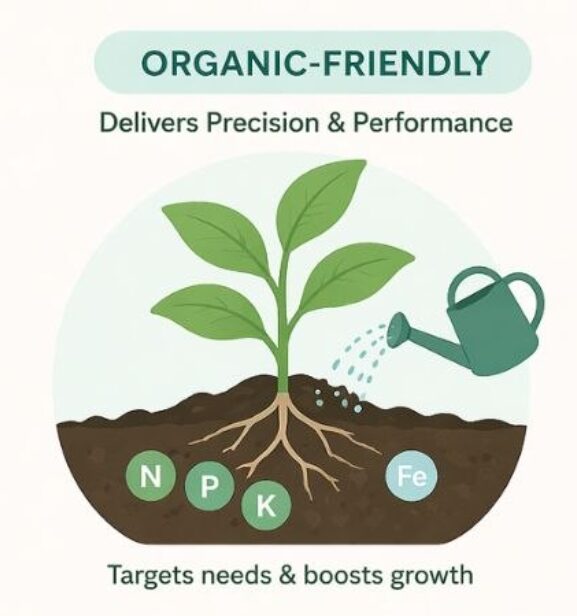
Is Potassium Humate Organic-Friendly?
Potassium humate is often used in organic-style and sustainable growing systems because it originates from naturally occurring humic substances. However, growers should always check the requirements of their specific organic certification program before use.
Our potassium humate is designed as an organic-friendly soil input for growers looking to improve soil quality while reducing dependence on excessive synthetic inputs.
Why Choose Green Pick Product? High-Purity Potassium Humate
When selecting humic products, consider: Higher Active Humic Content. Green Pick’s product provides: 80%+ humic acid compared with many lower-grade products. Also, our product is added with Potassium benefits, having more than 10% potassium it supports both soil conditioning and plant nutrition.
Frequently Asked Questions
Is potassium humate a fertiliser?
Is higher humic acid percentage better?
Can potassium humate replace NPK fertiliser?
How long does humic acid stay in soil?
Can I use potassium humate with other fertilisers?
Final Thoughts
Humic acid is more than just another plant additive. Its unique chemistry allows it to interact with soil, minerals, water, and plant roots, making it a valuable tool for improving soil performance.
Potassium humate combines these humic benefits with potassium nutrition, creating a versatile input suitable for gardens, horticulture, agriculture, and soil improvement programs.
With 80%+ humic acid and approximately 10% potassium, our premium Potassium Humate provides a concentrated solution for growers seeking higher active content, reliable quality, and organic-friendly soil support.