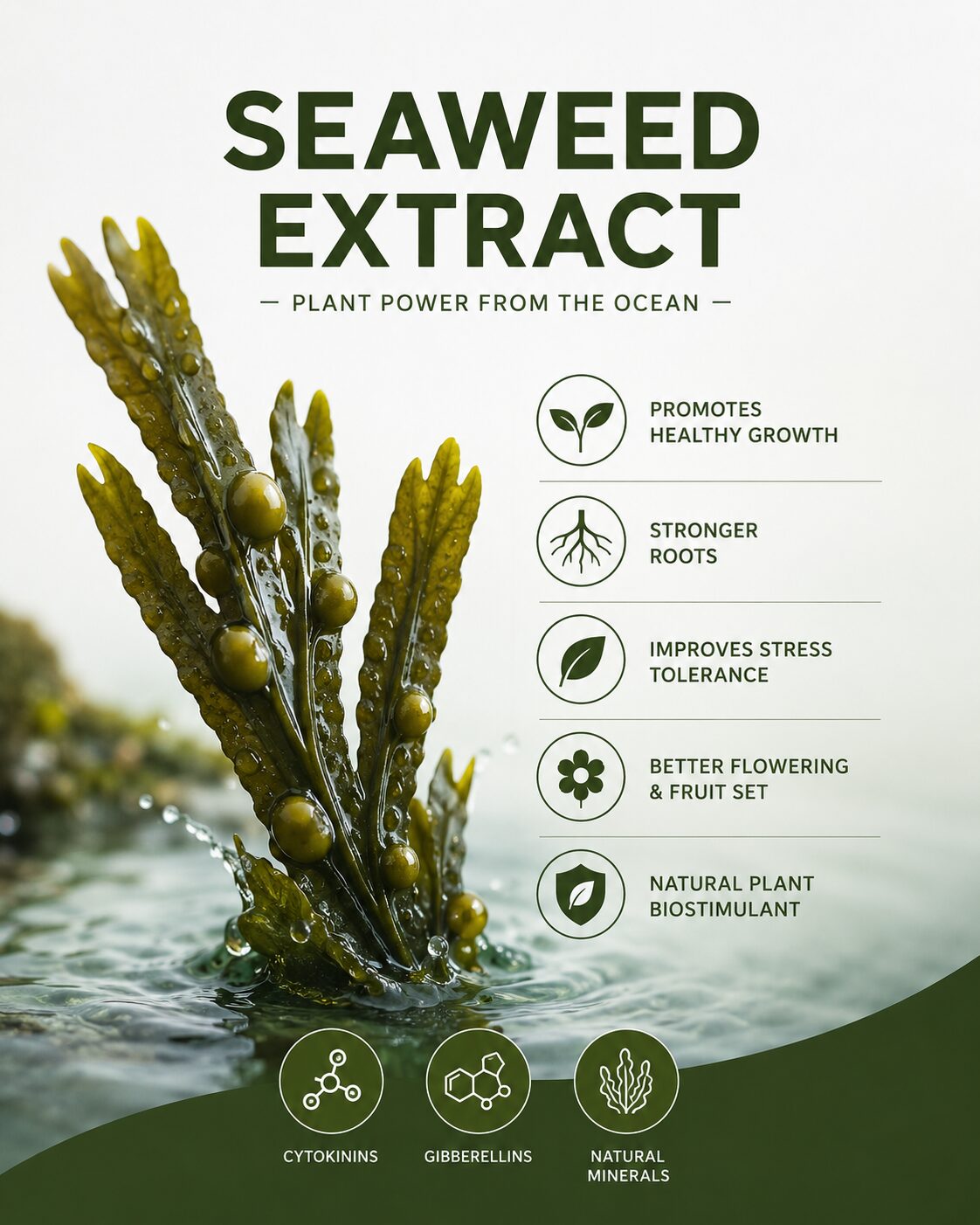
Does Seaweed Extract Actually Work? Why Ascophyllum Nodosum Is Different

Seaweed Extract for Plants: Does It Actually Work? Why Ascophyllum Nodosum Is Different
Seaweed extract has become one of the most widely used natural biostimulants in gardening, agriculture, hydroponics, and commercial crop production. But does seaweed extract actually work, or is it simply another gardening trend?
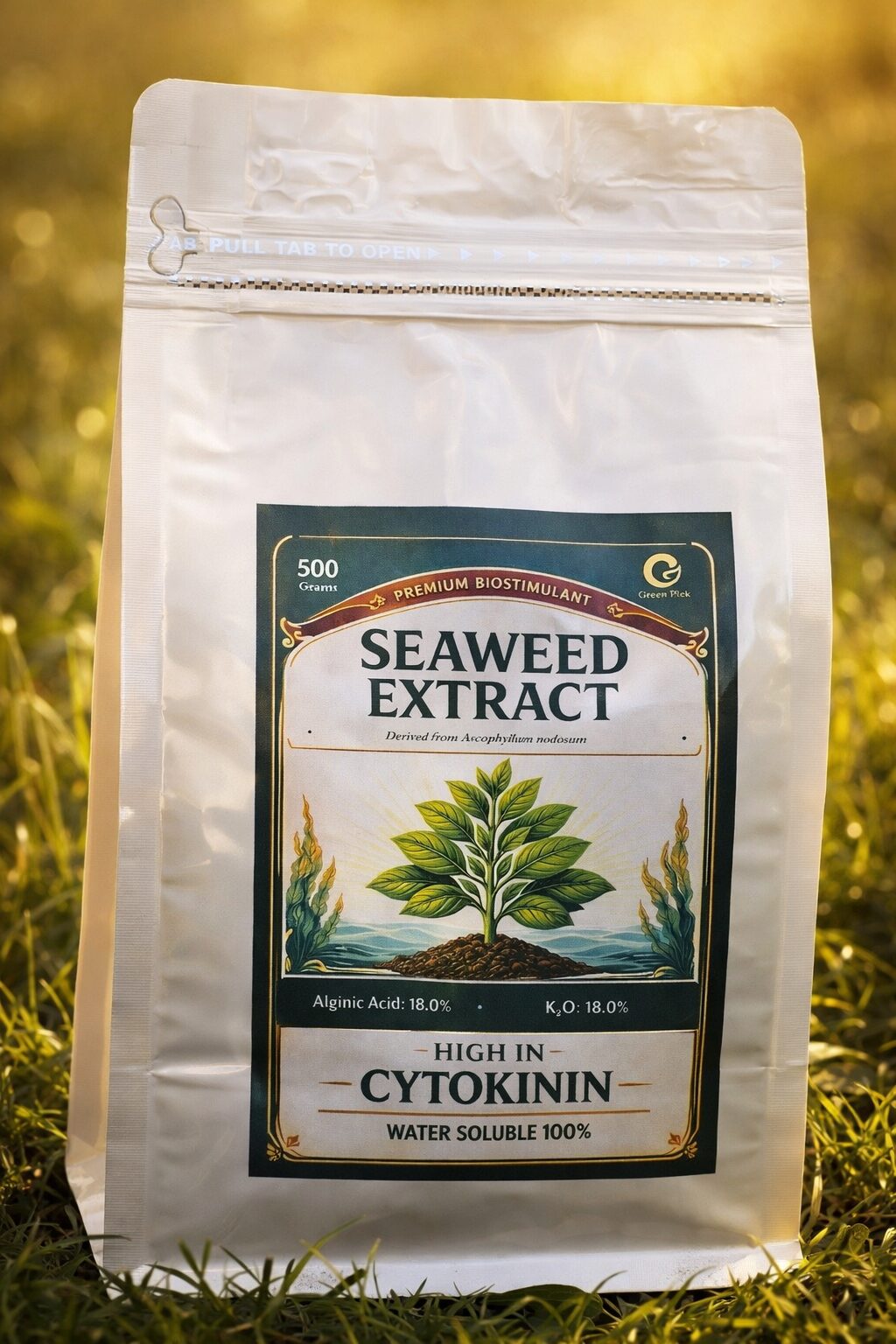
The answer lies in the unique biochemical compounds found within certain seaweed species, particularly Ascophyllum nodosum, a premium North Atlantic kelp that has been extensively studied for its ability to support plant growth, stress tolerance, root development, and nutrient efficiency.
Unlike traditional fertilisers, seaweed extract is not primarily used to supply nitrogen, phosphorus, or potassium. Instead, it acts as a plant biostimulant, helping plants perform better under both ideal and stressful growing conditions.
🌊 What Is Seaweed Extract?
Seaweed extract is a concentrated liquid or powder produced from marine algae. For centuries, coastal farmers used fresh seaweed to enrich soils and improve crop performance. Modern extraction methods allow growers to access the most beneficial compounds in a highly concentrated and convenient form.
Seaweed extracts contain a range of naturally occurring compounds including:
- Natural plant hormones
- Amino acids
- Trace minerals
- Vitamins
- Organic acids
- Alginates
- Bioactive polysaccharides
These compounds work together to support healthier plant growth and improved resilience.
⭐ Why Ascophyllum Nodosum Is Considered Premium
Not all seaweed species offer the same benefits. Among commercially available kelp species, Ascophyllum nodosum is widely regarded as the gold standard.
This brown seaweed grows naturally along the cold coastlines of:
- Canada
- Ireland
- Scotland
- Norway
- Iceland
Living in harsh marine environments with fluctuating tides, temperatures, and salinity levels forces the seaweed to develop a rich profile of protective compounds. These compounds are one reason why Ascophyllum nodosum extracts are highly valued in agriculture.
🧬 The Science Behind Seaweed Extract Benefits
🌱 Cytokinins
Cytokinins are naturally occurring plant hormones involved in:
- Cell division
- Shoot development
- Nutrient mobilisation
- Chlorophyll retention
- Delayed leaf ageing
Plants treated with cytokinin-rich seaweed extracts often maintain greener foliage and stronger vegetative growth.
🌸 Gibberellins
Gibberellins play important roles in:
- Seed germination
- Stem elongation
- Flower initiation
- Fruit development
The naturally occurring gibberellin-like compounds found in Ascophyllum nodosum may help support healthy plant development throughout the growing cycle.
💧 Alginates
Alginates are natural polysaccharides that help seaweed retain moisture in marine environments.
In agriculture, alginates may contribute to:
- Improved soil structure
- Better water retention
- Enhanced nutrient availability
- Support for beneficial soil microbes
📊 Comparison of Common Agricultural Seaweed Species
| Seaweed Species | Primary Region | Key Characteristics |
|---|---|---|
| Ascophyllum nodosum | North Atlantic | High in cytokinins, alginates and stress-response compounds |
| Ecklonia maxima | South Africa | Known for auxin-rich extracts supporting root growth |
| Laminaria spp. | Europe | Rich mineral and alginate content |
| Sargassum spp. | Tropical Regions | Variable composition depending on harvest source |
| Durvillaea spp. | Australia & New Zealand | Broad mineral profile and high biomass |
🔥 How Seaweed Extract Helps Plants Handle Stress
One of the biggest reasons growers use seaweed extract is its ability to support plants during periods of environmental stress.
Common stress factors include:
- Heat waves
- Drought conditions
- Transplant shock
- Salinity stress
- Nutrient imbalances
- Temperature fluctuations
Rather than acting as a fertiliser, seaweed extract helps plants maintain normal physiological functions during challenging conditions.
⚙️ Why Extraction Methods Matter
The quality of seaweed extract depends heavily on the extraction process used.
| Extraction Method | Benefits |
|---|---|
| Alkaline Extraction | Efficient and widely used commercial process |
| Cold Processing | Preserves more delicate bioactive compounds |
| Enzymatic Extraction | High-quality extraction with minimal compound degradation |
🌿 Why Modern Growers Use Seaweed Extract
- ✅ Supports root development
- ✅ Encourages vigorous growth
- ✅ Helps improve flowering and fruit set
- ✅ Supports nutrient-use efficiency
- ✅ Enhances stress tolerance
- ✅ Suitable for organic growing systems
- ✅ Works alongside conventional fertilisers
📌 The Bottom Line
So, does seaweed extract actually work?
Research and decades of grower experience suggest that high-quality seaweed extracts, particularly those derived from Ascophyllum nodosum, can provide meaningful benefits for plant growth and resilience.
Its naturally occurring cytokinins, gibberellin-like compounds, alginates, trace minerals, and other bioactive substances make it one of the most respected plant biostimulants available today.
Whether used in home gardens, commercial horticulture, hydroponics, or broadacre agriculture, Ascophyllum nodosum seaweed extract remains one of nature’s most effective tools for supporting healthier, stronger, and more productive plants.