

If you’re trying to save money on fertiliser, this has been a hard year to do it. When the Strait of Hormuz closed in early March, it choked off supply from the Persian Gulf, which typically provides about 40% of Australia’s urea. Within weeks, urea had climbed from a little over $800 a tonne to about $1,450 at its April peak.
Prices have eased since, but not all the way. In mid-October, global urea prices were still about 19% higher than a year earlier, and researchers at IFPRI have warned that fertiliser markets are unlikely to return to normal before the end of the year.
You can’t do much about the price of a bag. You can do a lot about how much of it reaches your plants. A widely cited study estimated that only about a third of the nitrogen applied to the world’s cereal crops was recovered in the harvested grain. The rest was lost along the way.
Home gardens can beat that comfortably. You’re feeding a few square metres, not thousands of hectares, so you can feed with far more precision than any farmer.
We sell fertiliser, so this might sound odd coming from us: most gardens could get the same results from less of it. Here’s where fertiliser goes missing, and how to keep more of every gram working.
Why fertiliser costs more this year
Nitrogen fertilisers like urea are made using natural gas, and the Middle East supplies about a third of the world’s urea exports. When fighting closed the Strait of Hormuz, much of that supply was suddenly stuck.
Farmers felt it first. In a March snap survey of 150 vegetable growers by AUSVEG, more than half reported fertiliser shortages, and 27% had cut back or stopped planting.
Garden fertilisers are made from the same raw materials, so home gardeners aren’t immune, even if the price of your usual bag hasn’t moved yet. Prices change quickly, so treat every figure here as a snapshot.
Where your fertiliser actually goes
Fertiliser only earns its money once it’s inside a plant. On the way there, it can leak out in four main ways.
Where does your fertiliser go?
Tap each route to see where fertiliser escapes, and how to stop it.
Into the plant
The only route that earns its keep. Roots take up dissolved nutrients from moist soil, and the plant puts them to work.
Tap the other routes to find your leaks.
Into the air
Urea left on the soil surface can turn into ammonia gas and drift away, especially when damp soil dries out in warm, windy weather.
Plug the leak: water it in with a good soak straight after spreading, or rake it lightly into the soil.
Past the roots
Nitrate dissolves easily and moves with water. Heavy rain or overwatering can carry it below the root zone, especially in sandy soil.
Plug the leak: feed smaller amounts more often, and water enough to wet the root zone, not drain it.
Washed away
Fertiliser on hard, dry or sloping ground can wash off in a downpour before it soaks in, and granules left on paths end up in the stormwater.
Plug the leak: moisten dry soil before feeding, skip feeding before storms, and sweep spills off paving.
Locked up
At the wrong soil pH, nutrients bind to the soil in forms roots can’t use, so a plant can go hungry in well-fed soil.
Plug the leak: test your soil pH and correct it gradually before adding more fertiliser.
Feed little and often
A plant can only take up so much at once. Give it a season’s worth in one hit, and most of it sits in the soil waiting, exposed to heavy rain, overwatering and gas loss, until the plant is big enough to use it.
Smaller, more frequent feeds solve that. Fertiliser maker Incitec Pivot notes that a little-and-often approach allows nutrient supply to be more closely matched to what the plant takes up.
One big feed vs little and often
Switch between the two approaches to see how closely the fertiliser in the soil matches what a growing plant can use. Hover or tap the chart for details.
One big feed floods the soil early, when the plant is small and can use little of it. That surplus sits exposed to rain, watering and gas loss. By the time the plant is growing fastest, supply has run short.
A simplified illustration of the principle, not measured data. Real results depend on the plant, the soil and the weather.
This is where water-soluble fertilisers earn their keep. Our NPK 20-20-20 dissolves completely, so you can mix a small, measured dose into a watering can every week or two while plants are actively growing. Our free Smart Fertigation Planner works out the dose for your plants and soil, and our NPK 20-20-20 guide covers the rates.
Little and often doesn’t mean more in total. The aim is the same amount or less, with more of it ending up in the plant.
Make every gram of urea count
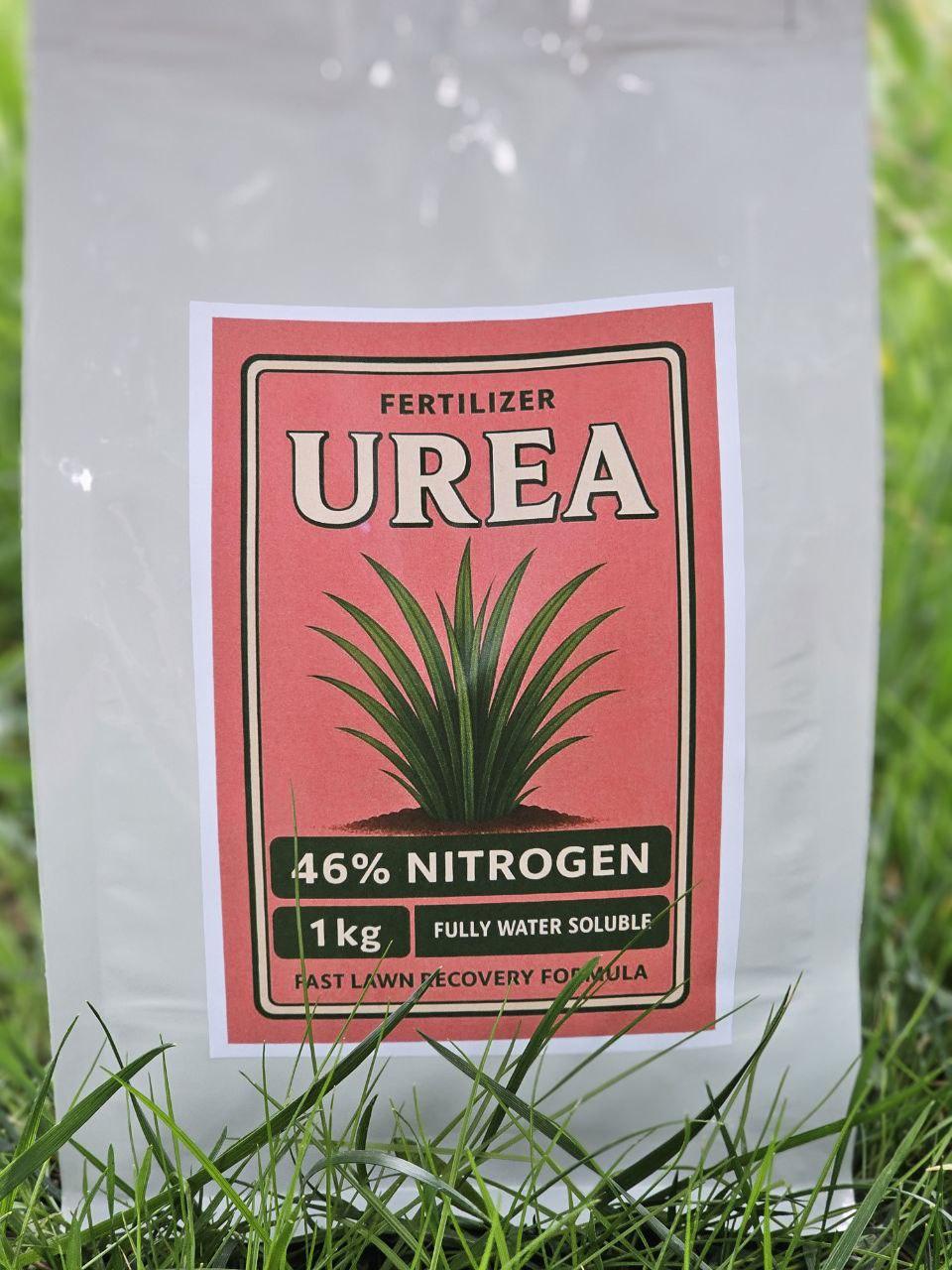
Urea packs more nitrogen into every gram than any other common solid fertiliser: 46%. That also makes it the most expensive one to waste.
Left on the surface, urea can turn into ammonia gas and drift away. In Australian field measurements, broadcast urea that wasn’t worked into the soil lost an average of about 8 to 12% of its nitrogen this way, and up to 29% in poor conditions. The worst case is urea spread on damp soil that then dries out in warm, windy weather.
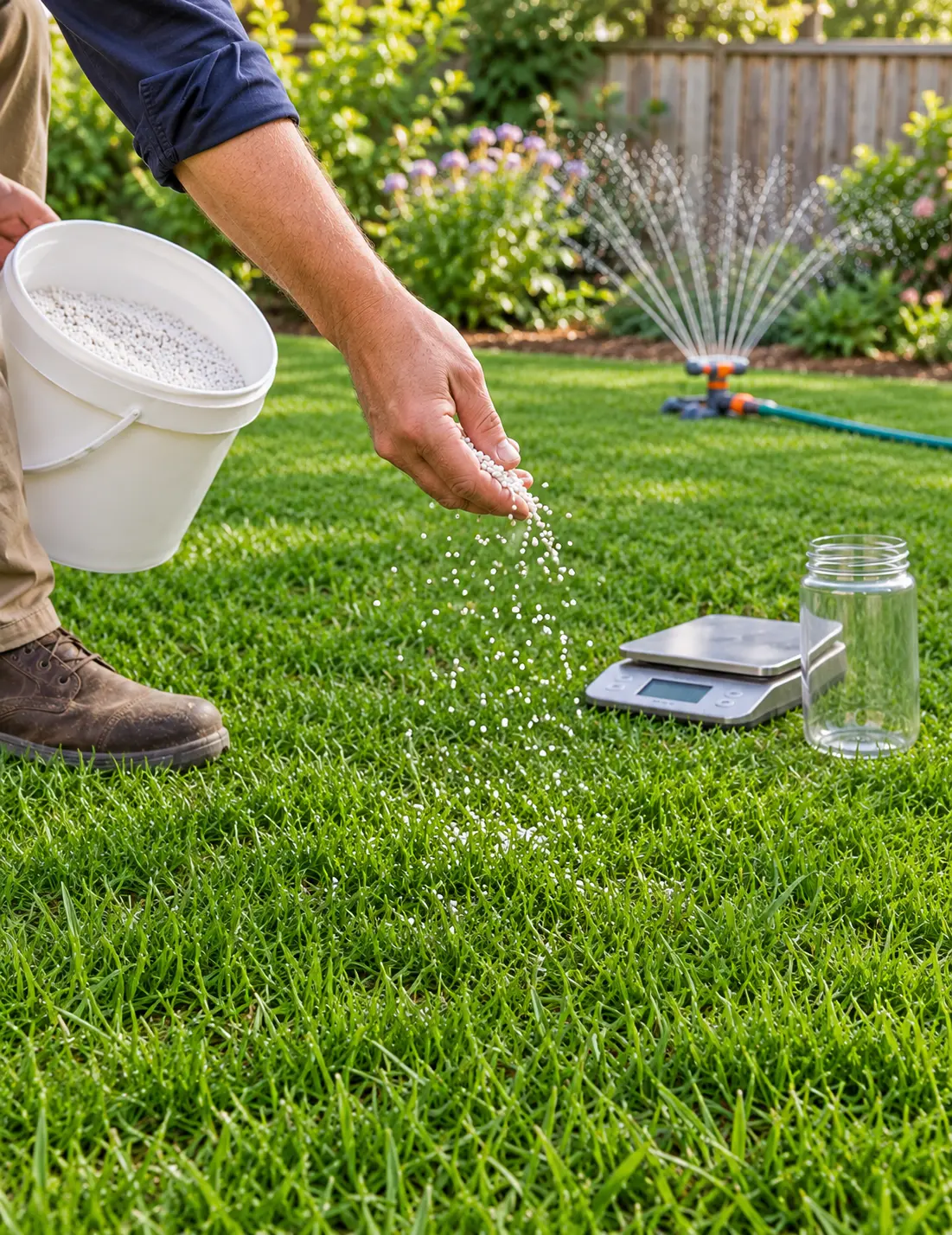
The fix costs nothing. Water it in straight after spreading, and make it a proper soak. Montana State University researchers found it took about 12 mm of water in one go to move urea safely into the soil, and that light, patchy rain could make losses worse. Or rake it lightly into the soil: Incitec Pivot notes that about 3 cm of cover suppresses the loss.
Take extra care on alkaline soil, where losses tend to run higher, and keep urea away from seeds and seedlings, where too much in one spot can burn. If you use our Urea, our urea guide has rates for lawns, veggies and fruit trees.
Measure, don’t guess
A handful is not a unit. Hands vary, scoops vary, and a bit extra for luck is pure waste. Weigh doses on kitchen scales, or weigh one spoonful once and write it on the lid, then stick to the label rate.
More fertiliser doesn’t buy better plants, either. Soil scientists at the University of Connecticut list it among the myths that cost home gardeners money, warning that extra nutrients don’t automatically mean extra health, and that surplus fertiliser can damage roots and leaves.
Feed only what’s missing
Plants grow only as well as their scarcest nutrient allows. Soil scientists call it the law of the minimum: growth tracks whichever nutrient is in shortest supply. If a plant is short of iron, extra nitrogen won’t green it up, and every gram you add is wasted.
So diagnose before you feed. Leaf symptoms are a good start, and our Leaf Scan AI can help you read them from a photo. A soil test every few years tells you what your soil actually holds, and the UConn team suggests treating the results “as a ceiling, not a suggestion to exceed”.
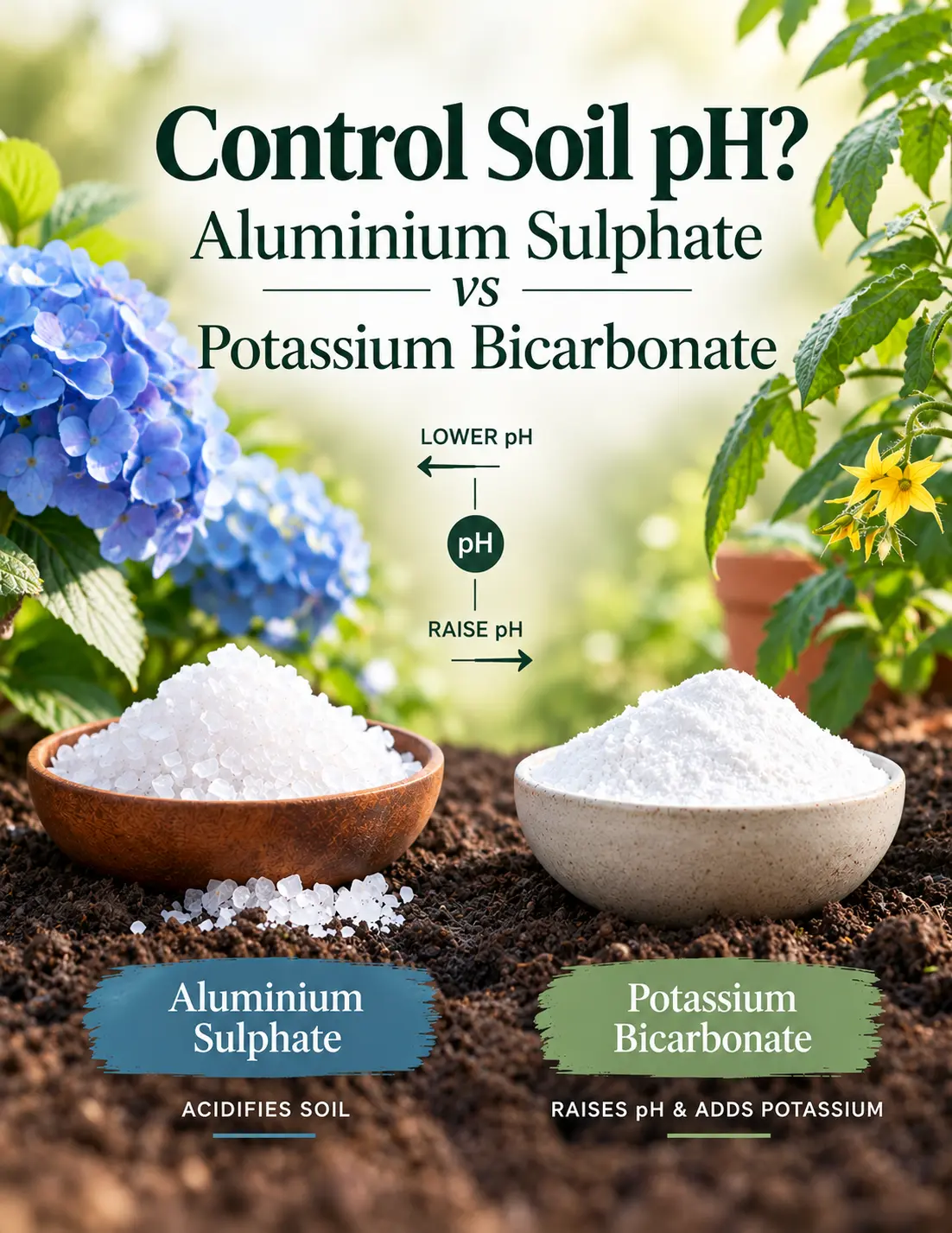
Check your pH while you’re at it. At the wrong pH, nutrients get locked up in forms roots can’t use. Phosphorus, for example, is most available in slightly acidic to neutral soil; in more acidic soil it’s tied up by aluminium and iron, and in alkaline soil by calcium. Our soil pH guide explains how to adjust it.
Keep nutrients where the roots are
Organic matter works like a nutrient sponge. It holds on to nutrients such as potassium, calcium and magnesium, and sandy soils rely heavily on it to stop them washing away. It builds slowly, over years, so start now with compost, mulch and plenty of living roots. Our piece on organic vs synthetic fertiliser explains why the two work best together.
Spread fertiliser evenly over the area where the roots are, not in a heap against the stem. And feed when plants can use it: in mild weather, on moist soil, while they’re actively growing. Feeding just before a heatwave or a downpour is money down the drain, as we explained in our El Niño garden guide.
| Habit | Why it costs you | Do this instead |
|---|---|---|
| Spreading urea and walking away | Some of it escapes as ammonia gas | Water it in with a good soak, or rake it lightly into the soil |
| One big feed a season | The plant can’t use it all at once, so the surplus is exposed to loss | Feed smaller amounts every week or two while plants are growing |
| Feeding just before heavy rain | Nitrate washes below the roots, especially in sandy soil | Check the forecast, and feed once the rain has passed |
| Guessing the dose | Over-feeding wastes money and can burn roots | Weigh it, and stick to the label rate |
| Adding nutrients the plant isn’t short of | Growth is held back by whatever is scarcest | Diagnose first, from the leaves or a soil test |
| Ignoring soil pH | Nutrients get locked up in forms roots can’t use | Test your pH and correct it gradually |
| Feeding stressed or dormant plants | Roots in cold, dry or baking soil take up little | Feed in mild weather, on moist soil, during active growth |
The cheapest fertiliser is the one your plant uses
Fertiliser prices may keep bouncing around for a while yet, and none of us can control that. What you can control is how much of each bag ends up in your plants instead of the air, the drain or the subsoil.
Water it in, feed little and often, measure every dose, and feed only what’s missing. Your plants won’t notice the difference. Your wallet will.
Not sure what your plants are short of? Try our Leaf Scan AI, use Find My Fertiliser to match a product to your plant, or work out exact doses with the Smart Fertigation Planner.
Sources and further reading
- Grain Central (25 March 2026). Fertilizer body seeks govt help to ease shortage.
- Grain Central (30 June 2026). Urea price dive hits suppliers beyond the chosen three.
- Trading Economics. Urea prices (accessed October 2026).
- IFPRI (2 July 2026). Iran war: From fertilizer to food crisis?
- The Land (26 March 2026). AUSVEG snap survey on fertiliser shortages and planting.
- Raun WR, Johnson GV (1999). Improving nitrogen use efficiency for cereal production. Agronomy Journal.
- Incitec Pivot Fertilisers. Urea fact sheet.
- Schwenke G (2021). Nitrogen loss pathways: how much N is lost when urea is not incorporated? GRDC Update Paper.
- Montana State University. Urea volatilization research: what we learned.
- Manitoba Agriculture. Volatilization of surface applied urea.
- University of Connecticut Home Garden Education. Five soil myths that cost home gardeners money.
- University of Wisconsin. The law of the minimum.
- Incitec Pivot Fertilisers. Understanding soil acidity and nutrient availability.
- Soil Quality Pty Ltd. Cations and cation exchange capacity.