How to Use MKP and Seaweed Together: Rates for Pots, Beds and Fruit Trees

MKP and seaweed make a flowering and fruiting pair. MKP (0-52-34) supplies phosphorus and potassium, and Ascophyllum kelp extract is a biostimulant that helps plants root, flower, set fruit and cope with heat. To use MKP and seaweed together on pot plants, dissolve 5 g of MKP and 3 g of kelp extract in a litre of water, and apply it every 2 weeks from when flower buds form.
MKP 0-52-34Kelp BiostimulantPhosphorus + PotassiumZero NitrogenOne Can, Two Products
Our MKP + Kelp Dual Pack puts 500 g of MKP and 500 g of Kelp Seaweed Extract in one order. They’re made to share a watering can or sprayer, and this guide gives the combined rates for pots, seedlings, beds, fruit trees, citrus and drip lines.
The short version: start when the flower buds form, mix both in the same can, apply in the cool of the day, and stop the MKP once the fruit is colouring.
Shop the Dual Pack See the Rates ↓
Why MKP and Seaweed Work Together
They do different jobs, which is why they pair so well.
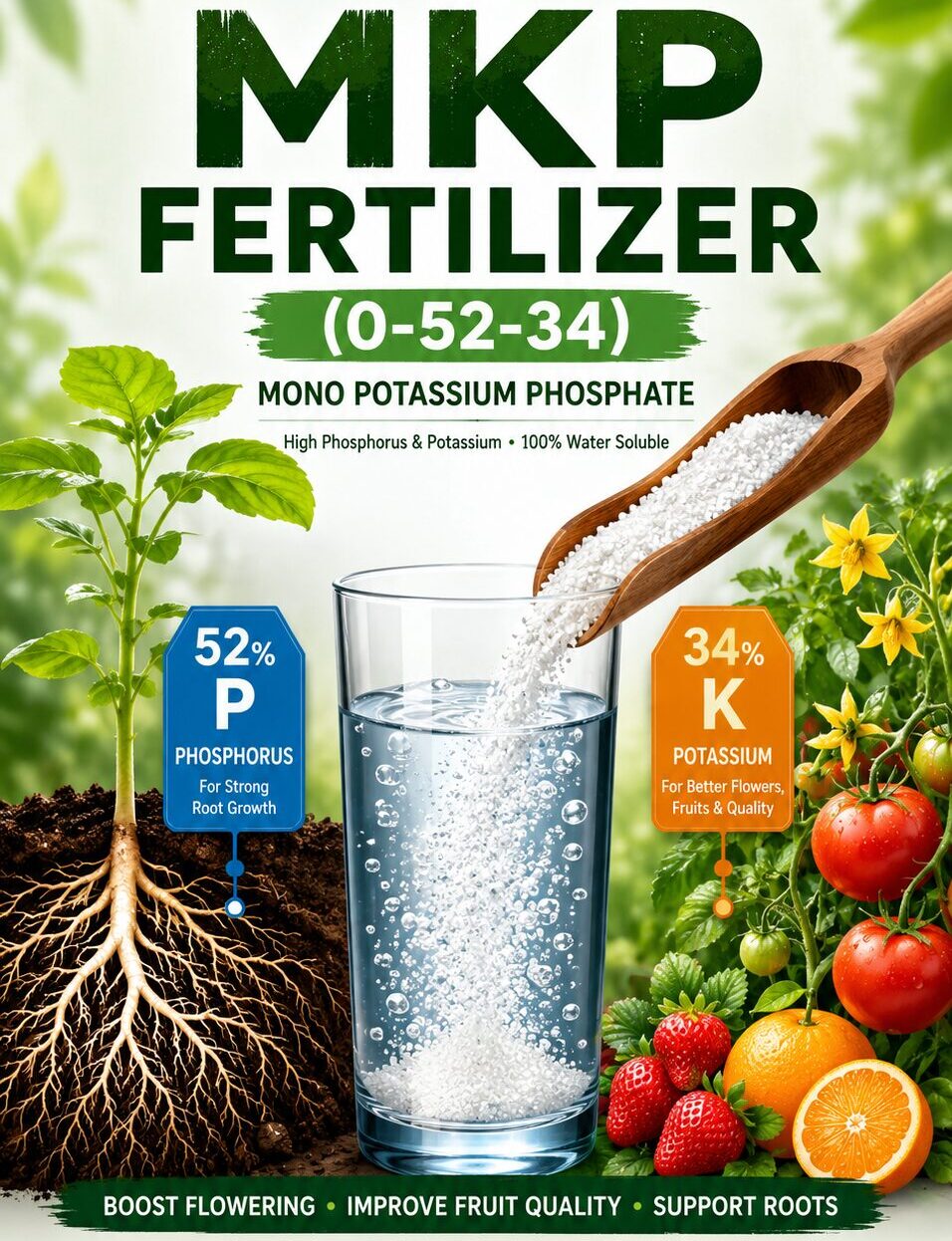
- MKP feeds. Mono potassium phosphate is 52% phosphate (P₂O₅) and 34% potash (K₂O), with no nitrogen. Phosphorus drives roots and flowering, and potassium goes into fruit fill and quality. It dissolves completely, and it’s gentle on roots, with a salt index of about 8 against about 120 for muriate of potash, as our MKP guide explains.
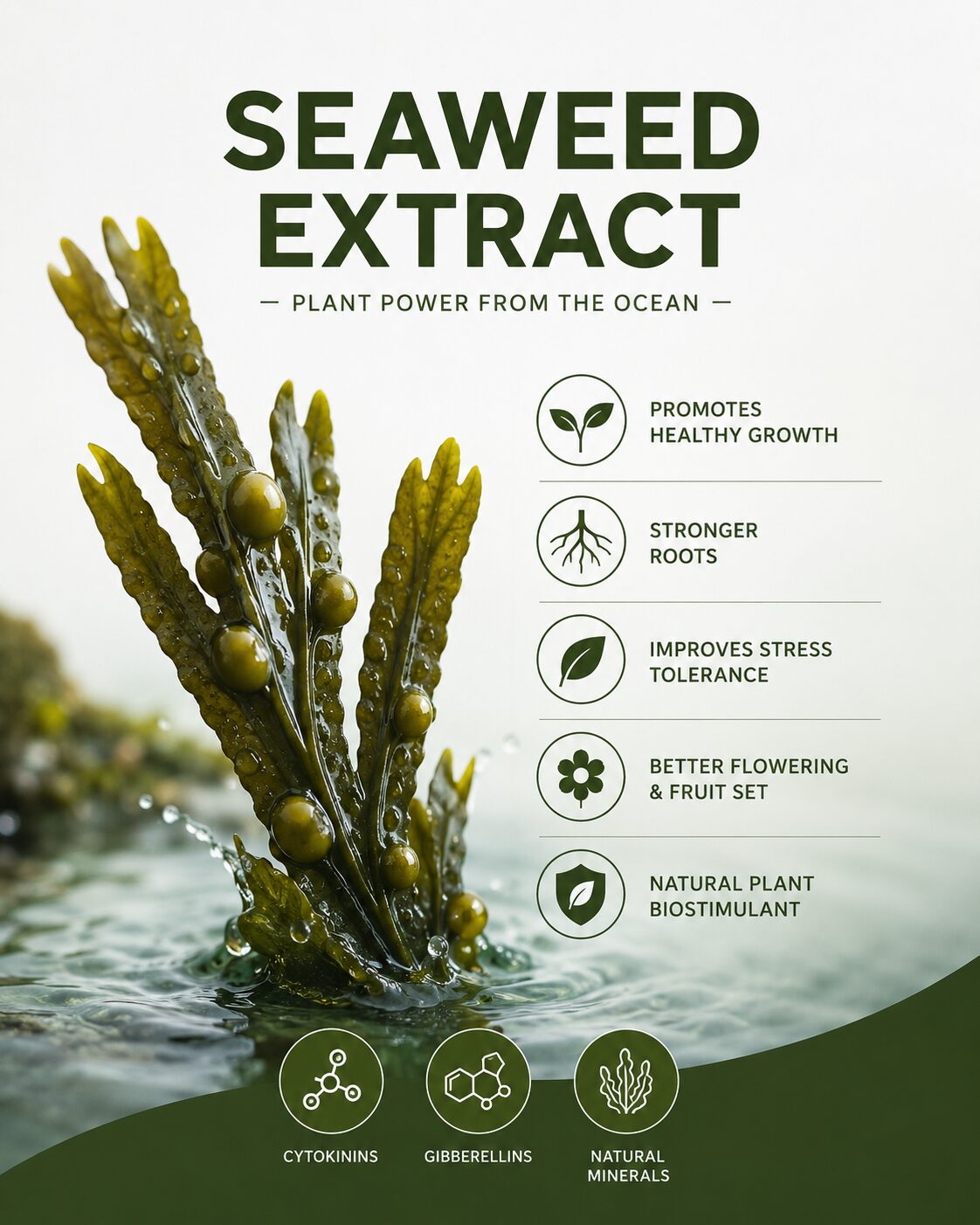
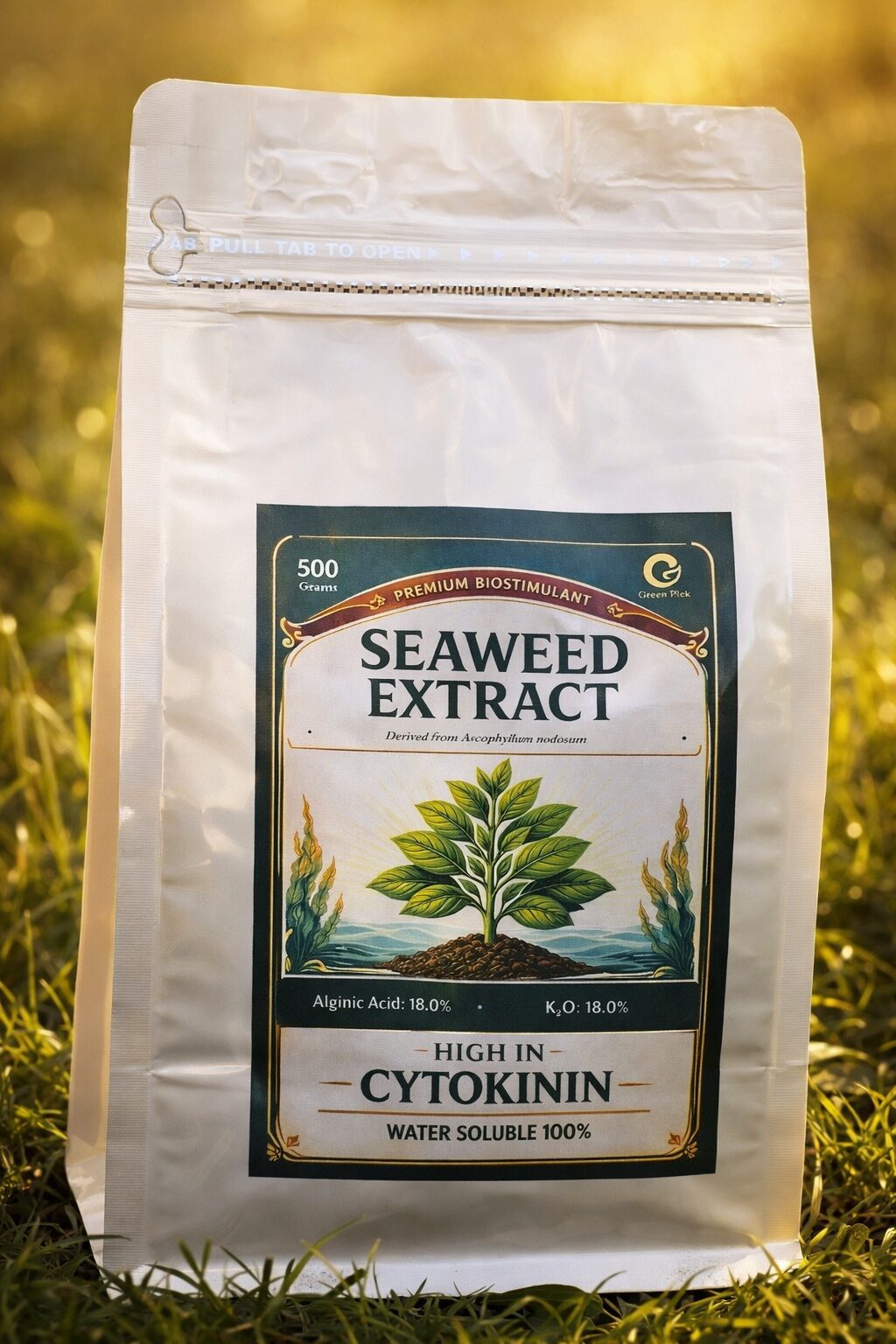
- Kelp backs the plant up. Our extract is made from Ascophyllum nodosum, with at least 18% alginic acid, 18% potassium (K₂O) and 1.5% amino acids. It works mainly as a biostimulant: seaweed extracts can increase root size and density, and plants treated with Ascophyllum extracts have handled drought, salty soil, heat and frost better in trials.
Flowering and fruit set is where the two overlap. Seaweed extracts have brought on earlier flowering and better fruit set in a range of crops. In one tomato trial, an Ascophyllum extract sprayed around two weeks of heat stress lifted fruit numbers by 86% compared with unsprayed plants, although a differently processed extract in the same trial made no real difference. Results vary between products and gardens, so take that as what’s possible, not a promise.
What the pair doesn’t have is nitrogen. That makes it a flowering and fruiting feed, not the one for leafy spring growth.
When to Use the Dual Pack
- Tomatoes, capsicums, chillies, eggplants and cucurbits from the first flower buds through to harvest.
- Strawberries, at half-strength MKP, since they’re sensitive to salts.
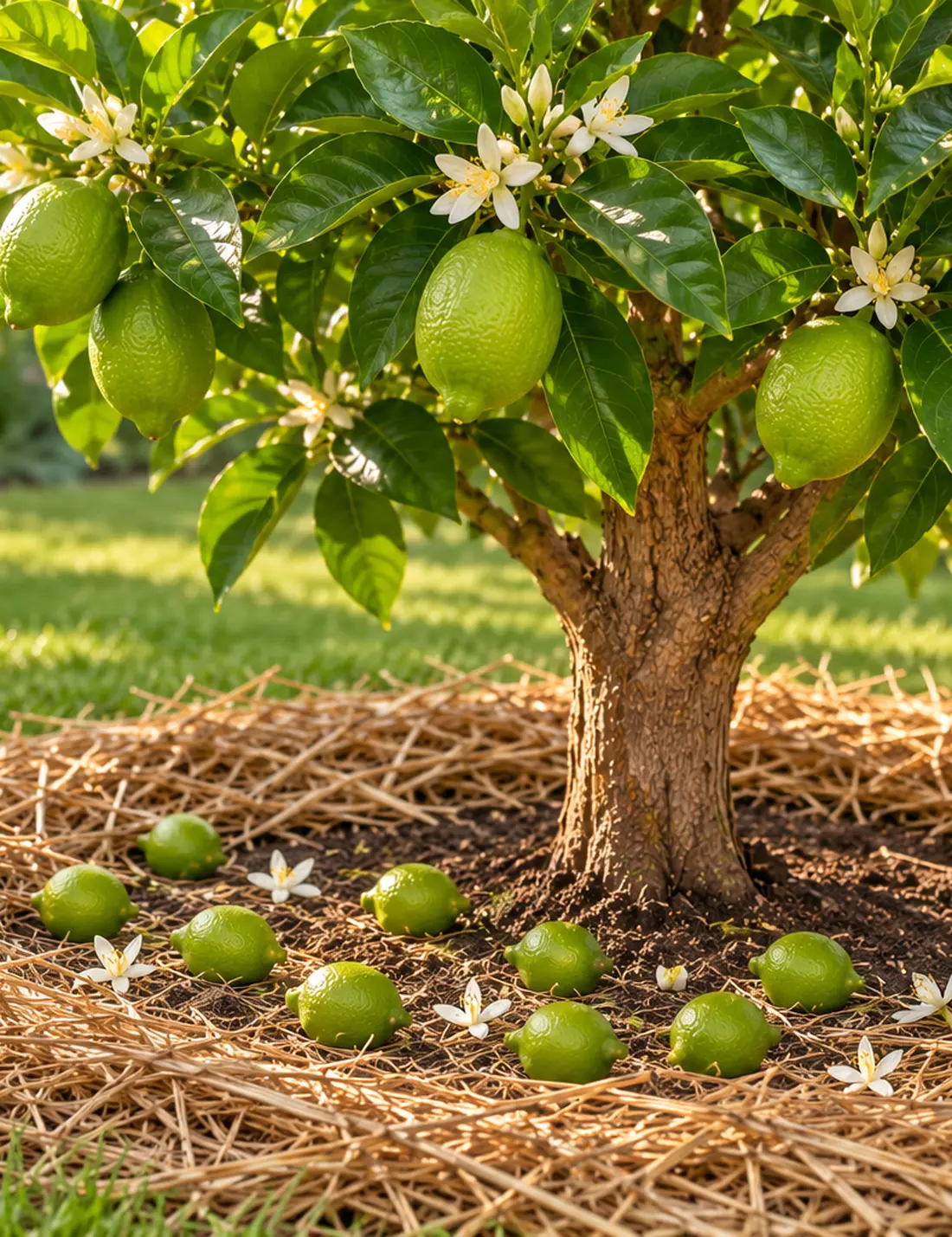
- Fruit trees and citrus, as leaf sprays from fruit set to colouring.
- Flowers and roses from when the buds form until flowering finishes.
- Pots and indoor flowering plants, every 2 weeks while they’re in bud and flower.
- Before a heatwave, with a kelp spray 3 to 5 days before the heat arrives.
Early in the season, while plants are making leaves, use the kelp on its own alongside your nitrogen feed. Bring the MKP in when the buds show.
How Much MKP and Kelp to Use
⚠️ Note: More fertiliser is not always better. Weigh both, because spoon sizes vary, and never double up.
| Use | MKP | Kelp extract | Water | How to apply | How often |
|---|---|---|---|---|---|
| Pots & indoor plants | 5 g | 3 g | 1 L | Water it onto moist potting mix, or spray the leaves | Every 2 weeks |
| Seedlings, transplants, strawberries & avocados | 2.5 g | 3 g | 1 L | Water it in at planting, enough to soak the root ball | Every 2 weeks |
| Small beds, 1 to 2 m² | 5 to 10 g | 3 to 5 g | 2.25 to 4.5 L | Water it evenly over moist soil | Every 2 to 3 weeks |
| Medium beds, 4 m² (one 9 L can) | 20 g | 5 g | 9 L | Water it evenly over moist soil | Every 2 to 3 weeks |
| Large beds, 20 m² | 100 g | 20 g | 45 L | Five 9 L cans, watered evenly over moist soil | Every 2 to 3 weeks |
| Fruit trees & shrubs, up to 2 m across | 50 g | 12 g | 5 L | Spray the leaves until they just drip, in the cool of the day | 2 to 4 sprays, 2 to 3 weeks apart, from fruit set to colouring |
| Fruit trees 3 to 4 m across | 100 g | 24 g | 10 L | Spray the leaves until they just drip, in the cool of the day | 2 to 4 sprays, 2 to 3 weeks apart, from fruit set to colouring |
| Fruit trees 5 m across or more | 150 g | 36 g | 15 L | Spray the leaves until they just drip, in the cool of the day | 2 to 4 sprays, 2 to 3 weeks apart, from fruit set to colouring |
| Citrus, bananas & olives | 20 g per litre | 2.4 g per litre | 5 to 15 L | As for fruit trees, with 5, 10 or 15 L by tree size. This is the top MKP rate, so try it on one branch first | 2 to 4 sprays, 2 to 3 weeks apart, from fruit set to colouring |
| Orchards, per 100 L spray tank | 1 to 2 kg | 240 g | 100 L | Spray the canopy until it just drips. Use 1 kg for most fruit, and up to 2 kg for citrus, bananas and olives | 2 to 4 sprays, 2 to 3 weeks apart, from fruit set to colouring |
| Drip & fertigation | 2 g per m² | 1 g per m² | 1 L per 100 g of MKP | Per m² the drippers water. Dissolve, inject, then flush the lines with clean water | Weekly from flowering to fruit fill. Keep the season’s MKP under 30 g per m² |
Somewhere in between? The calculator works it out, and tells you how many doses one dual pack gives.
How much MKP and kelp do you need?
Pick what you’re feeding, then slide to its size. Both go in the same can.
1 L of mix: 5 g of MKP and 3 g of kelp extract. Water it onto moist potting mix, or spray the leaves until they just drip.
Halve the MKP for strawberries and avocados, and during heatwaves. Flush pots with plain water once a month.
One dual pack covers this 100 times, and the MKP runs out first.
The calculator uses the top rates from our MKP guide and kelp guide. Weigh a level teaspoon of each once on kitchen scales, and you’ll know how many spoons make a dose. Canopy width is the spread of the branches. For full feed programs on drip, use the Smart Fertigation Planner.
| Use | One dual pack covers | Left over |
|---|---|---|
| Pots (5 g MKP + 3 g kelp per litre) | 100 litres of mix | About 200 g of kelp |
| Seedlings (2.5 g MKP + 3 g kelp per litre) | About 166 litres of mix | About 85 g of MKP |
| Beds, one 9 L can over 4 m² (20 g + 5 g) | 25 cans, or 100 m² once | About 375 g of kelp |
| Fruit tree 2 m across (50 g + 12 g) | 10 sprays | About 380 g of kelp |
| Fruit tree 3 to 4 m across (100 g + 24 g) | 5 sprays | About 380 g of kelp |
| Citrus 3 to 4 m across (200 g + 24 g) | 2 sprays | 100 g of MKP and about 450 g of kelp |
| Drip, 20 m² (40 g + 20 g a week) | 12 weeks | 20 g of MKP and 260 g of kelp |
The MKP runs out first at almost every rate, so you’ll usually have kelp to spare. Use it on its own for spring growth, before flowering, before a heatwave or on the lawn, at the rates in our kelp guide. For an orchard, buy MKP and kelp separately in the quantities you need.
How to Mix and Apply It, Step by Step
- Weigh both doses. Use kitchen scales, or spoons you’ve weighed once.
- Half-fill the can with water and stir in the MKP. It dissolves in a minute or two.
- Make a kelp paste. Stir the kelp extract into a splash of water until it’s smooth, then add it to the can. It mixes in more easily that way.
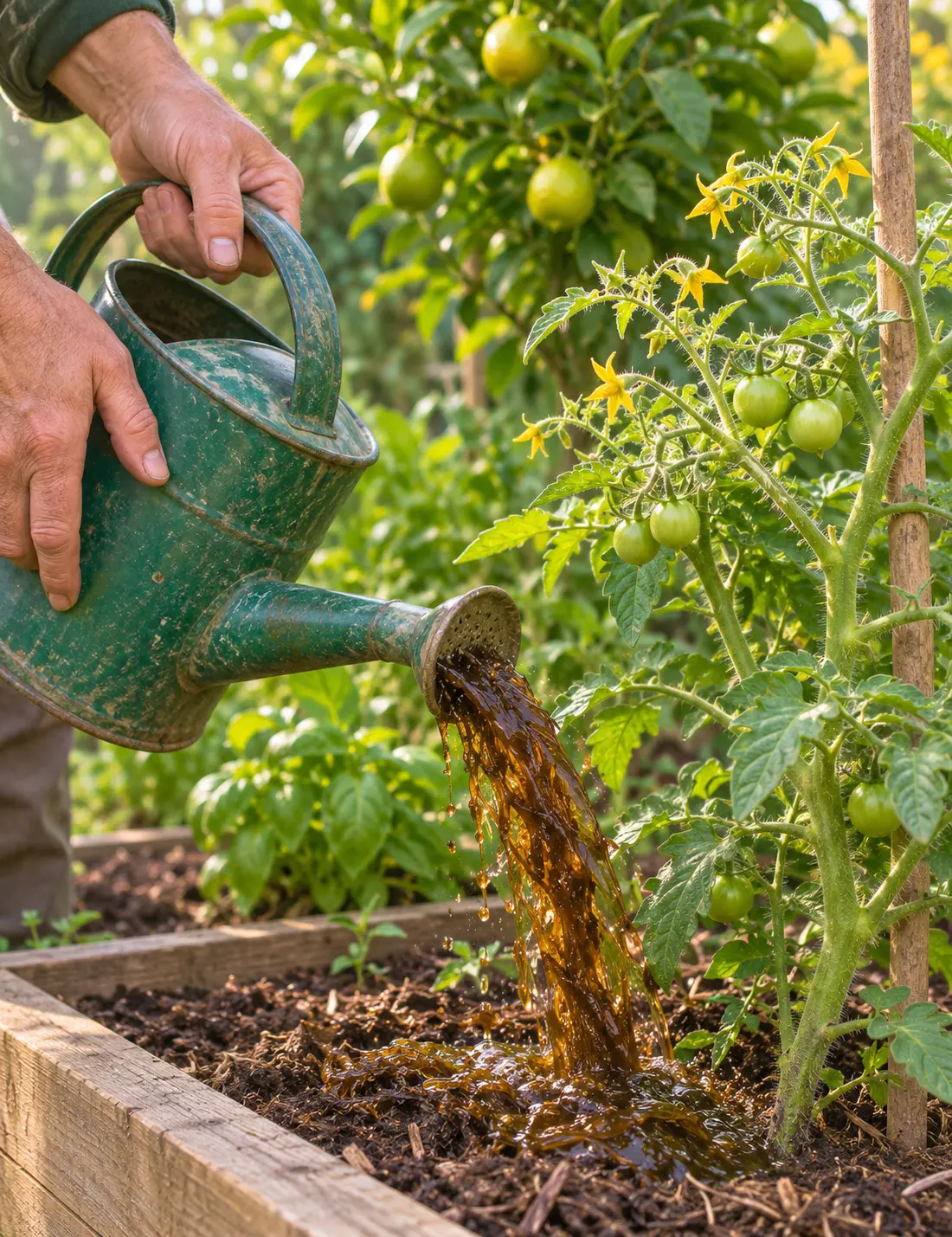
- Top up and stir until no specks are left. The mix turns brown, which is normal.
- Pick a cool part of the day. Early morning or late afternoon, ideally below 29 °C. Don’t feed wilting or heat-stressed plants, and skip leaf sprays just before or after rain or sprinklers.
- Water the soil, or spray the leaves. For a drench, water dry soil first, then pour the mix over the root zone. For a leaf spray, wet both sides of the leaves and stop when they start to drip. Around trees, spray the canopy rather than pouring this strength at the trunk.
- Use it the same day. Mix only what you need, and don’t keep leftovers in the sprayer.
- Rinse your gear, and flush pots with plain water once a month so salts don’t build up.
Drip Lines and Fertigation
On drip, allow 2 g of MKP and 1 g of kelp extract for every square metre the drippers water, once a week from flowering to fruit fill. That’s 20 kg of MKP per hectare a week, the top of the range in our MKP guide. Keep the season’s MKP under 30 g per square metre, which is 300 kg per hectare, the top seasonal total for fruiting crops and mature citrus.
Dissolve both fully in a bucket first, at least 1 litre of water for every 100 g of MKP, then inject it and flush the lines with clean water. For a full program with nitrogen and calcium on the other days, our Smart Fertigation Planner works out the schedule for your crop.
What Else Can Go in the Can?
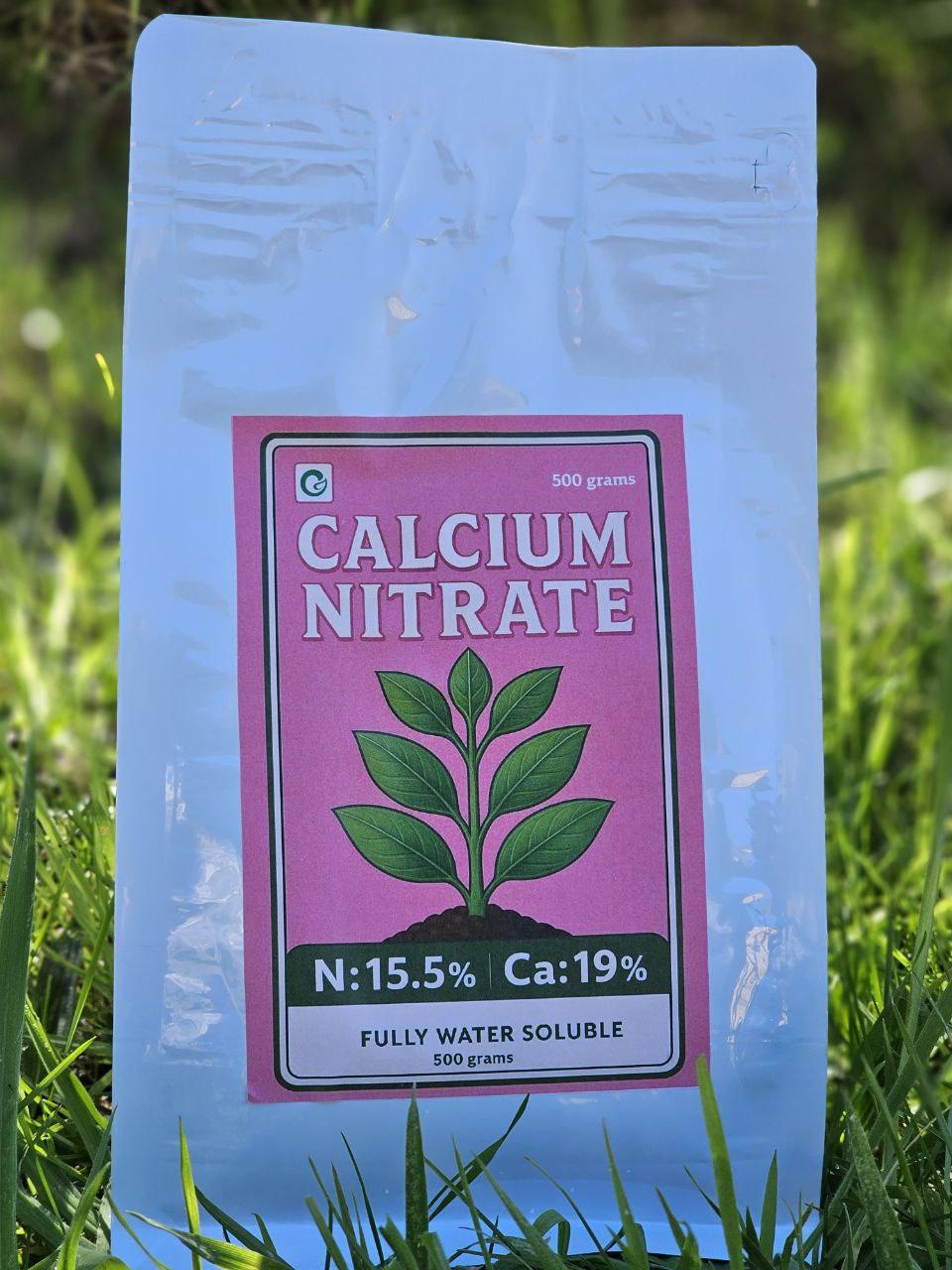
- Calcium nitrate and other calcium fertilisers. Not in the same can or tank. Calcium and phosphate form calcium phosphate, a chalky sediment that blocks drippers and nozzles. Feed calcium on a different day, as our calcium nitrate guide explains.
- A nitrogen feed. Early in the season, use kelp with NPK 20-20-20 instead of MKP. Jar test any new pairing first.
- Anything new. Do a jar test. Mix everything at its normal rate in a clear jar of water, let it stand for half an hour, and look for clumps, cloudiness or sediment. If you see any, apply them separately.
A Year With MKP and Kelp
| When | What to do | Notes |
|---|---|---|
| Early spring | Kelp on its own every 2 weeks as new growth comes through, alongside your nitrogen feed | MKP has no nitrogen, so it isn’t the feed for leafy growth |
| Buds forming | Start the combined mix on pots, beds and vegetables. Fruit trees get kelp alone, just before flowering | The key stage for flowering crops |
| Fruit set to colouring | Combined doses every 2 to 3 weeks on pots and beds; 2 to 4 combined sprays on fruit trees | Weekly on drip, within the season’s limit |
| Summer heat | Halve the MKP in heatwaves, and give a kelp spray 3 to 5 days before the heat arrives | Spray early in the morning or late in the afternoon only |
| Harvest and autumn | Stop the MKP once fruit is colouring or picked. Kelp alone while plants are still growing | Ease off as growth slows |
| Winter | Rest dormant plants | Cool-season crops still flowering can stay on the pot or bed rate |
When to Hold Off
- Phosphorus-sensitive natives. The Australian Native Plants Society reports a CSIRO trial in which some natives, including certain Banksia, Hakea and Grevillea species, were among the most sensitive to phosphorus. Keep the MKP away from them. The kelp on its own is fine.
- Alkaline soil. Above about pH 7, phosphorus reacts with calcium in the soil, so leaf sprays get more of the MKP into the plant.
- Heatwaves and dry soil. Water first, feed in the cool of the day, and halve the MKP while the heat lasts.
- Leafy early growth. Plants making leaves need nitrogen, which the pair doesn’t have.
What It Won’t Do
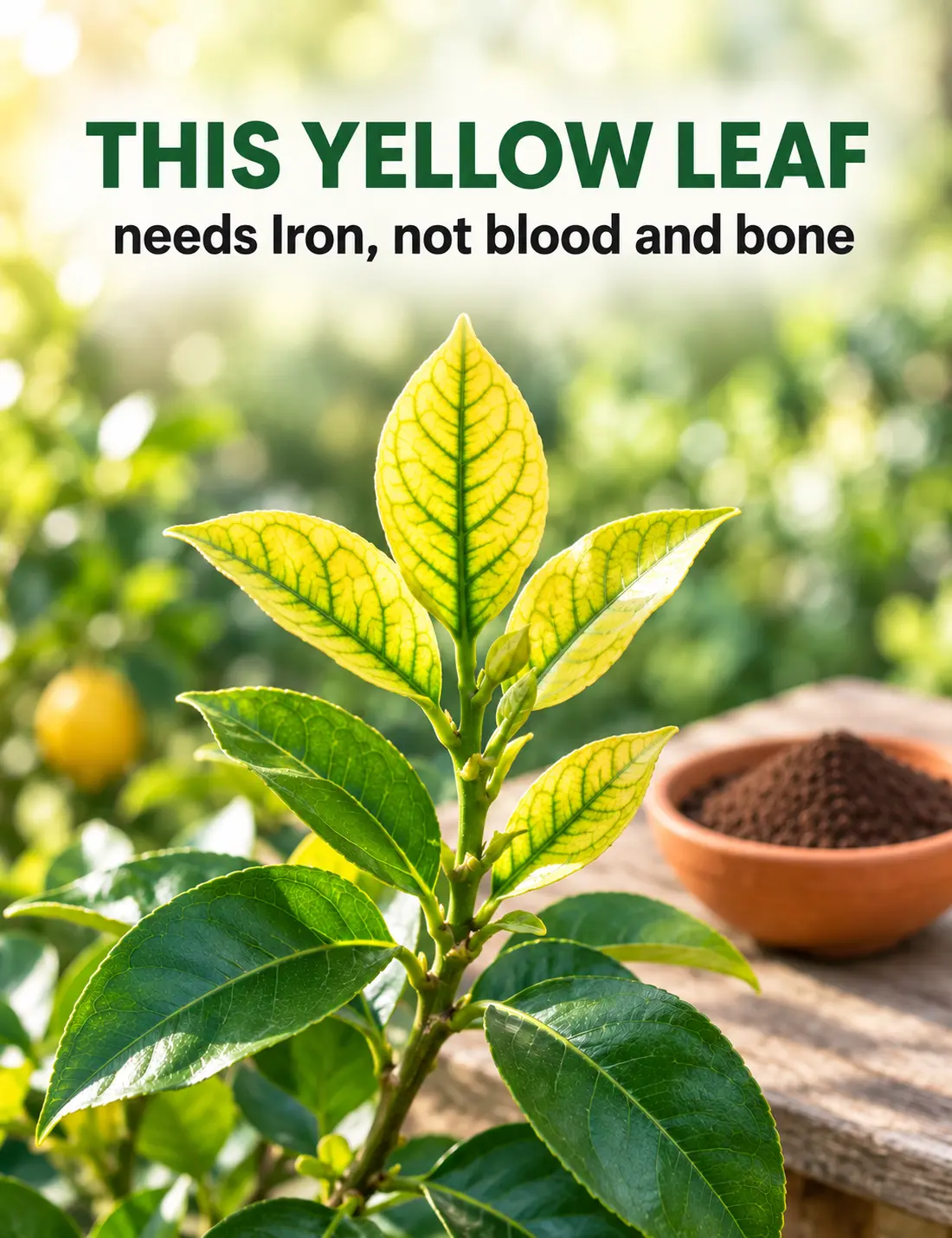
- Fix every deficiency. Yellow leaves usually mean a shortage of nitrogen, iron or magnesium, and this pair won’t cure those. Our guide to yellow leaves with green veins and our Leaf Scan AI can help you work out which.
- Replace a balanced feed. There’s no nitrogen, calcium or magnesium in it.
- Control pests or diseases. Neither product is a pesticide or a fungicide, so treat those problems separately.
- Work overnight. Judge it over a flowering and fruiting season.
Frequently Asked Questions
Can I mix MKP and kelp in the same can?
Is the dual pack a complete fertilizer?
When should I start using it?
Can I use it on seedlings?
Can I spray it on the leaves?
How strong can I go on citrus?
Can it go through drip irrigation?
Can I add calcium nitrate to the mix?
Is it safe for Australian natives?
Why is there kelp left over?
How should I store it?
What is in the dual pack?
Shop the MKP + Kelp Dual Pack
One order, two products that share a can: 500 g of MKP (0-52-34) for phosphorus and potassium, and 500 g of Ascophyllum kelp extract to help plants root, flower and handle heat. Made for tomatoes, strawberries, citrus, fruit trees, flowers and pot plants.
🚚 Free shipping Australia-wide · 🔒 Secure checkout · 🌱 2 × 500 g dual pack
Shop the Dual Pack MKP Guide Kelp Guide
Sources and further reading
- Green Pick. MKP + Kelp Seaweed Extract Dual Pack: product details.
- Green Pick. MKP fertiliser (0-52-34): what it is and how to use it.
- Green Pick. How to use seaweed extract: kelp rates for pots, beds, trees and lawns.
- Green Pick. Smart Fertigation Planner.
- Green Pick. Calcium nitrate: how much to use and what it mixes with.
- Shukla P.S., Mantin E.G., Adil M., Bajpai S., Critchley A.T. and Prithiviraj B. (2019). Ascophyllum nodosum-based biostimulants: sustainable applications in agriculture for the stimulation of plant growth, stress tolerance, and disease management. Frontiers in Plant Science 10: 655.
- Ali O., Ramsubhag A. and Jayaraman J. (2021). Biostimulant properties of seaweed extracts in plants: implications towards sustainable crop production. Plants 10: 531.
- Carmody N., Goñi O., Łangowski Ł. and O’Connell S. (2020). Ascophyllum nodosum extract biostimulant processing and its impact on enhancing heat stress tolerance during tomato fruit set. Frontiers in Plant Science 11: 807.
- Acadian Seaplants. ACADIAN liquid seaweed concentrate label (PDF).
- Australian Native Plants Society (Australia). Phosphorus needs of some Australian plants.