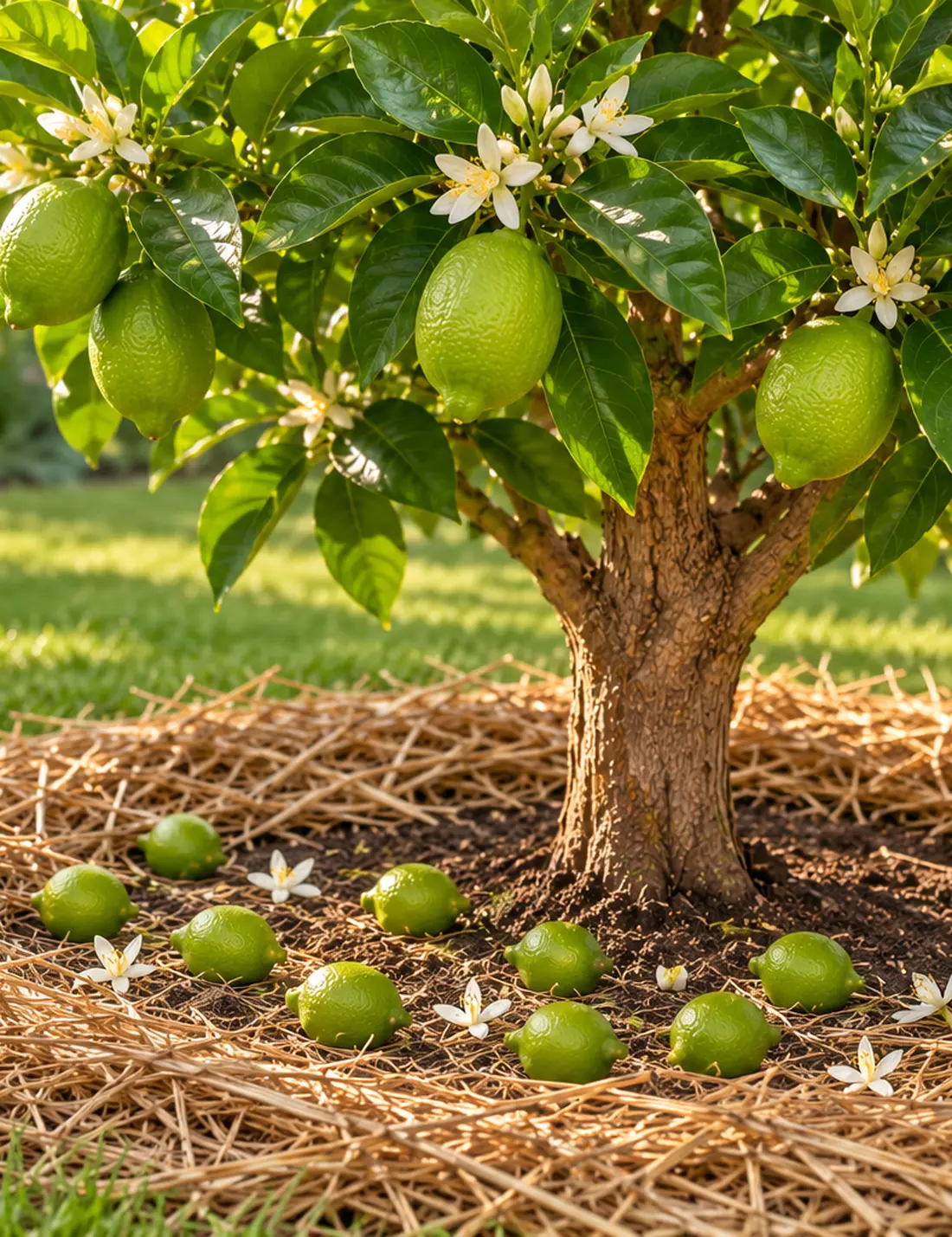

Every spring, a lemon tree puts on a show: thousands of scented flowers, then a crop of tiny green lemons. And every spring, gardeners panic when they find their lemon tree dropping fruit all over the ground.
Here’s the good news first. Most of that drop is the tree doing exactly what it’s meant to. Citrus set far more fruit than they can ripen, then shed the extras. When researchers counted every flower on one Florida navel orange tree, there were more than 81,000. Nearly 9 in 10 fell soon after flowering, and only 532 made it to harvest.
The less good news is that this summer could push it further. The Bureau of Meteorology expects a strong El Niño to peak around now, with warmer-than-average days very likely across most of the country through January. Southern Victoria is likely to be drier than normal, while south-east Queensland and north-east NSW lean wetter. Heat, dry soil and waterlogged soil all make a lemon tree drop more fruit than it needs to.
Here’s how to tell normal drop from a problem, and what actually helps.
What’s dropping off your tree?
Pick the description that best matches. You’ll see whether it’s normal and what to do about it.
Your answer will appear here.
Normal: let it happen
The tree is shedding its spare flowers. More than 95% of citrus blossoms never become fruit, and most of them fall within a month of flowering. Keep watering steadily and resist the urge to fertilise heavily.
Normal: help it along
This is natural thinning. The tree is matching its crop to what its leaves can feed, and the fruit that stays will be bigger for it. Water deeply once or twice a week, keep the mulch topped up, and feed on schedule.
Fixable: water and shade
Heat and water stress. A tree short of water sheds fruit to protect itself. Water deeply (the calculator below gives the amount), mulch the root zone, shade young trees and pots on 40°C days, and hold off feeding until the heat breaks.
Fixable: feed it
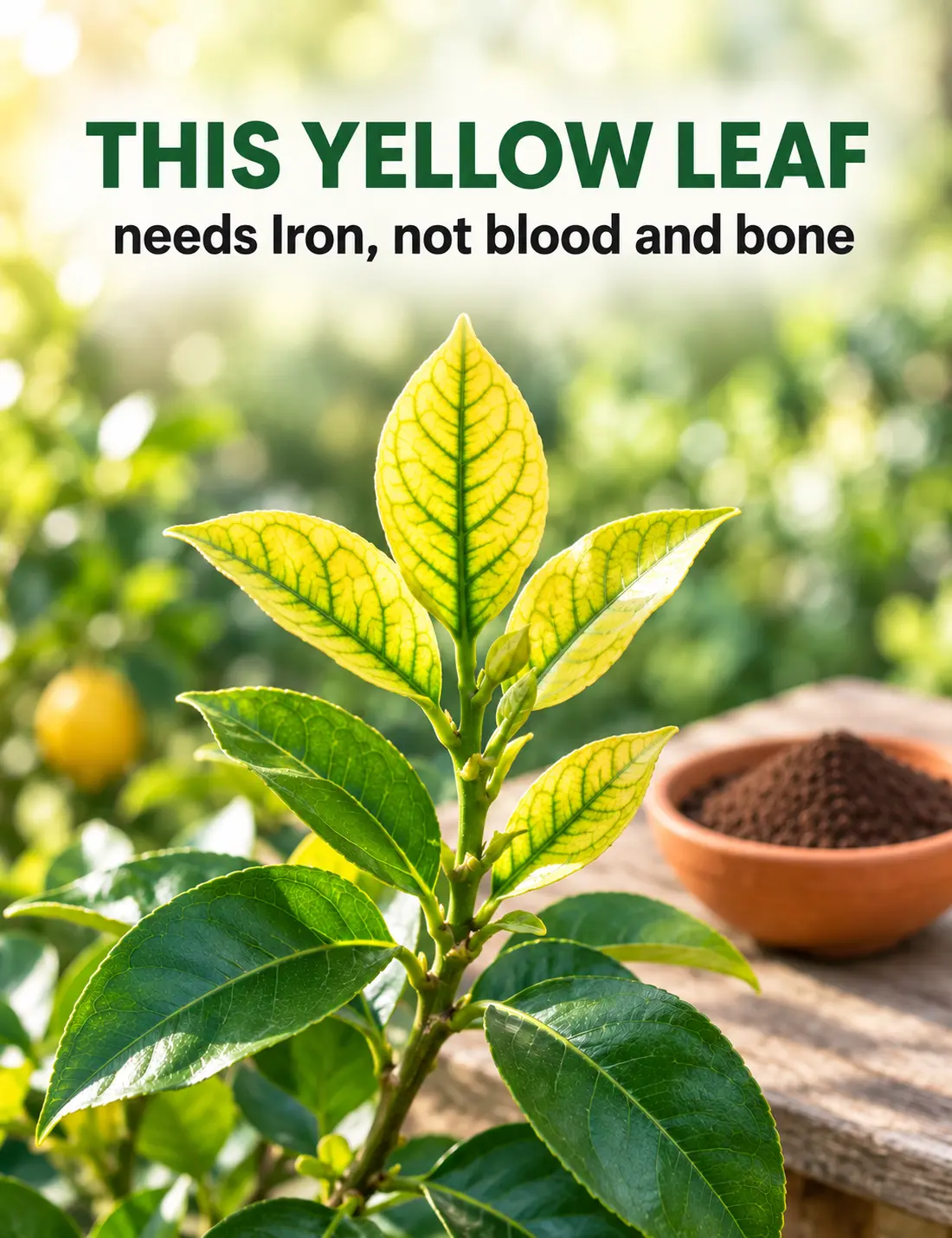
Likely a hungry tree. Pale leaves can’t feed a crop. Evenly pale leaves point to nitrogen, which urea fixes. Yellow new leaves with green veins point to iron, and yellow older leaves with a green V point to magnesium. Our guide to yellow citrus leaves helps you tell them apart.
Act now: check the roots
Waterlogged soil or collar rot. Roots sitting in water can’t hold a crop, and gum oozing from the bark near the ground is a classic sign of collar rot. Pull mulch and soil back from the trunk, improve drainage, water less while the soil is wet, and don’t feed until it recovers.
Act now: deal with the bugs
Stink bugs. Bronze orange bugs knock off flowers and young fruit in spring and early summer, and spined citrus bugs leave fruit with dry, brown-stained segments. Pick them off into soapy water, wearing gloves and eye protection, because they squirt a stinging liquid.
Causes can overlap, so treat this as a starting point.
Why Citrus Trees Drop Fruit
A citrus tree decides for itself how much fruit it can carry. Each young fruit competes with its neighbours for water and food from the leaves, and the weakest lose. That’s why a tree smothered in blossom can still end up with a modest crop, and why the drop can look alarming without anything being wrong.
It comes in waves, and the timing tells you a lot:
| Wave | When | Fruit size | What it means |
|---|---|---|---|
| Flower and fruitlet drop | During flowering and for about a month after | Flowers, and fruit smaller than a pea | Normal. Most flowers never become fruit |
| Natural thinning | Late spring into early summer, our version of the northern hemisphere’s June drop | Marble-sized, about 1 to 3 cm | Normal, but heat and dry soil make it heavier |
| Later drop | Summer through to harvest | Bigger green or colouring fruit | Usually stress: heat, drought, waterlogging, pests or an overloaded tree |
If the fruit on the ground is small and the tree looks healthy, relax. It’s the later drop of bigger fruit, or a sudden heavy drop after a hot or wet spell, that’s worth acting on.
Heat and Dry Soil Make It Worse
Heat is the biggest trigger for extra drop. In the research, the drop was heaviest when a hot spell arrived just after fruit set, and one study found it was worst when days stayed above 40°C. Dry soil adds to it, because a tree that’s short of water sheds fruit to protect itself.
What helps:
- Water deeply, not daily. Citrus roots are shallow, but a daily sprinkle only wets the surface. In summer, citrus need about 100 to 150 mm of water a month, so give it as one or two deep soaks a week. The calculator below works out the amount for your tree.
- Mulch the root zone, but keep it a hand’s width back from the trunk to avoid collar rot.
- Shade young trees and pots on 40°C days, and move potted lemons out of the afternoon sun.
- Don’t feed during a heatwave. Fertiliser salts pull water from stressed roots. Feed once the heat breaks, as we explain in preparing your garden for El Niño.
How much water does your citrus need?
Pick the week you’re having, then slide to the width of your tree’s canopy, the spread of its branches.
In a normal summer week, a tree 3 m across needs about 180 L. Give it as two deep waterings of about 88 L each, and take off 1 litre per m² for every millimetre of rain.
Based on the 4 to 6 inches (about 100 to 150 mm) a month that citrus need in summer. For potted lemons, water whenever the top few centimetres of mix are dry, which can mean every day in a heatwave.
Too Much Water Is Just as Bad
If you’re in the wetter north-east this summer, the risk runs the other way. Citrus roots hate sitting in water. Waterlogged soil starves roots of air, and Phytophthora, the soil-borne disease behind collar rot and root rot, thrives in damp conditions. A tree with sick roots can’t hold its fruit.
Watch for gum oozing from the bark near the ground, leaves turning yellow and twigs dying back. Pull mulch and soil away from the trunk, keep the graft union well above the soil, fix any drainage problems, and ease off the watering while the soil stays wet. For potted lemons, check the drainage holes are clear and never leave the pot standing in a saucer of water.
Feeding: Steady, Not Heavy
A hungry tree drops more fruit, but so can an overfed one. Too little nitrogen and the tree can’t support its crop. Too much and it pours its energy into lush leaves instead of fruit. The aim is steady, adequate feeding.
In most of Australia, citrus do best fed every two to three months from early spring to autumn, with nothing in winter. Spread it from just out from the trunk to past the edge of the canopy, then water it in. If you use a complete citrus fertilizer, the same rule applies: little and often beats one big dose. Here’s what each nutrient does for a tree that’s carrying fruit:
| Nutrient | Why it matters | Signs it is short | What to use |
|---|---|---|---|
| Nitrogen | Keeps the leaves green so they can feed the fruit. Too much pushes leaf instead of fruit | Evenly pale leaves and weak growth | Urea, in measured doses |
| Potassium | Fruit size and quality. Steady potassium and even watering also reduce splitting | Small fruit, splitting | Sulphate of Potash |
| Magnesium | Part of chlorophyll, and the tree moves it into the fruit as it fills | Yellow older leaves with a green V at the base | Magnesium Sulphate |
| Iron | Needed to make chlorophyll in new leaves | Yellow new leaves with green veins, often on limey soil | Iron Chelate |
For nitrogen, a mature tree needs about 50 to 100 g of urea per feed, watered in, as our urea guide explains. Our guides to sulphate of potash and iron chelate cover their rates. In poor or stressed soil, a little humic acid can also help roots make better use of what you feed, and our humic acid guide has the doses.
If the leaves are yellowing as well as the fruit dropping, read the leaf before you buy anything. Our guide to yellow citrus leaves walks through the causes, and our article on yellow leaves with green veins shows how to tell iron from magnesium.
Bugs That Knock Fruit Off
Two native stink bugs cause real fruit drop on Australian citrus:
- Bronze orange bug. Large, shield-shaped and bronze to almost black, with green to orange young. They suck sap from shoots, flower stalks and fruit, causing flowers and fruit to drop, and they’re worst in spring and early summer. Pick them off into a bucket of soapy water, wearing gloves and eye protection, because they squirt a caustic liquid.
- Spined citrus bug. Mostly a problem in inland southern NSW, Victoria and South Australia. It leaves gumming on the skin and fruit with dry, brown-stained segments, and it causes early fruit drop. Cut open a fallen fruit to check.
Young Trees Should Drop Their Fruit
If your tree is only a year or two old, any fruit is a cost it can’t really afford. Daleys Fruit Tree Nursery recommends picking off small fruit for the first two years, so the tree builds strong roots and leaves before it starts cropping. It feels wrong, but you’ll get more lemons in the long run.
Let It Thin, Help It Hold
Some fruit drop is the price of a lemon tree’s generosity, and the fruit that stays will be bigger and better for it. What you can control is the stress that turns normal thinning into a heavy drop: water deeply through the heat, mulch, keep the roots out of standing water, feed steadily, and keep an eye out for stink bugs.
If your tree is due for a feed, our Urea and Sulphate of Potash cover the two big ones, and Iron Chelate and Magnesium Sulphate fix the yellow-leaf problems that often come with a stressed tree.
Sources and further reading
- Bureau of Meteorology (2026). Climate outlook, issued 15 October 2026.
- UC Statewide IPM Program. Fruit drop of citrus.
- Davies P. S., University of Florida. Fruit drop problems of citrus (PDF).
- UC Master Gardeners, Solano County (2022). June drop.
- UC Statewide IPM Program. Watering avocados and citrus.
- Better Homes and Gardens. When to fertilise citrus.
- DPIRD Western Australia. Citrus diseases: collar rot and Phytophthora root rot.
- NSW Department of Primary Industries. Spined citrus bug.
- Yates. Bronze orange bug.
- Daleys Fruit Tree Nursery. Blooming beautiful.