
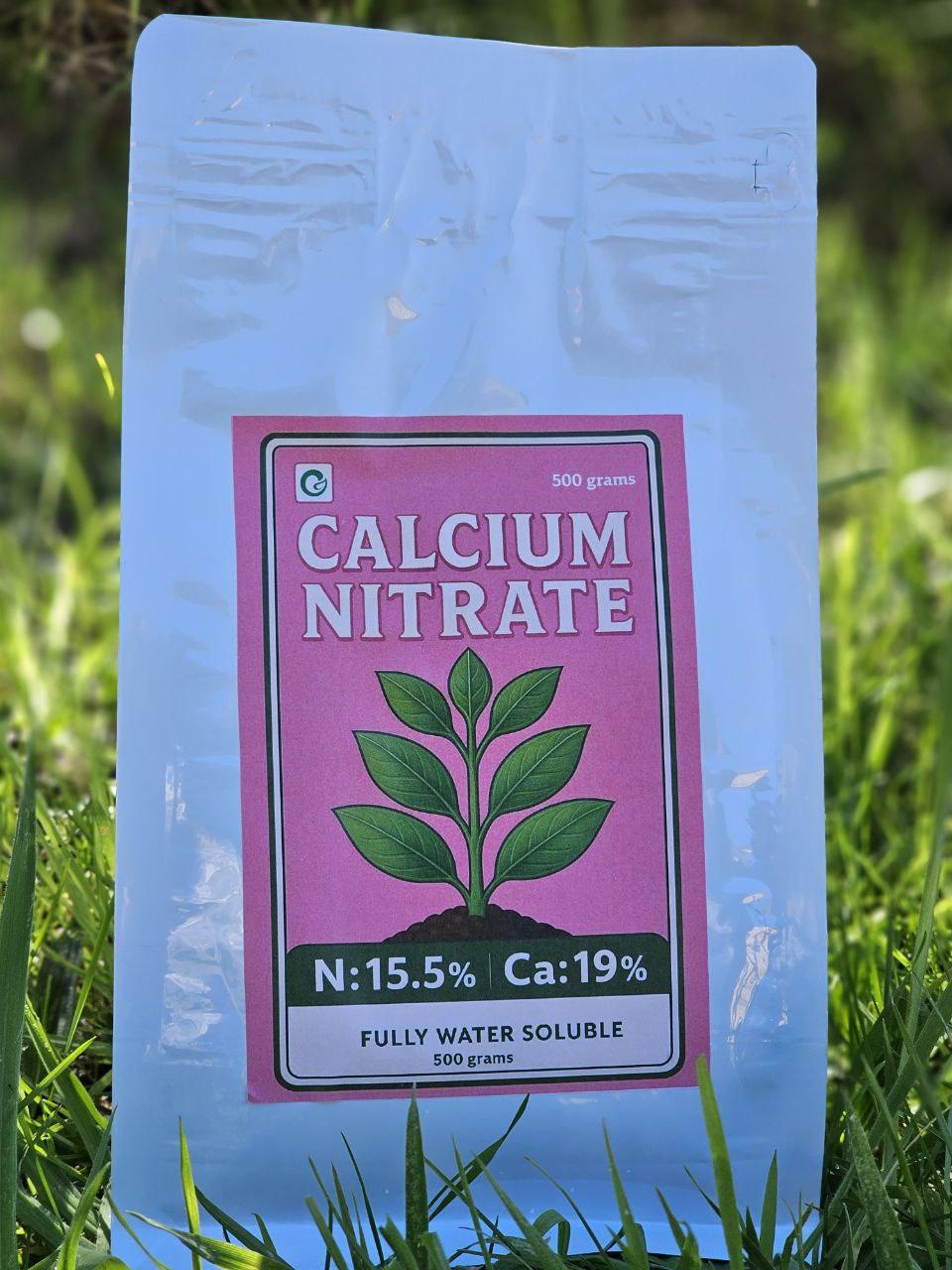

Calcium nitrate is a fully water-soluble granular fertiliser with 15.5% nitrogen and 19% calcium, both in forms plants can use straight away. Growers scatter the granules dry or dissolve them for fruiting crops, leafy greens and hydroponics, but it must never share a concentrate with phosphate or sulphate fertilisers.
15.5% Nitrogen (N)19% Calcium (Ca)Mostly Nitrate Nitrogen100% Water-SolubleFree-Flowing Granules
Our Calcium Nitrate comes as free-flowing granules that you can scatter straight onto the soil or dissolve completely in water. This guide gives you a dose chart and calculator for pots, veggie beds, fruit trees, hydroponics and farms, tips for spreading and dissolving the granules, the mixing rule that saves blocked drippers, and an honest answer on blossom end rot.
What Calcium Nitrate Does
Calcium nitrate supplies two things plants use quickly: nitrogen and calcium. Our granules contain 15.5% nitrogen, almost all of it as nitrate, plus 19% calcium, and they dissolve so readily that a litre of water can hold more than a kilo of them.
- Firmer fruit, tougher leaves. Calcium is built into cell walls, which helps fruit stay firm and store longer.
- Calcium where it’s short. Tip burn in lettuce, bitter pit in apples and blossom end rot in tomatoes are all calcium disorders, although they’re often about water rather than supply (more on that below).
- Fast nitrogen. Nitrate goes straight to work without waiting for soil microbes, which makes calcium nitrate granules a quick side-dressing.
- A hydroponic staple. It’s the standard calcium source in nutrient recipes.
It earns its keep in fruiting crops like tomatoes, capsicums, cucumbers, strawberries and melons, in leafy greens, in apples and citrus, and in any hydroponic or fertigation setup.
Calcium Nitrate Dose Chart
⚠️ Note: Apply these rates to moist soil and in the cool of the day. More fertiliser is NOT always better. Use half strength for seedlings, salt-sensitive plants and during heatwaves.
| Use | Rate | How to apply | How often |
|---|---|---|---|
| Pots & containers | 2–3 g per litre of water | Dissolve the granules and water onto moist potting mix. Don’t scatter dry granules in pots | Every 2 to 3 weeks from the first flowers |
| Vegetable & flower beds (liquid) | 20 g in a 9 litre watering can | Water evenly over about 2 m² of moist soil | Every 2 to 3 weeks during active growth |
| Vegetable & flower beds (dry granules) | 15–25 g per m² (about 1–2 level tablespoons) | Scatter between rows or around plants, keeping granules off leaves and at least 5 cm from stems. Water in straight away | Every 3 to 4 weeks as a side-dressing during active growth |
| Fruit trees (dry granules) | 30–50 g per young tree, 100–150 g per mature tree | Scatter evenly under the canopy out to the drip line, at least 15 cm from the trunk, and water in well | 2 to 3 split doses from spring to early summer, while fruit develops |
| Leaf spray (apples, leafy greens) | 5 g per litre (0.5%), up to 7.5 g | Dissolve fully first. Spray in the cool of the morning or evening. Halve the rate if leaves burn. Not effective for blossom end rot (see below) | Weekly or fortnightly while fruit develops |
| Hydroponics | 0.5 to 1 g per litre of final solution | Dissolve in the A tank, away from phosphates and sulphates | Every feed |
| Farms (fertigation) | 20 to 50 kg per hectare per week | Through drip, from flowering or fruit set | Weekly. Up to about 60 kg for tomatoes where blossom end rot is a problem |
| Farms (broadcast granules) | 100 to 200 kg per hectare per application | Spread with a fertiliser spreader as a side-dressing onto moist soil, ideally before rain or irrigation | Every 3 to 6 weeks during active growth. Base the seasonal total on a soil test |
How much calcium nitrate do you need?
Pick how you’re applying it, then slide to the size of your watering can, sprayer, tank or garden bed.
Soil drench: 2 g per litre, so 18 g in 9 litres.
Weigh it on kitchen scales. For liquid feeds, let the granules dissolve fully before use. For a complete nutrient recipe, try our Smart Fertigation Planner.
Spreading and Dissolving the Granules
- Scattering dry: spread the granules evenly over moist soil and water in straight away. Keep them off leaves, flowers and stems, as undissolved granules sitting on wet foliage can scorch it.
- Dissolving: stir the granules into room-temperature water until clear. The water gets noticeably colder as they dissolve, which is normal, and they will dissolve a little slower in very cold water.
- A light film is normal: granules carry a thin anti-caking coating to keep them free-flowing, and it can leave a faint film or a few specks on the surface of a concentrated solution. Let the tank settle and skim it, or run the solution through a filter before it reaches drippers.
- Keep the bag sealed: the granules pull moisture from the air, so close the bag tightly after each use and store it somewhere dry.
The Mixing Rule You Can’t Skip
Never dissolve calcium nitrate in the same concentrate as a phosphate or a sulphate fertiliser. Calcium grabs phosphate to make calcium phosphate, and sulphate to make gypsum. Both settle out as a chalky sludge that blocks drippers, filters and spray nozzles, and the nutrients locked up in it are wasted. Apart from those, calcium nitrate mixes with almost all water-soluble fertilisers. To be safe, also keep concentrated boron and molybdenum products in a separate tank.
That’s why hydroponic and fertigation growers run two stock tanks. We put calcium nitrate in tank A and the phosphates and sulphates in tank B. Each tank is then dosed into the water separately, so the two concentrates never meet until they’re diluted to feeding strength.
Spreading dry granules on the same bed as other dry fertilisers is fine, since they only meet once diluted in the soil. The rule is about concentrated solutions.
| Tank | What goes in | Why |
|---|---|---|
| Tank A | Calcium nitrate, potassium nitrate and iron chelate | Calcium stays away from phosphate and sulphate |
| Tank B | MKP, magnesium sulphate (Epsom salts) and sulphate of potash | Phosphate and sulphate stay away from calcium |
Can it go in the same tank?
Pick the product you want to mix with calcium nitrate.
Your answer will appear here.
Separate tanks
Phosphate and calcium form calcium phosphate, a chalky sludge that blocks drippers. Our MKP goes in the B tank, and our MKP guide covers its rates.
Separate tanks
Sulphate and calcium form gypsum, which settles out as a white crust. Our Magnesium Sulphate goes in the B tank.
Separate tanks
Another sulphate, so it forms gypsum with calcium. Our Potassium Sulphate goes in the B tank.
Separate tanks
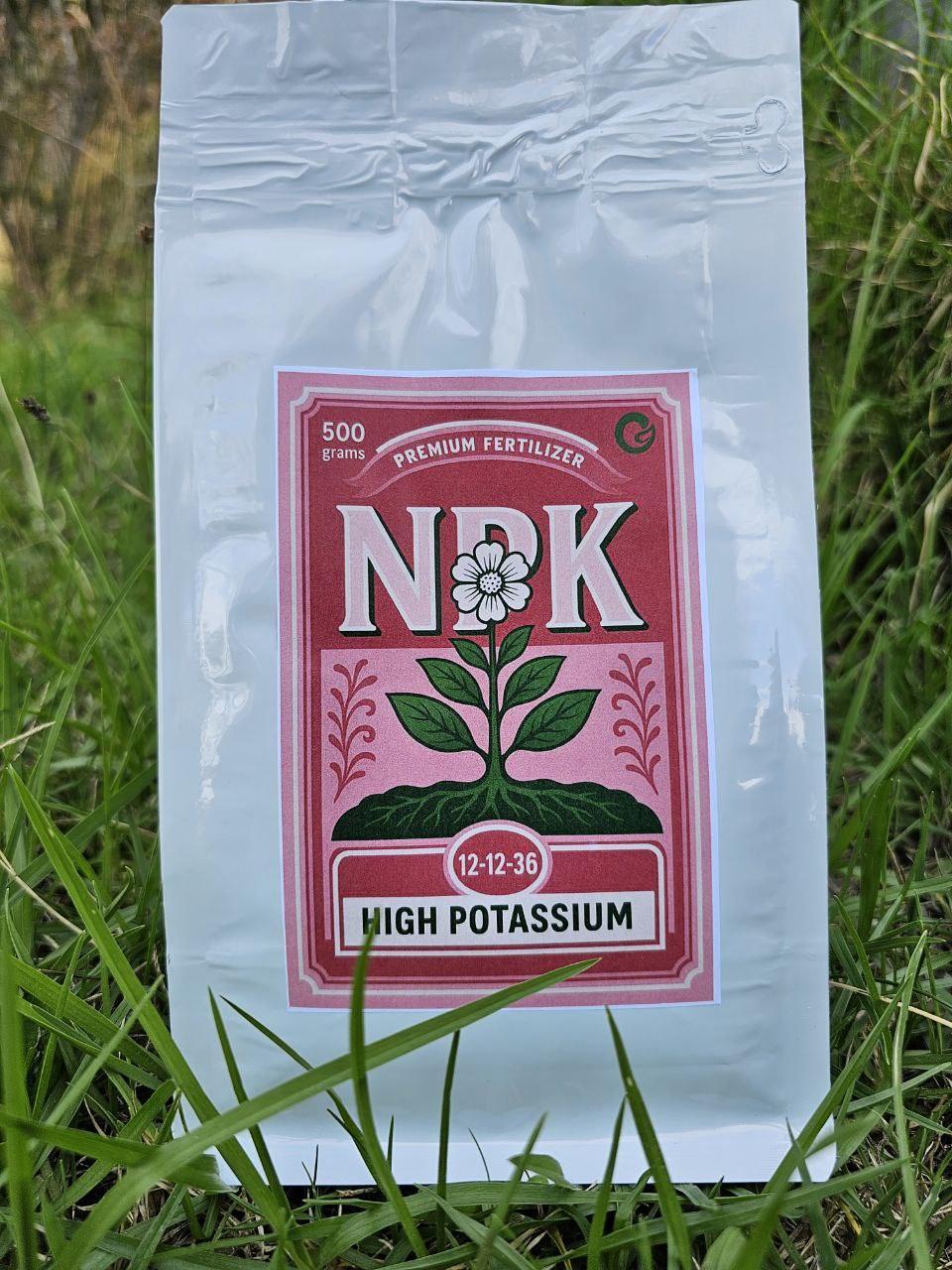
Blends like 20-20-20, 10-52-10 and 12-12-36 all contain phosphate. Mix them in a separate tank or apply them on a different day.
Same tank is fine
Chelated trace elements are compatible with calcium nitrate, and in a two-tank setup they usually go in the A tank.
Same tank is fine
No phosphate or sulphate, so no reaction. It can go in either tank.
Same tank is fine
Urea is compatible with calcium nitrate, so they can share a tank.
Jar test first
Organic products vary from brand to brand, and some react with calcium. Mix a small batch in a clear jar before you commit a whole tank.
Based on manufacturer compatibility guides. These rules apply to concentrates, before they’re diluted to feeding strength.
Not sure about a product that isn’t listed? Do a jar test: mix both at their normal rates in a clear jar, let it stand for half an hour, and look for cloudiness or sediment.
Will Calcium Nitrate Fix Blossom End Rot?
Blossom end rot is the sunken, leathery black patch on the bottom of tomatoes, capsicums and eggplants. It’s caused by a shortage of calcium in the fruit, so calcium nitrate looks like the obvious fix. Usually it isn’t.
The shortage is almost always about water, not soil. Calcium travels through the plant with water, so when watering is uneven, the supply to the fruit is cut off too. Clemson University Extension notes that blossom end rot can appear even when soil calcium is adequate, and the Royal Horticultural Society says soils rarely lack calcium at all.
Sprays don’t help either. Calcium in the leaves can’t move into the fruit, and the fruit skin can’t absorb it, which is why both Clemson and the RHS rate foliar calcium sprays as ineffective against blossom end rot. Damaged fruit won’t recover, but the next fruit can come through clean.
What works is steady moisture. Water deeply and regularly, ideally with drip irrigation on a timer, never let pots dry out, and spread at least 5 cm of mulch to hold moisture in. Avoid hoeing close to the plants, too, since damaged roots take up less water. In a hot, dry summer this matters even more, and our guide to preparing your garden for El Niño has tips for keeping moisture even.
Calcium nitrate does earn its place where calcium really is short: sandy or acidic soils, potting mixes and hydroponic systems, where you supply all the calcium the plant gets. A soil test before planting tells you which camp you’re in. If it’s low, use the drench rate or the dry granule rate in the chart from the first flowers onwards.
Frequently Asked Questions
What is calcium nitrate fertilizer?
Can I spread calcium nitrate granules dry?
How much calcium nitrate per litre of water?
Why does the water go cold when I dissolve the granules?
Can I mix calcium nitrate with Epsom salts?
Can I mix calcium nitrate with MKP?
Will calcium nitrate fix blossom end rot?
Is calcium nitrate safe for hydroponics?
How should I store calcium nitrate?
What sizes do you sell?
Shop Calcium Nitrate
Whether you’re feeding tomatoes, fruit trees or a hydroponic system, calcium nitrate granules give your plants calcium and fast nitrogen in one dose.
🚚 Ships across Australia · 🔒 Secure checkout · 🌱 For home gardens and commercial growers
Sources and further reading
- Clemson Cooperative Extension. Gardening myths: fix blossom end rot with calcium sprays.
- Royal Horticultural Society. Blossom end rot.




Test, message – Thank you!
Interesting article, thanks for the information!