
Australia has just had its second-warmest September on record. The weather bureau expects the heat to keep coming: its outlook shows above-average day and night temperatures across the country through to January, with a very strong El Niño likely to peak in late spring or summer. If you want to prepare your garden for El Niño, the window is now, not when the first scorcher hits.
Here’s where a lot of gardeners go wrong. When plants droop in the heat, the instinct is to reach for the fertiliser. It’s exactly the wrong move. A heat-stressed plant can’t use the feed, and the salts in fertiliser make its job harder.
Fertiliser builds strength before the heat. It can’t rescue a plant during it. So here’s what to do in these mild weeks, and what to do once the hot days arrive.
What El Niño could mean for your garden
The bureau declared El Niño in July. In past events, it has often brought drier conditions to central and eastern Australia through winter and spring, and it raises the risk of heatwaves and hotter days. Its grip on rainfall usually loosens by early summer, but this year’s outlook still points to a hot few months.
This summer won’t look the same everywhere. The current outlook favours below-average rain in the north and south-east, while parts of the west, centre and east may even be wetter than usual. And a record-strength El Niño doesn’t guarantee record heat or drought, because past events show only a weak link between strength and severity. The sensible plan is simple: prepare for heat, and treat any decent rain as a bonus.
Why feeding in a heatwave backfires
Fertilisers are salts. They need water to dissolve and reach roots, and in hot, drying soil they concentrate around the very roots that are already struggling to drink. Tree-care experts at the Morton Arboretum warn that fertiliser salts can injure roots when soil moisture is limited.
Feeding also asks the plant to grow, and new leaves need water the plant doesn’t have. LSU AgCenter notes that fertiliser-driven growth without water to support it simply adds stress. Extension experts put it plainly: a heat-stressed plant is unlikely to benefit from fertiliser, so water it and wait for the heat to break.
Fertiliser isn’t medicine. If you’re not sure whether today is a feeding day, run through these three questions.
Should I feed my garden today?
Answer three quick questions to get a verdict.
1. The next few days look…
2. The soil right now is…
3. Your plants are…
Answer all three to see the verdict.
Good day to feed
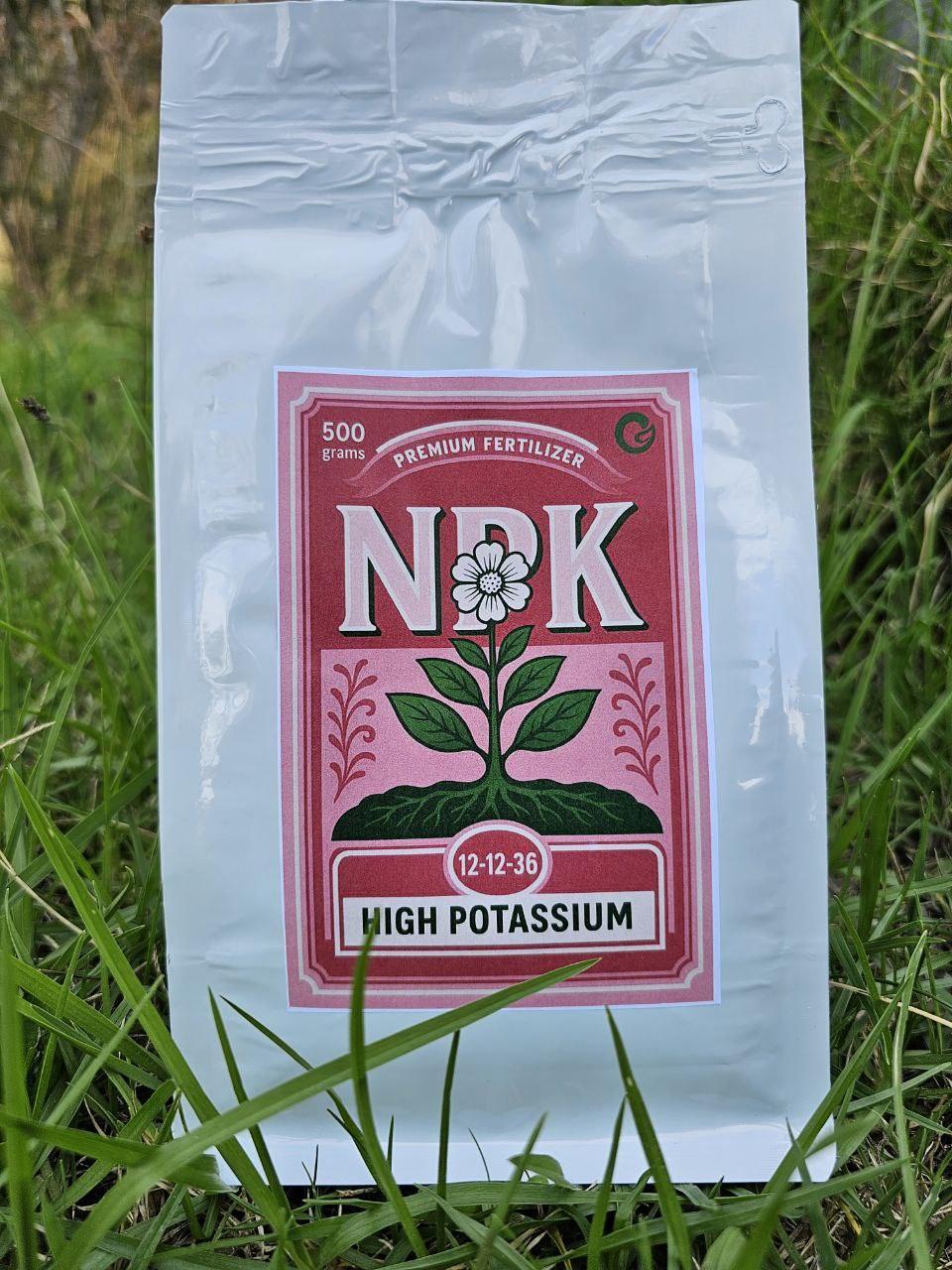
Mild or warm weather and moist soil make this a good time. A potassium feed now helps plants head into summer with better water control. Try our Potassium Sulphate (SOP), and add Kelp Seaweed Extract to help them brace for heat.
Wait until it perks up
A little afternoon wilting on a warm day is normal if the plant recovers by evening. Feed in the morning once it looks perky again, and make sure your watering soaks in deep.
Water first, feed tomorrow
Fertiliser on dry soil concentrates salts around the roots. Water deeply today, then feed tomorrow morning once the soil is moist.
Hold off: water and shade instead
Hot days are coming. A heat-stressed plant can’t use fertiliser, and the salts can injure its roots. Water deeply at dawn, top up the mulch and have shade ready. Feed once a milder spell arrives.
Don’t feed: check the roots
Drooping first thing in the morning, after a cool night, points to a problem beyond heat: bone-dry roots, waterlogged soil, root damage or pests. Check the soil before doing anything else.
Feed now: what actually helps plants handle heat
The mild weeks of October and November are when feeding pays off, and two things stand out in the research.
Potassium runs the plant’s water control. It powers the guard cells that open and close the pores on leaves. In potassium-deficient plants, those pores can’t close properly during drought, so the plant loses more water. Researchers describe adequate potassium as critical for drought resistance.
Note the word adequate. Extra potassium won’t make a well-fed plant heatproof, as we explained in our article on banana peel water. But plenty of hungry fruiting crops, citrus trees and plants on sandy soil head into summer short of it. Our Potassium Sulphate (SOP) tops them up without chloride or nitrogen, so you’re not pushing soft new growth. Feed in the next few weeks while it’s mild, and water it in well.
Seaweed extracts can help plants brace for stress. They aren’t fertilisers in the usual sense; they work as biostimulants. A major review gathered studies in which extracts of the brown seaweed Ascophyllum nodosum improved tolerance to drought and heat across a range of crops, and in one lab study, plants pre-treated before a drought coped noticeably better than untreated ones.
Results vary between products, though. In a tomato trial, one seaweed extract nearly doubled fruit numbers under heat stress compared with untreated plants, while a differently processed extract did less. Our Kelp Seaweed Extract is made from Ascophyllum nodosum, the same seaweed used in these studies, and it also comes as an MKP + Kelp dual pack for flowering and fruiting plants (our MKP guide explains when that suits). Our kelp guide covers rates. Like potassium, it works best as preparation, applied in the weeks before the heat.
One thing to skip is a big nitrogen hit right before summer. It produces soft, leafy growth that drinks more water and attracts aphids, as we covered in our piece on organic vs synthetic fertiliser.
| When | Water | Feed | Protect |
|---|---|---|---|
| Now to mid-November | Set up deep, early watering and check drippers and timers | Potassium-rich feed and seaweed extract while it’s mild | Top up mulch, and get new plants in the ground so roots establish before summer |
| Late November to December | Soak deeply before forecast hot spells | Light feeds only in mild spells, on moist soil | Put up shade cloth on the western side and group pots together |
| Heatwave days | Deep soak at dawn, and check pots morning and afternoon | Don’t feed | Shade on, no pruning, and leave scorched leaves where they are |
| After the heat | Let soil drain between waterings | Resume feeding once plants recover | Trim dead growth once new shoots appear |
Water smarter, not more
Deep, occasional watering beats a daily sprinkle. It pushes roots down into cooler, moister soil, where they’re better protected when the surface bakes. Sustainable Gardening Australia recommends watering before sunrise or the night before a hot day, so plants go into the heat fully hydrated.
Before you water, check the soil moisture a few centimetres down with your finger. Soggy soil is as dangerous as dry soil, because roots in waterlogged ground run short of oxygen. And water the soil, not the leaves.
If water gets tight, prioritise
A dry summer can bring tighter water supplies, and the rules differ between water authorities, so check yours before the heat arrives. If you can’t water everything, decide now what gets first call.
The Morton Arboretum suggests putting newly planted trees and shrubs first, then those planted in the last few years, then your most valued established trees. Pots and veggie beds come close behind, because they dry out fastest and have no deep soil to fall back on. Well-established, drought-hardy plants can usually cope with less.
Mulch and shade: your cheapest heat insurance
A thick layer of organic mulch keeps soil cooler and slows evaporation. Top up your beds now, keeping mulch a few centimetres clear of stems and trunks. If you live in a bushfire-prone area, check your local fire authority’s advice, and use gravel rather than bark close to the house.
Shade does the rest. A 30 to 50% shade cloth suits most heat-sensitive plants, as long as it sits above the foliage rather than touching it. Plants that cop the afternoon sun often benefit most from a screen on the western side of the bed, rather than a full cover.
Pots heat up fastest of all. Group them together, move them into afternoon shade before a heatwave, and lift them off hot paving.
On the hot days themselves
When a heatwave hits, keep it simple. Water deeply at dawn, get the shade up, and leave the secateurs alone. Don’t prune, don’t feed, and leave scorched leaves on the plant for now, where they still shade the tender growth underneath. Once the heat breaks and plants recover, tidy up and resume feeding.
Is your garden El Niño-ready?
Tap each step you’ve already done.
Tap the steps you’ve done to see your score.
Feed in spring, protect in summer
El Niño will do what it does, and nobody can promise a mild summer. What you can control is whether your plants meet the heat fed, mulched and deeply watered, or hungry and caught out. Do the feeding now. Save the hot days for water and shade.
Not sure whether leaf damage is heat or a nutrient problem? Upload a photo to our Leaf Scan AI, read our guide to yellow leaves with green veins, or use Find My Fertiliser to match a feed to your plants.
Sources and further reading
- Bureau of Meteorology. Climate outlooks: November to January.
- Bureau of Meteorology. El Niño: what it means for Australia’s climate.
- Bureau of Meteorology, via Mirage News. Long-range forecast: October to December 2026.
- The Conversation. The weather bureau has just declared an El Niño. What could this mean for Australia?
- ABC News. El Niño warming could be unprecedented, but don’t assume record drought in Australia.
- The Morton Arboretum. Drought care.
- LSU AgCenter. Dos and don’ts in the garden during droughts.
- Ask Extension. Fertilizer use during a heat wave.
- Wang M, Zheng Q, Shen Q, Guo S (2013). The critical role of potassium in plant stress response. International Journal of Molecular Sciences.
- Shukla PS et al. (2019). Ascophyllum nodosum-based biostimulants: sustainable applications in agriculture for the stimulation of plant growth, stress tolerance, and disease management. Frontiers in Plant Science.
- Santaniello A et al. (2017). Ascophyllum nodosum seaweed extract alleviates drought stress in Arabidopsis. Frontiers in Plant Science.
- Carmody N et al. (2020). Ascophyllum nodosum extract biostimulant processing and its impact on enhancing heat stress tolerance during tomato fruit set. Frontiers in Plant Science.
- Sustainable Gardening Australia. Protecting plants in hot weather.
- Iowa State University Extension. Managing the garden in extreme heat.
- Better Homes and Gardens Australia. Heatwave alert! Protect your plants before it’s too late.