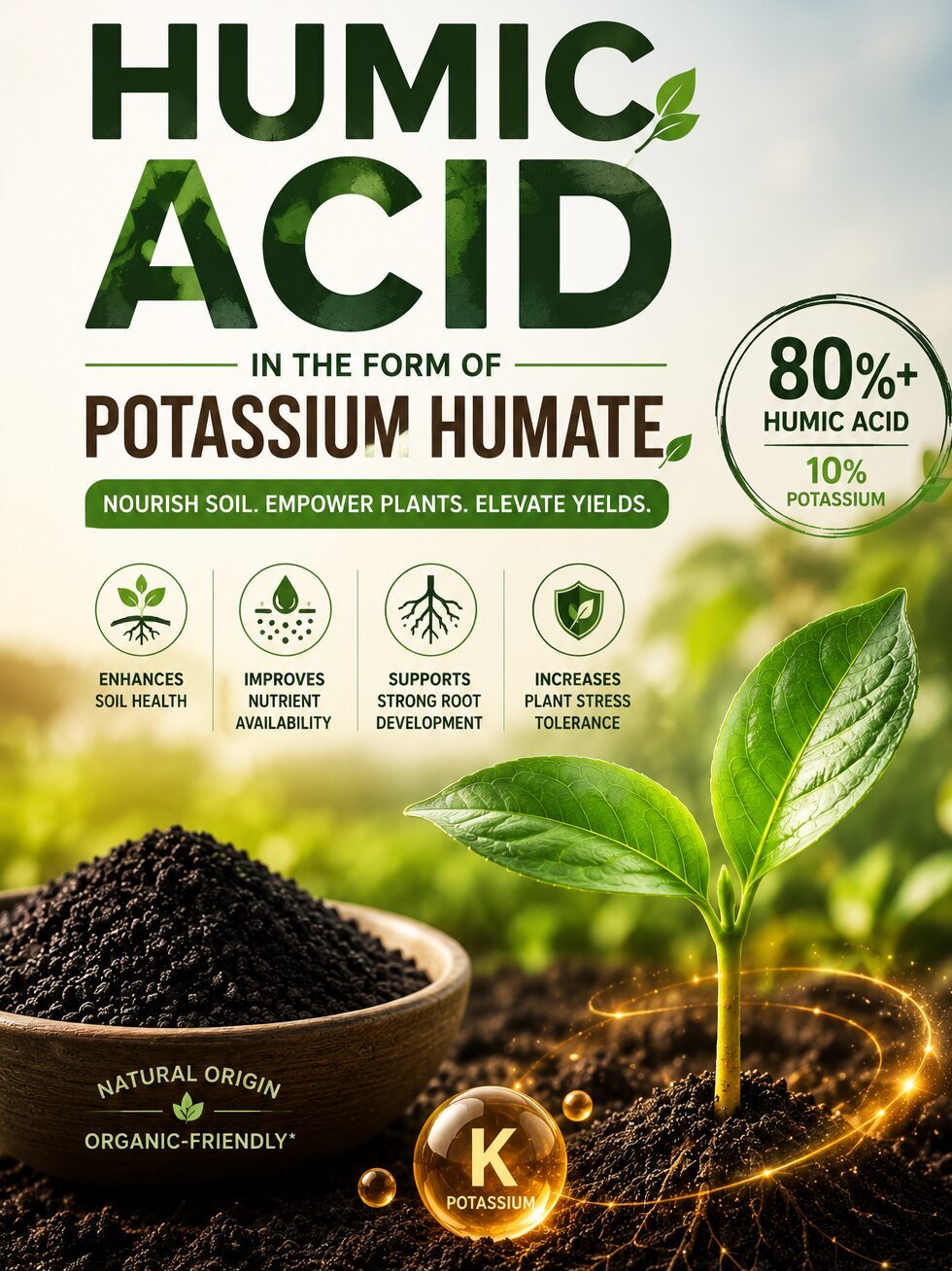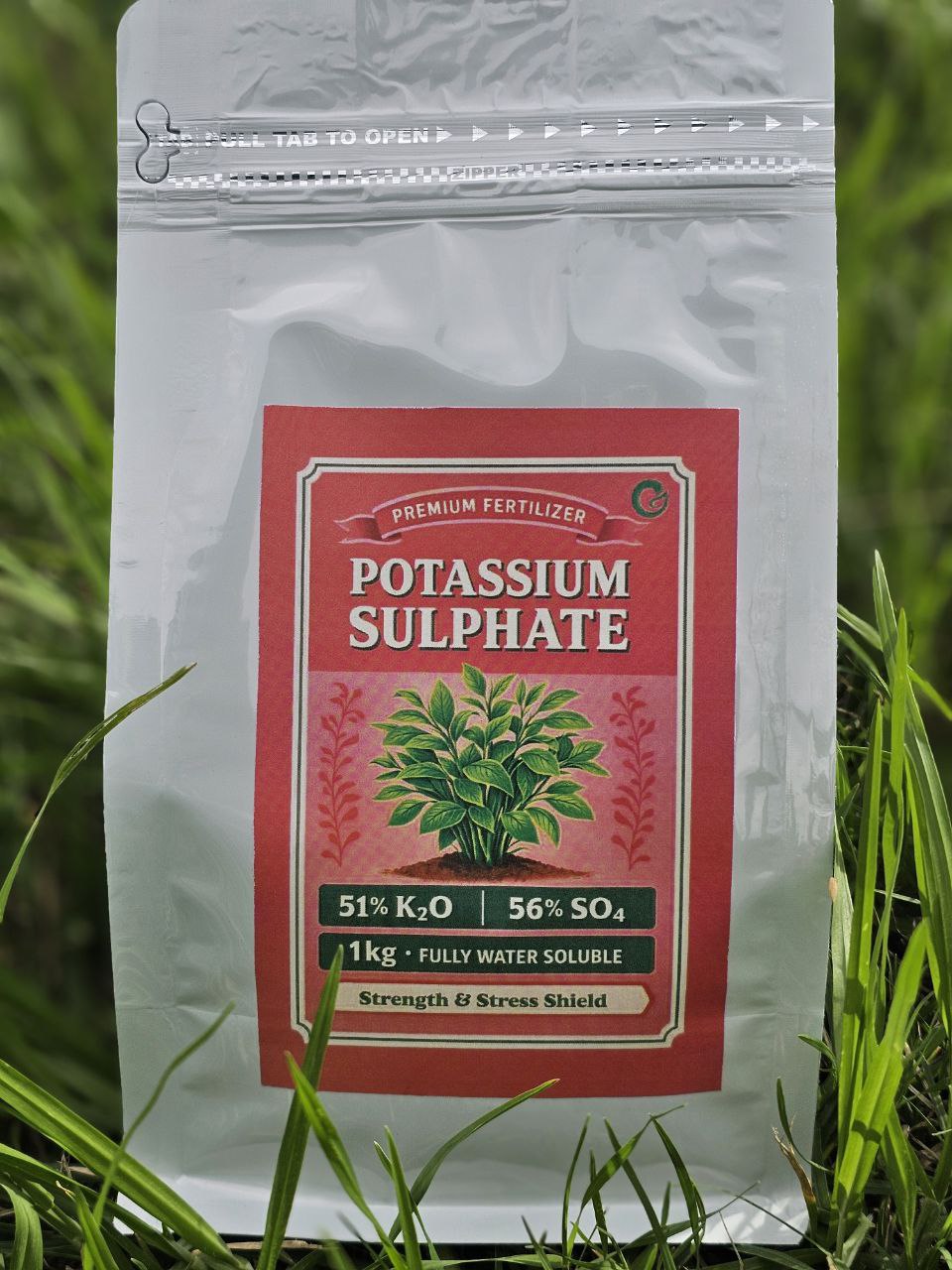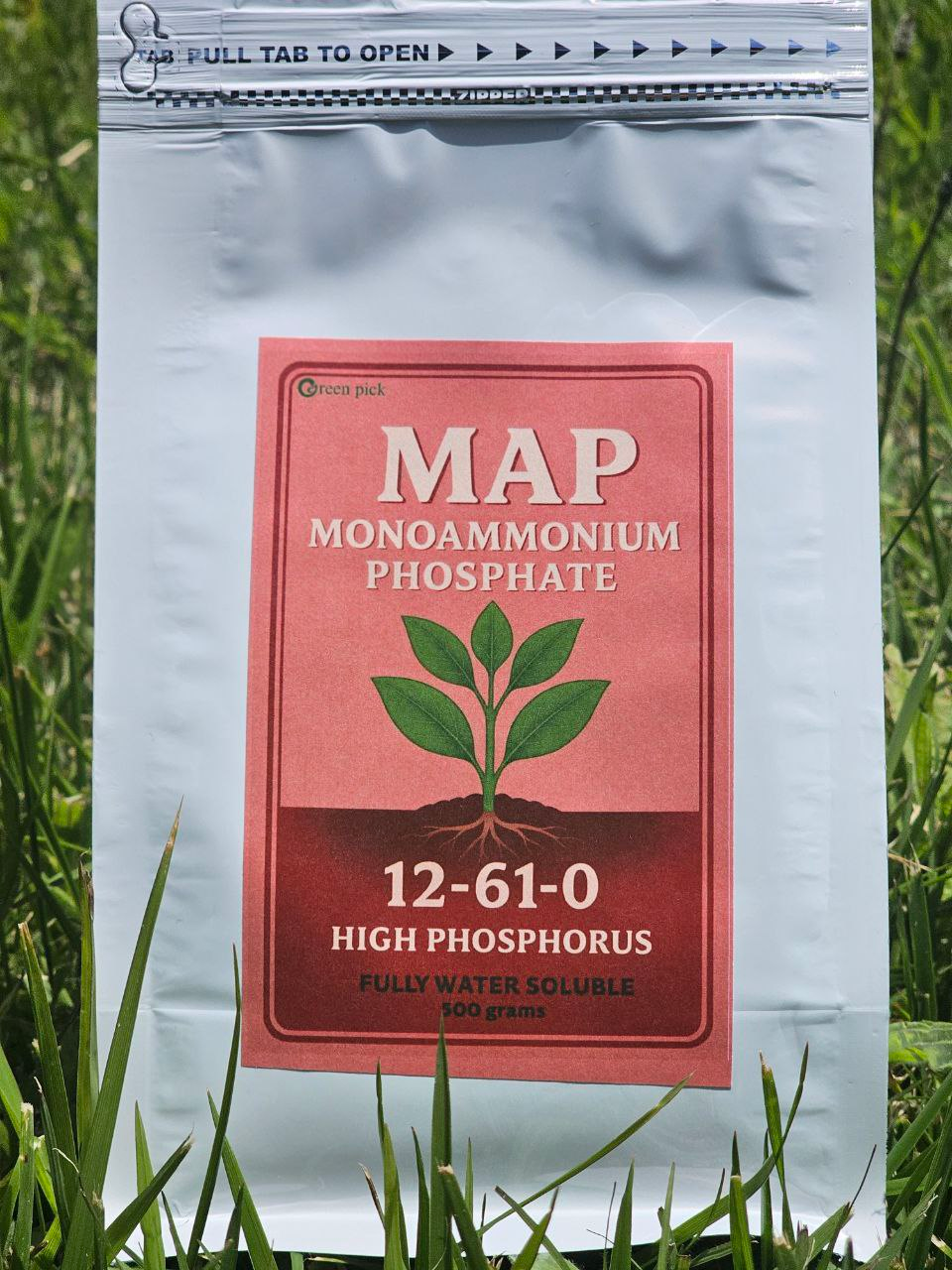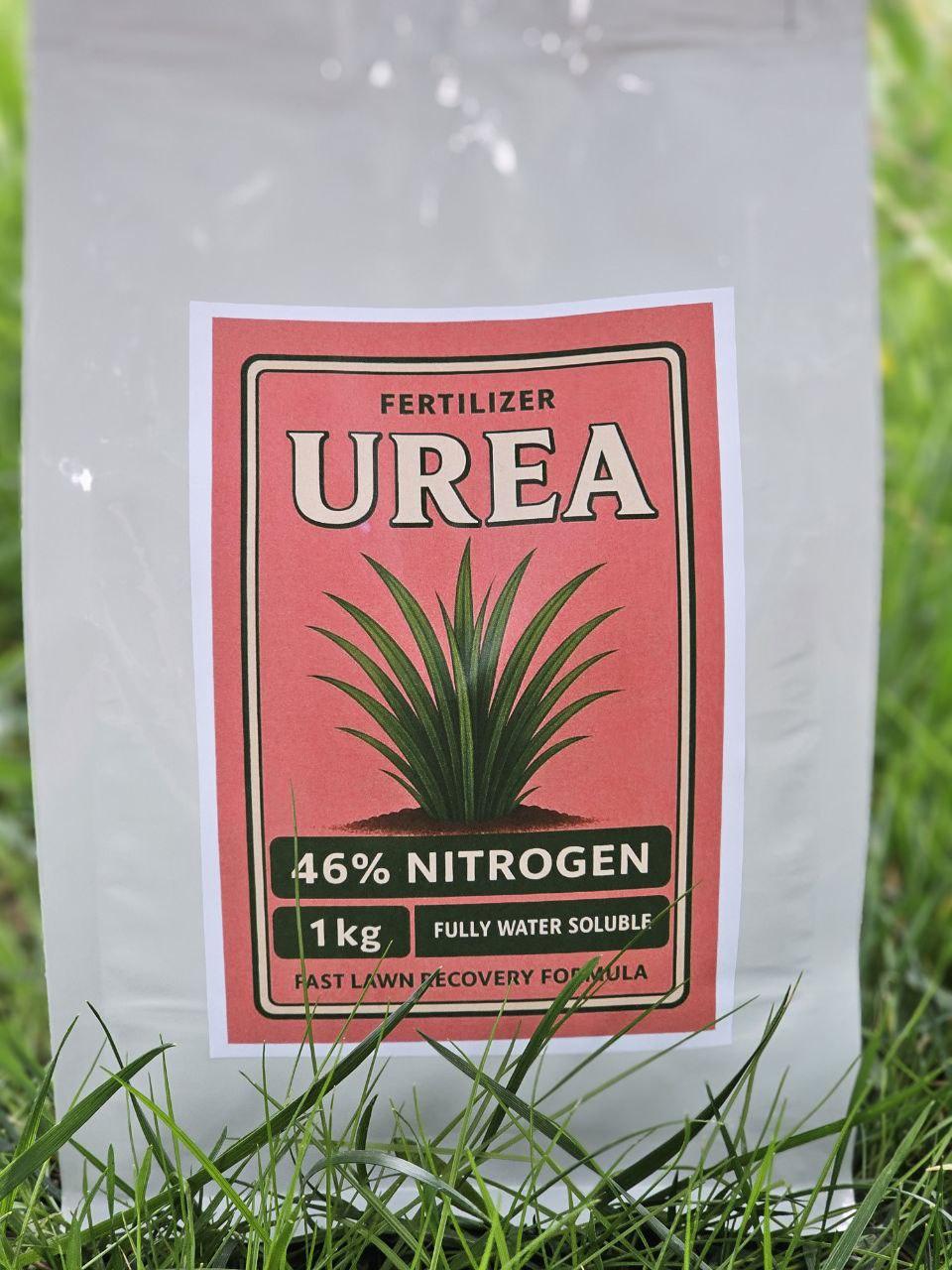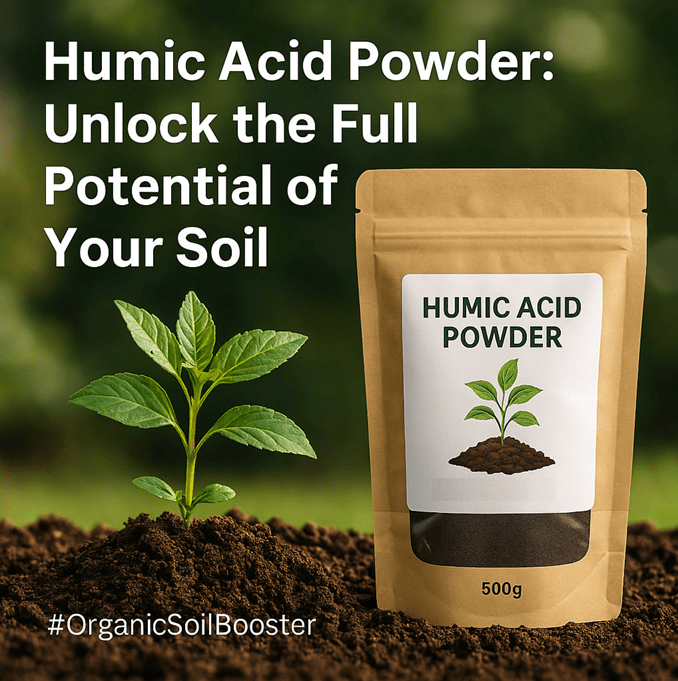
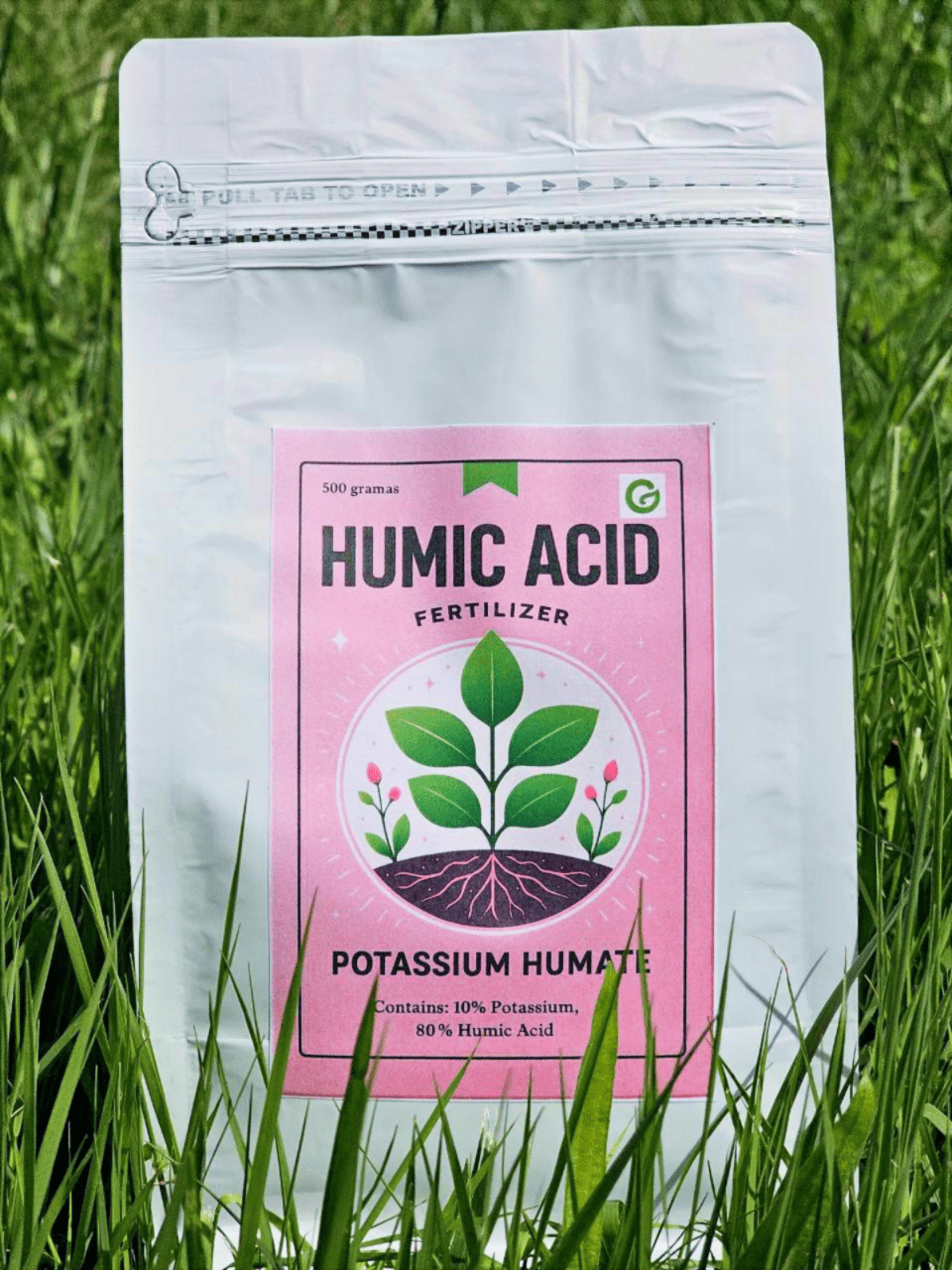

Humic acid powder is a soil conditioner that helps roots make better use of the fertiliser you give them, especially in poor or stressed soil. A little goes a long way: about 1.2 g per litre of water, or 1.2 g per square metre, every two weeks.
80%+ Humic Acid10% Potassium (K₂O)100% Water-SolubleUse With Your Fertiliser
Our Humic Acid Powder is potassium humate, the water-soluble form of humic acid, with at least 80% humic acid and 10% potassium (K₂O). This guide gives you the rates for pots, beds, lawns, fruit trees, hydroponics and farms, a calculator for your garden, and how to mix it so it doesn’t curdle.
Shop Humic Acid See the Rates ↓
What Humic Acid Powder Does
Humic acid is the dark, stable part of soil organic matter. It holds onto nutrients like calcium, magnesium and iron, which helps keep them where roots can reach them. Ours dissolves completely, so it goes through a watering can, drippers or a sprayer.
- It helps plants use fertiliser. At low rates, humic products may help plants take up more of the nutrients you apply.
- It does most in tough conditions. Poor, sandy or salty soil and stressed plants tend to respond best.
- It suits every setup. Pots, beds, lawns, drip systems and hydroponics.
Just as important is what it won’t do. It isn’t a fertiliser, so keep feeding as normal. It won’t rebuild soil structure on its own at these doses, because compost and mulch do that job. And trees and vines respond least, so keep them at the rates below. A Monash University review of the research found the results vary a lot from trial to trial, and our article on why high-purity potassium humate matters goes through the science.
How Much Humic Acid Powder to Use
⚠️ Note: More humic acid isn’t always better, and very high rates can hold plants back. Halve the rates for seedlings and sensitive plants.
| Use | Rate | How to apply | How often |
|---|---|---|---|
| Pots & containers | 1.2 g per litre of water (12 g in a 10 litre can) | Water onto moist potting mix until it starts to drain | Every 2 weeks while plants are growing |
| Vegetable & flower beds | 1.2 g per m² (12 g in a 9 litre can covers 10 m²) | Water evenly over moist soil around the plants | Every 2 weeks through the growing season |
| Lawns | 1.2 g per m², as for beds | Water on with a can or hose-end sprayer, then water in lightly | Every 2 to 4 weeks while the grass is growing |
| Fruit trees & citrus | 1.2 g per m² of canopy (about 8.5 g for a tree 3 m across) | Dissolve in a watering can and pour around the drip line | Every 4 weeks, spring to autumn. Don’t go higher on trees |
| Hydroponics | 2 to 6 g per 100 litres of nutrient solution | Dissolve it in a little water, then add it to the diluted solution, never to the calcium (A) stock tank. Jar test first | Each fresh batch |
| Farms & orchards | 4 to 8 kg/ha per application | Through drip or fertigation, or sprayed onto the soil before rain or irrigation | Pre-plant, at planting, during vegetative growth, and from flowering to fruit fill |
| Leaf spray | 1.2 to 2.4 g per litre (on farms, 1 to 2 kg/ha) | Spray in the cool of the day, test a few leaves first, and avoid produce close to harvest | Every 2 to 4 weeks |
A 500 g pack treats about 400 m² of garden, or about 400 litres of watering-can mix.
How much humic acid powder do you need?
Pick how you’re applying it, then slide to your can, area, tree or tank.
A 10 litre can: 12 g of powder. Stir until dissolved, then water it onto moist soil or potting mix.
Weigh a level teaspoon of the powder once on kitchen scales, and you’ll know how many spoons make your dose. Tree doses use canopy width, the spread of the branches.
How to Mix and Apply It
- Dissolve it first. Stir the powder into water until it’s fully dissolved. The water turns dark brown, which is normal.
- Add it before other fertilisers. Put the humic acid in the water first, then the rest.
- Keep calcium and acid out. Don’t mix it with calcium nitrate or other calcium fertilisers, or into mixes at pH 4 or below, because it can curdle into clumps and block drippers.
- Apply to moist soil. Water it on around the root zone, then water in lightly.
- Mix only what you need. Don’t store the diluted mix. Make it fresh each time.
- Rinse off splashes. Humates can stain tiles and pavers.
Start in spring as plants come into growth, and keep going through the growing season at the intervals in the table. For doses tailored to your crop and irrigation, try our Smart Fertigation Planner.
Not Seeing a Difference?
- Check the feeding. Humic acid helps plants use nutrients, but it can’t replace them. Pale, slow growth usually means nitrogen, which our urea guide covers.
- Check the leaves. Yellow leaves with green veins point to iron or magnesium. Our guide to yellow leaves with green veins shows how to tell which.
- Give it a season. Its effects are gradual and show most in poor or stressed soil. Healthy plants in rich soil may not look any different.
Frequently Asked Questions
Is humic acid powder a fertilizer?
How much humic acid powder per litre of water?
How often should I apply it?
Can I use humic acid with other fertilisers?
Can I use too much?
How long until I see results?
What is the shelf life?
What sizes do you sell?
Shop Humic Acid Powder
Our Humic Acid Powder is potassium humate with at least 80% humic acid and 10% potassium (K₂O). It dissolves completely, so it suits watering cans, drippers and sprayers, and it comes in 500 g and 5 kg packs.
🚚 Free shipping Australia-wide · 🔒 Secure checkout · 🌱 For home gardens and commercial growers
Shop Humic Acid Fertigation Planner
Sources and further reading
- Rose M. T. and others, Monash University (2014). A meta-analysis and review of plant-growth response to humic substances. Advances in Agronomy 124 (PDF).