Why Are My Hydrangeas Pink? How to Turn Them Blue, and When to Start

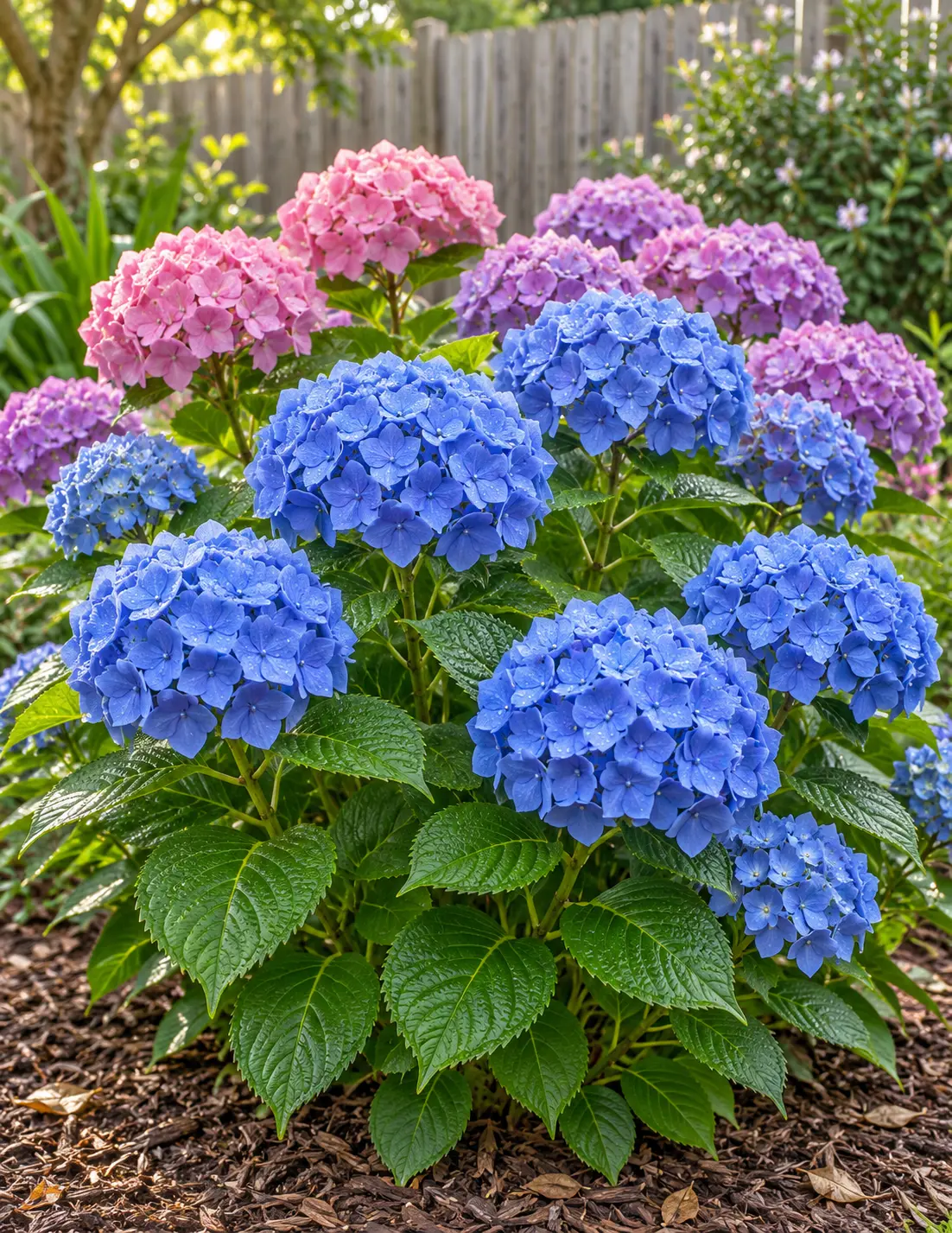
You bought it covered in sky-blue flowers. A couple of summers later, it’s flowering candy pink, and the hydrangea over the fence is still blue.
Nothing’s wrong with your plant. It’s reading your soil. Blue hydrangea flowers need aluminium, and whether the roots can get at it comes down to your soil pH, your fertiliser and even your water.
Here’s why yours turned pink, which hydrangeas can change at all, how to make hydrangeas blue, and when to start so the flowers to come get the benefit.
It’s the Aluminium, Not the Plant
Pink and blue hydrangeas carry the same pigment. On its own, it makes pink to red flowers. When aluminium reaches the flowers, it binds to that pigment and turns it blue, and researchers measuring hydrangea flowers have found blue ones hold far more aluminium than pink ones.
What matters is whether the roots can take aluminium up, and that depends on pH. In acid soil, around pH 5.5 or lower, aluminium is easy to reach and the flowers come out blue. As the soil becomes less acidic, it gets locked away, and from about pH 6.0 and up the flowers are pink. In between, you get purple, mauve or a patchy mix of both.
What colour will your soil give you?
Test your soil, then slide to the reading to see what a blue or pink variety will do there.
Aluminium is locked up at this pH, so the flowers stay pink.
Bands from the University of Georgia, Clemson and Mississippi State extension services. Real flowers blend, and white varieties stay white at any pH.
Which Hydrangeas Can Change
Not all of them. The RHS lists the mophead and lacecap hydrangeas, Hydrangea macrophylla, plus H. serrata and H. involucrata, as the ones that change colour with the soil. That includes the big, round mopheads most of us picture.
White varieties stay white, because there’s no pigment to change, though Mississippi State notes they can show a pink or blue eye. Some red and deep pink varieties barely move too. If yours is one of those, enjoy it as it is.
Why Yours Turned Pink
A pink flush usually has a simple cause. The most common one is soil that’s too alkaline, but phosphorus, hard water and the spot you planted it in all play a part.
Why did yours turn pink?
Pick the one that sounds most like your plant to see the likely cause and the fix.
Your answer will appear here.
Likely cause: lime from the hardscape
Paving can push the pH up. Bricks, paths, patios, walls and concrete driveways can leach lime into the soil beside them. Test the soil right next to the plant. If it’s alkaline, move the plant or grow it in a pot. Yellow leaves with green veins mean the same high pH is locking up iron too, and our iron chelate guide covers that.
Easy fix: catch the rain
Your water may be undoing your work. The RHS recommends watering blue hydrangeas with rainwater to keep the colour, and using tap water only when you need it to stop the plant drying out. A tank or even a few buckets under a downpipe helps.
Easy fix: change the feed
Phosphorus locks up aluminium. Mississippi State’s extension service says phosphorus ties up aluminium so the roots can’t take it up, which leads to pink flowers. Switch to a low-phosphorus feed. Our Sulphate of Potash supplies potassium with no phosphorus at all.
Normal: it’s showing you your soil
The flowers follow the soil, not the label. A plant bought in flower shows the conditions it was grown in. Once it’s planted out, it flowers in whatever colour your soil gives it. Test the pH, then start treating as new growth begins.
Won’t change: enjoy it as it is
Some colours won’t budge. White varieties stay white whatever the soil, and some red and deep pink varieties barely shift. Mississippi State notes that the variety ‘Pia’ is hard to turn blue.
Easy fix: repot it
Ordinary mix isn’t acid enough. For blue flowers in pots, the RHS recommends ericaceous compost, which you’ll find here as azalea and camellia mix. Repot into it and water with rainwater.
More than one cause can be at work, so test your soil pH either way.
When to Start
Timing is where most people go wrong. Colour forms as the flower heads develop, so soil treatments are really about the flowers still to come. That’s why extension services time treatments for spring: Clemson says to start when new growth emerges, and Mississippi State’s spring treatments run for three months, through the season. In Australia that’s roughly September to November.
If you’re reading this while your hydrangea is in flower, you haven’t missed out. Test the soil now, sort out the feeding and watering, and you’ll be ready to start as new growth emerges next spring. If yours is still forming buds, you can start now.
| When | What to do | Why |
|---|---|---|
| Late winter | Test the soil pH and do the fizz test. Switch to a low-phosphorus feed | You need to know your starting point, and phosphorus locks up aluminium |
| Early spring, as new growth emerges | Start the aluminium sulphate, at the rates in our aluminium sulphate guide | Extension services time it for when new growth emerges, so the coming flowers can use it |
| Through spring | Keep going, and water with rainwater where you can | In Australia, the spring treatment window runs roughly from September to November |
| Summer | Enjoy the flowers, and keep the plant well watered | The flowers show how well the soil work went |
| Autumn | Test again. For a slow, long-term shift in a garden bed, consider sulphur | Sulphur takes weeks, or months in cold soil, so it needs a head start |
How to Make Hydrangeas Blue
- Test the soil first. A cheap pH kit tells you where you stand, and the RHS says to check before adding any acidifier. Don’t test within three months of adding lime, fertiliser or compost, or the reading can mislead you.
- Do the fizz test. Drop a little vinegar on a soil sample. If it fizzes, there’s free lime, and the RHS says soil like that can’t realistically be acidified. Grow your blue hydrangea in a pot instead.
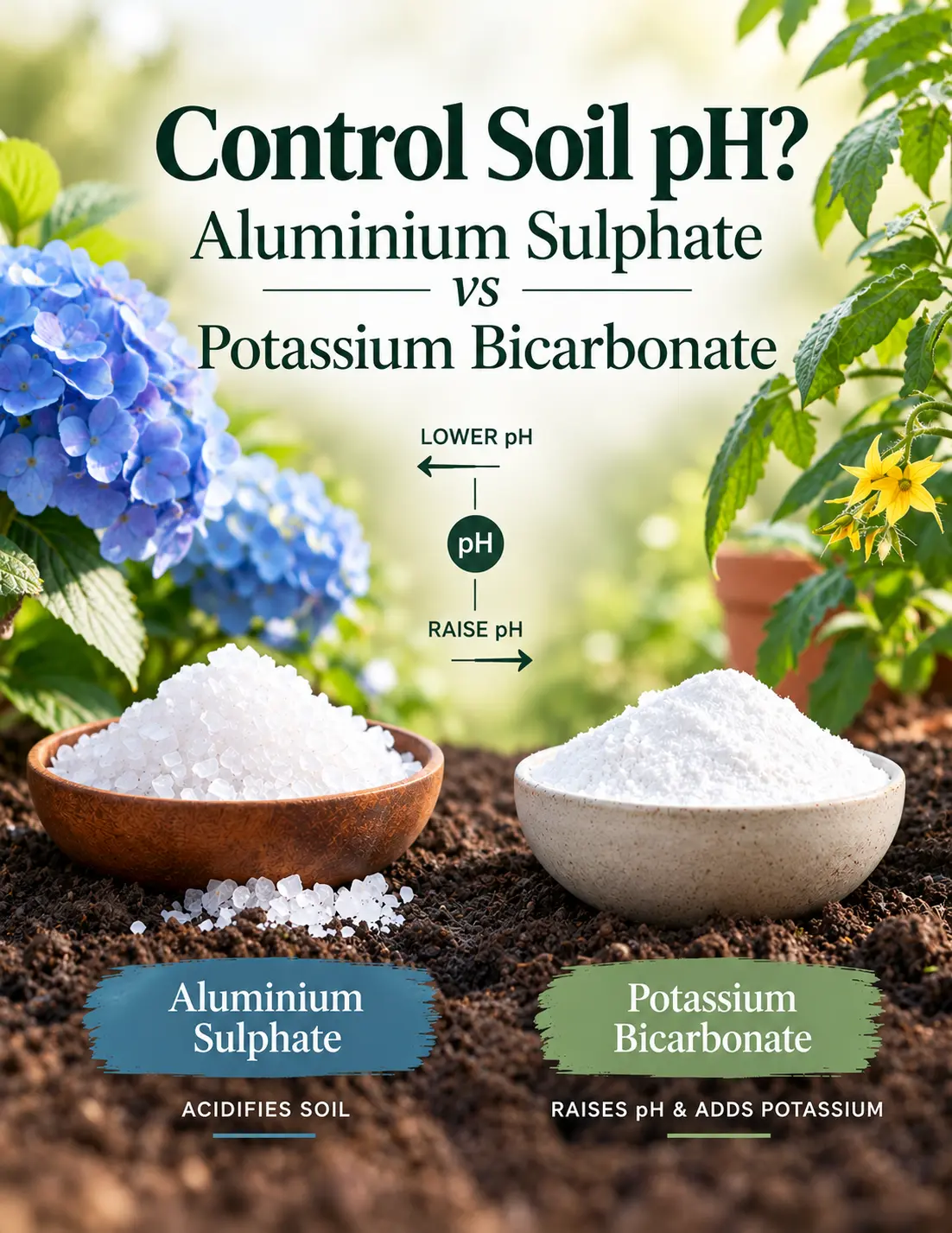
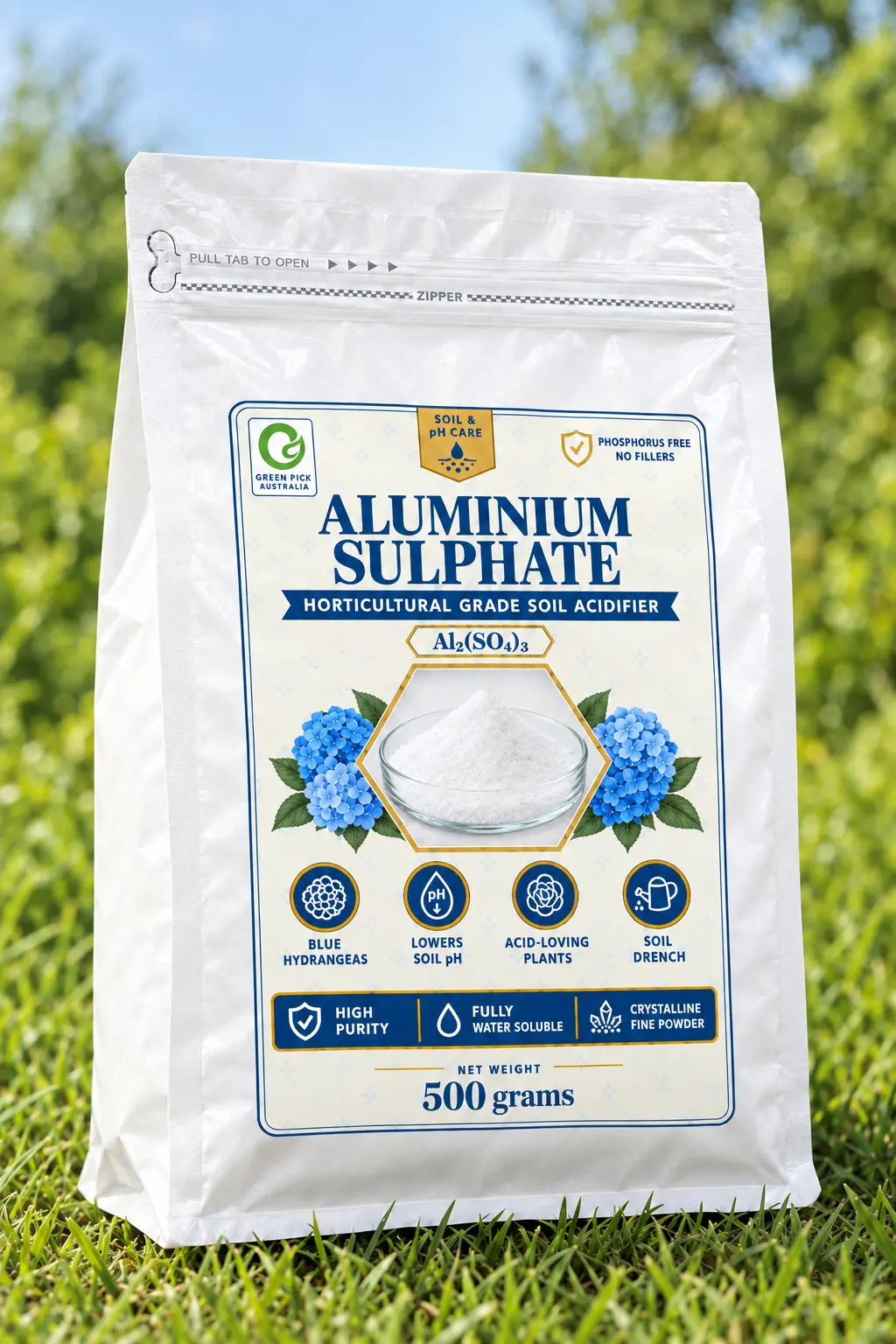
- Give it aluminium sulphate. It does two jobs at once: it makes the soil more acid and it supplies the aluminium the flowers need, which is why hydrangea blueing products contain it. The RHS notes that its effects are rapid. Our Aluminium Sulphate does both jobs, and the rates and mixing are in our aluminium sulphate guide. Water it onto moist soil around the plant and keep it off the leaves, which it can damage.
- Feed it low-phosphorus. Phosphorus ties up aluminium, so skip high-phosphorus and general feeds. Our Sulphate of Potash gives potassium with no phosphorus.
- Water with rainwater. The RHS recommends rainwater for blue hydrangeas, with tap water only when the plant would otherwise dry out.
- Use a pot if the soil won’t budge. In azalea and camellia mix, you control the soil completely. The RHS recommends this for keeping blue flowers on alkaline soil.
Skip the coffee grounds. Used grounds are close to neutral, around pH 6.5 to 6.8, and Oregon State University soil scientists say they won’t lower soil pH enough to help blue hydrangeas.
More Isn’t Bluer
It’s tempting to double the dose and hurry things along. Don’t. In the flower research, once the flowers held a certain amount of aluminium, adding more made them no bluer. Mississippi State is blunt about it: don’t increase the amounts, because aluminium in high doses will harm hydrangeas.
The RHS adds two more warnings. Repeated heavy use can build aluminium up to toxic levels in the soil, and making soil too acid damages plants, so it suggests small amounts over several months. Stick to the rates in our guide, test the pH as you go, and stop pushing once you’re in the blue range.
Hydrangea colour: myth or fact?
Five things you’ll hear over the fence. Tap an answer to see what the evidence says.
White hydrangeas can be turned blue.
Answer: It’s a myth. White varieties stay white whatever the soil, though a few show a pink or blue eye. Read why
Burying rusty nails turns hydrangeas blue.
Answer: It’s a myth. Blue comes from aluminium, not iron, and rusty nails only add iron. Read why
A high-phosphorus fertilizer can stop hydrangeas turning blue.
Answer: It’s a fact. Phosphorus ties up aluminium in the soil, so the roots can’t take it up. Read why
Coffee grounds will turn them blue.
Answer: It’s a myth. Used coffee grounds are close to neutral, around pH 6.5 to 6.8, and won’t lower soil pH enough to help. Read why
The more aluminium sulphate you add, the bluer they get.
Answer: It’s a myth. Past a certain level of aluminium in the flowers they get no bluer, and too much harms the plant. Read why
Your Soil Picks the Colour
A hydrangea’s colour is a soil report you can read from the kitchen window. Pink means the aluminium is locked away. Blue means the roots can reach it.
So test the pH, feed low-phosphorus, water with rainwater, and start the Aluminium Sulphate as new growth emerges in spring. Then be patient. The flowers already out won’t change much, but the ones still to come will show what you did.
Sources and further reading
- Royal Horticultural Society. How to grow shrubby hydrangeas.
- Royal Horticultural Society. Acidifying soil.
- Williams T., University of Georgia Extension (2012). Hydrangea blooms turn colors based on soil pH levels.
- Pugliese P., University of Georgia Extension (2016). Foundation plants must tolerate hot conditions and hard soil.
- Clemson Cooperative Extension. Hydrangea care in South Carolina (HGIC 1067).
- Porter W. C., Mississippi State University Extension (2019). Hydrangeas for Mississippi gardens (Publication 2574, PDF).
- Oregon State University Extension (2023). Coffee grounds boost soil health, and help control slugs.
- Schreiber H. D. and others (2011). Role of aluminum in red-to-blue color changes in Hydrangea macrophylla sepals. BioMetals.