Aluminium Sulphate for Pools: The Overnight Fix for Cloudy Water (and Muddy Dams)

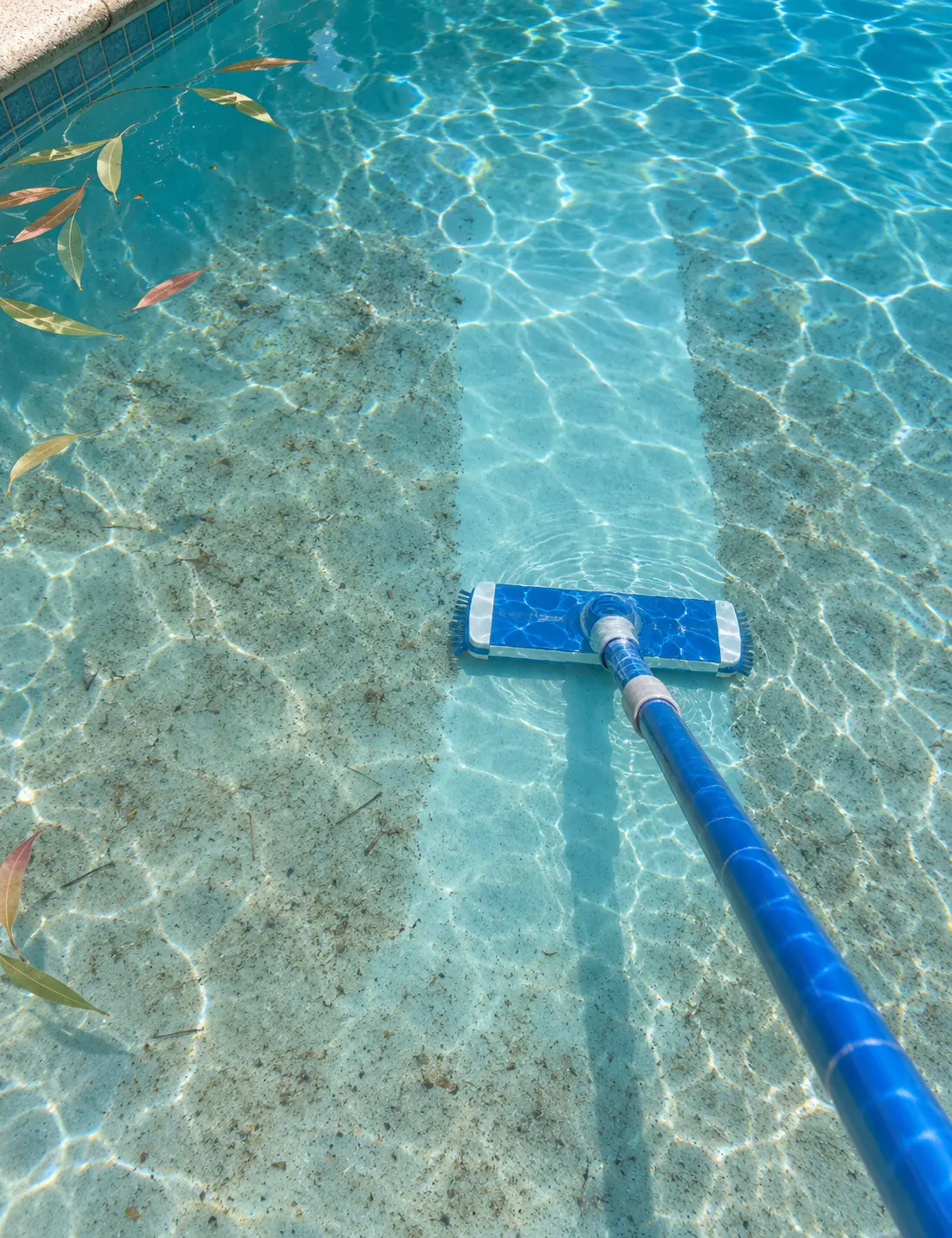
It’s the morning after a summer storm. Yesterday you could see the drain at the deep end; today the pool looks like milky tea, and the filter has run all night without making a dent. This is the job aluminium sulphate does best in pools.
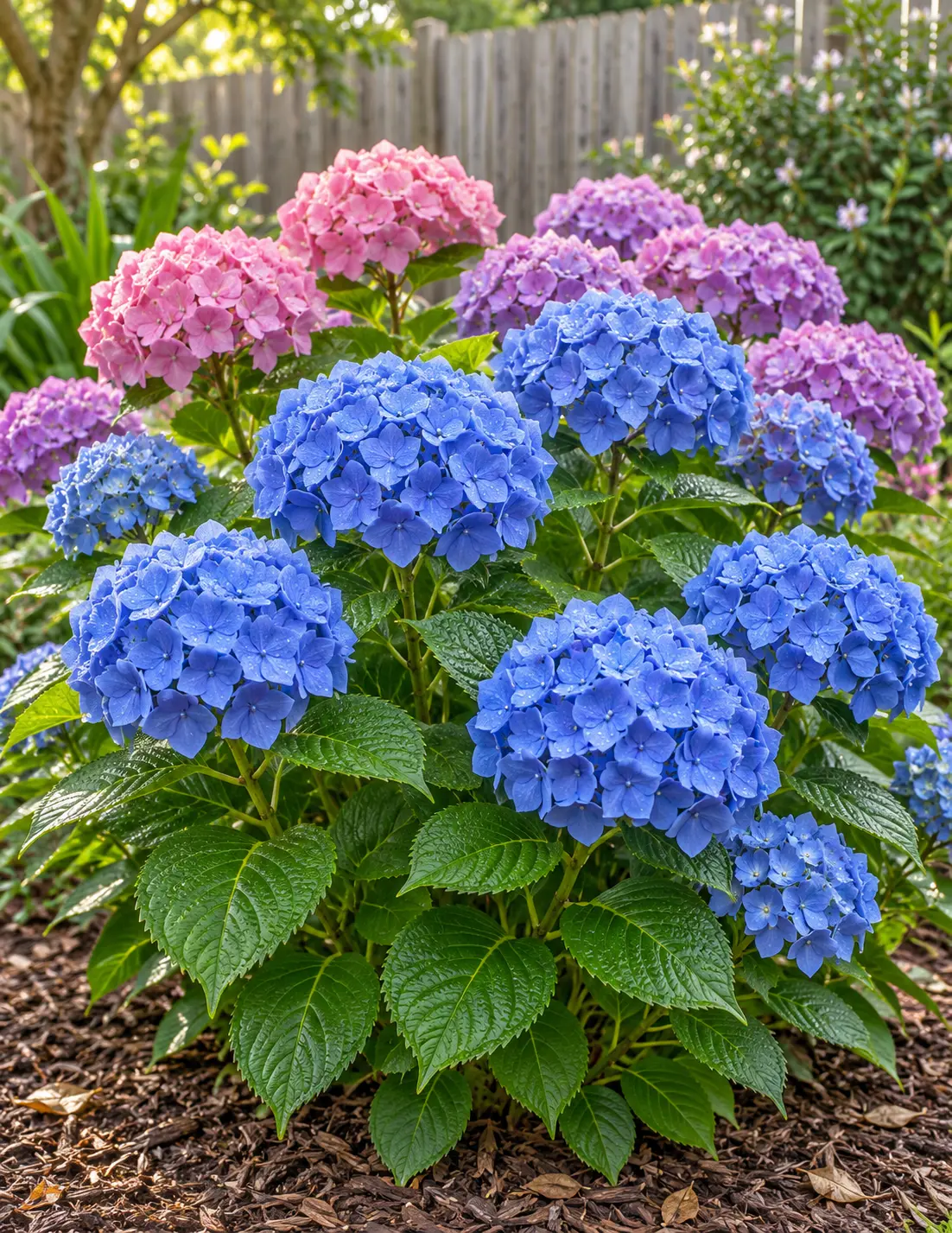
Also called alum, it’s the same white powder gardeners use to turn hydrangeas blue, and it’s often what’s in the box when you buy granular floc at a pool shop. Dissolve it in the evening, let it drag the cloud to the floor overnight, then vacuum the lot out to waste in the morning.
Here’s how much to use for your pool’s size (there’s a calculator), how to do it without crashing your water balance or clogging the filter, and how farmers use the same powder to clear muddy dams and tanks.
How much aluminium sulphate for a pool? 40 to 50 g per 1,000 litres, which is 2 to 2.5 kg for a 50,000 litre pool. Bring the pH to 7.4 to 7.6, dissolve the alum in a bucket of pool water, pour it around the edges with the pump on Recirculate for 2 hours, then switch the pump off overnight. In the morning, vacuum the settled floc to Waste and rebalance the water. It suits pools with a sand filter.
How Aluminium Sulphate Clears Pools
Cloudy water is full of particles too fine for your filter to catch: clay from runoff, dust, ash, dead algae. They stay suspended because each one carries a small negative charge that keeps it apart from the rest.
Aluminium sulphate dissolves into positively charged aluminium that cancels that charge, so the particles start to stick together. At pool doses it also forms a jelly-like floc of aluminium hydroxide that sweeps up everything in its path on the way down. Water engineers call this sweep coagulation, and treatment plants use the same chemistry on drinking water.
There are two things it doesn’t do. It doesn’t sanitise or kill anything; that’s chlorine’s job. And it doesn’t disappear: the floc sits on the floor until you vacuum it out of the pool, which is why you need a filter with a Waste setting.
It also uses up alkalinity. Every gram per 1,000 litres burns through about half a ppm (part per million) of total alkalinity, and the pH drops with it. Alum needs that alkalinity to form a floc at all, so checking it first is the step that decides whether the treatment works, and the one most people skip.
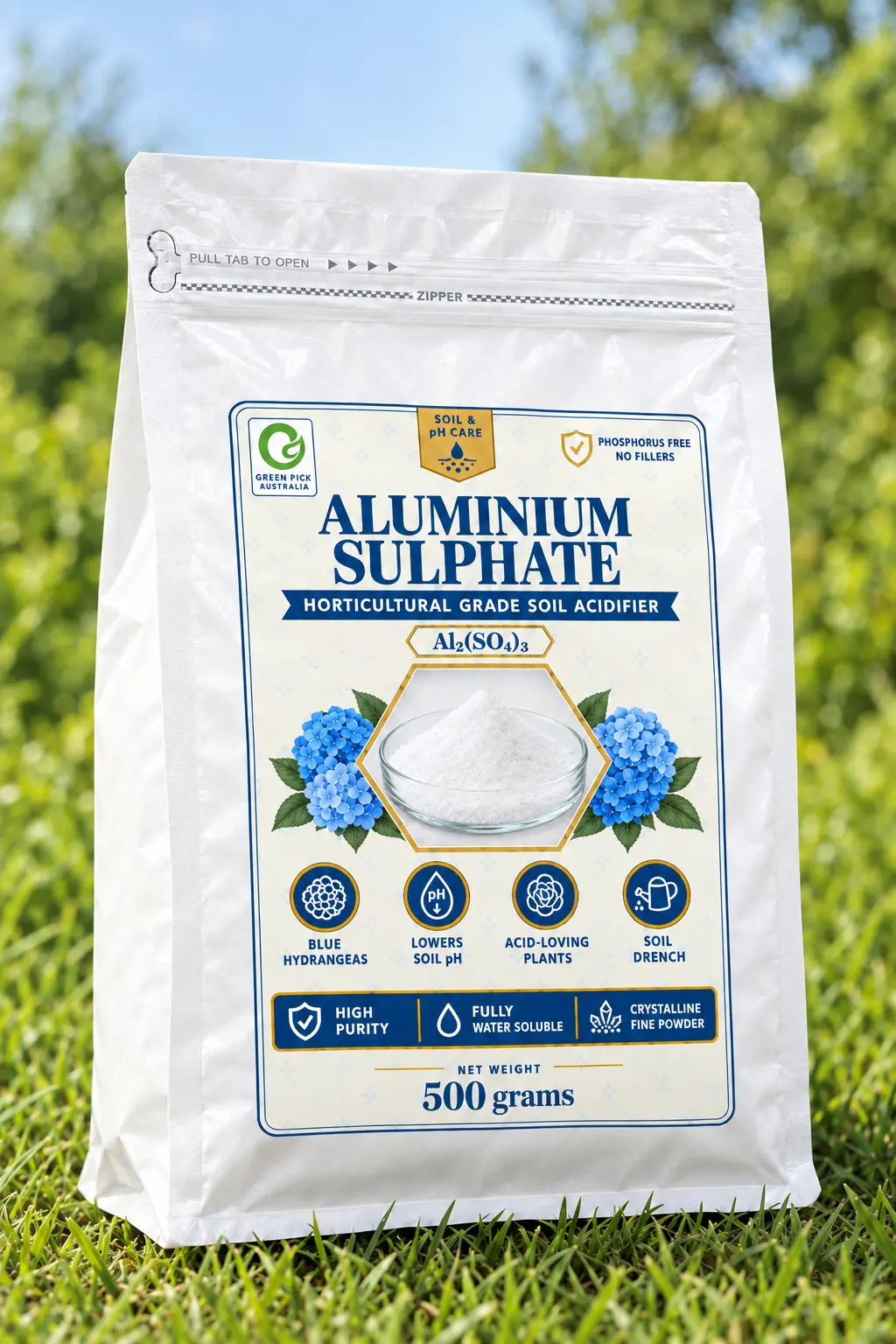
Any grade of aluminium sulphate does the job, garden grade included. Just don’t confuse it with ammonium sulphate, which is a different chemical altogether. Ours is a low-iron grade, at least 98% pure, so you avoid the faint rust-brown stain that iron-bearing grades can leave.
Floc or Clarifier? Pick the Right Fix
Alum is the heavy-duty option. Before you reach for it, check whether a clarifier will do.
| Clarifier | Alum floc | |
|---|---|---|
| How it works | Joins tiny particles into slightly bigger ones that the filter can catch | Drops the cloud to the floor as a heavy floc that you vacuum out |
| Best for | Hazy water where you can still see the floor | Very cloudy or muddy water where you can only see the steps |
| Filter | Any filter, cartridge included | Sand or DE filters with Recirculate and Waste settings |
| How long | Days of filtering | One night to settle, then a vacuum |
| Water lost | None | Some, because you vacuum to waste |
The pool trade’s rule of thumb is simple: if you can still see the bottom, use a clarifier; if you can only see the steps, floc it. A clarifier also works with any filter, which matters if yours is a cartridge.
How Much Aluminium Sulphate for a Pool?
Use 40 to 50 g per 1,000 litres. A typical pool-shop alum floc label says 400 g per 10,000 litres, and our aluminium sulphate guide goes up to 50 g per 1,000 for a one-off clearing dose. Use the low end when the water’s cloudy, and the top end when you can’t see past the steps or it’s brown with mud.
Don’t know your pool’s volume? Find the size closest to yours.
| Pool water | Roughly this size | Cloudy | Very cloudy or muddy |
|---|---|---|---|
| 10,000 L | Round above-ground pool, 3.6 m across and 1 m deep | 400 g | 500 g |
| 20,000 L | Round above-ground pool, 5 m across and 1 m deep | 800 g | 1 kg |
| 30,000 L | 6 m by 3.5 m, 1.4 m average depth | 1.2 kg | 1.5 kg |
| 40,000 L | 7 m by 4 m, 1.4 m average depth | 1.6 kg | 2 kg |
| 50,000 L | 8 m by 4.5 m, 1.4 m average depth | 2 kg | 2.5 kg |
| 60,000 L | 9 m by 4.5 m, 1.5 m average depth | 2.4 kg | 3 kg |
| 80,000 L | 10 m by 5 m, 1.6 m average depth | 3.2 kg | 4 kg |
| 100,000 L | 12.5 m by 5 m, 1.6 m average depth | 4 kg | 5 kg |
Cloudy is 40 g per 1,000 L and very cloudy or muddy is 50 g. To put the alkalinity back afterwards you need up to the same weight of bicarb (sodium bicarbonate) as alum, at 200 g per 10,000 L for each 10 ppm.
Or let the calculator do the sums. It works out the volume from your pool’s shape, the dose, how much alkalinity the alum will use, and how much bicarb puts it back.
Alum dose calculator for pools
Pick your pool’s shape and how cloudy it is, then set the size.
Pool shape
How cloudy is it?
44,800 L of water: dissolve 2.2 kg of aluminium sulphate in two 10-litre buckets of pool water, then follow the steps below.
Before you start: pH 7.4 to 7.6, and alkalinity at 105 ppm or more, so it stays above 80 once the alum has used its share.
What to buy: one 5 kg pack (enough for 2 doses).
Cloudy uses 40 g per 1,000 L and very cloudy or muddy uses 50 g. Alum uses about half a ppm of alkalinity for each gram per 1,000 L, and bicarb at 200 g per 10,000 L raises it about 10 ppm. Round pools are diameter × diameter × 0.785 × depth; oval and kidney pools use length × width × 0.785 × depth, which is an estimate. Average depth is the shallow end plus the deep end, divided by two. Our aluminium sulphate comes in 500 g and 5 kg packs.
⚠️ Weigh it rather than guessing. More isn’t better: every extra gram pulls the pH and alkalinity further down. If the pool’s still hazy after the first vacuum, do a second round once you’ve rebalanced. Zodiac notes that extreme cases may need a second treatment.
How to Floc a Pool With Aluminium Sulphate, Step by Step
Start in the evening, so the pool settles overnight while nobody wants to swim. You’ll need a test kit, a plastic bucket, gloves, safety glasses, a manual vacuum head and pole, and a hose.
- Check your filter. You need a sand or DE filter with a multiport valve that has Recirculate and Waste settings. Cartridge filter? Read the next section before you start.
- Clear the big stuff. Skim the leaves, empty the skimmer and pump baskets, and take the pool cleaner out.
- Test and adjust. Get the pH to 7.4 to 7.6 and the total alkalinity to at least 100 ppm. Alum pulls both down, and it flocs best between about pH 6.5 and 7.5, so start at the top of the normal range, not the bottom.
- Top up the water. Fill it to the top of the skimmer opening, because vacuuming to waste will drop the level.
- Dissolve the alum. Weigh the dose and stir it into a plastic bucket of pool water, about 10 litres for every 2 kg. Add the powder to the water, not the water to the powder, and keep one chemical per bucket.
- Spread it around the edges. Set the valve to Recirculate, start the pump and pour the solution evenly around the edges of the pool. Give the walls and floor a brush.
- Mix for 2 hours, then switch off. Run the pump on Recirculate for about 2 hours, then turn it off. Switch off the timer too, so the pump doesn’t start overnight and stir everything back up. A salt chlorinator stops with the pump.
- Leave it alone. No swimming, no cleaner and no pump for 12 to 24 hours. A grey-brown layer will settle on the floor.
- Vacuum to waste, slowly. Set the valve to Waste, prime the manual vacuum and glide it across the floor slowly enough not to stir the floc back up. Run the hose while you work. If it clouds up, stop and let it settle again. You may need two or three passes.
- Rebalance. Backwash and rinse the filter, then test the water. Add bicarb to bring the alkalinity back up, adjust the pH, then bring the chlorine up before anyone swims. In a salt pool, check the salt level too, because you’ve let some water go.
Cartridge Filters, Salt Pools and Other Setups
- Cartridge filter. Skip the floc unless you can bypass the filter, because otherwise the floc goes straight into the cartridge. Use a clarifier, or vacuum the floor out with a portable pump that doesn’t go through the filter.
- DE filter. Fine if the valve has Recirculate and Waste, but keep the floc out of the grids.
- Salt pool. No problem. Check the salt level after vacuuming to waste, since the top-up water dilutes it.
- Above-ground pool. Works with a sand filter and a waste outlet. Plenty of above-ground pools run cartridges, so check yours first.
- Fibreglass, vinyl and pebble. Always dissolve it first and pour it around the edges, so no undissolved powder sits on the surface.
Using Alum as a Sand Filter Aid
If the water’s only a little dull and you’d rather not lose a night or any water, a small dose can sharpen up a sand filter instead. Poured into the skimmer with the pump running on Filter, alum forms a thin floc layer on top of the sand that catches finer particles than sand alone.
The dose depends on the sand, not the pool: about 375 g for every 100 kg of filter sand (the label on the tank says how much it holds). Backwash first to get a clean pressure reading, then backwash again once the gauge sits 8 to 10 psi (about 55 to 70 kPa) above it. Never use it with a cartridge or DE filter, because it clogs the fabric.
Summer Problems Alum Fixes, and Ones It Doesn’t
Summer throws everything at a pool: storms, dust, ash and algae. Here’s where alum earns its keep, and where something else has to come first.
| Problem | Will alum help? | What to do |
|---|---|---|
| Muddy water after a storm or flood | Yes | Skim, then floc, and give heavy mud longer to settle: AstralPool suggests 24 to 48 hours before you vacuum to waste |
| Dust storm | Yes, if you can’t see the floor | Floc as above. If it’s only hazy, a clarifier and a longer filter run may be enough |
| Bushfire ash | Yes, if there’s a lot of it | Skim and empty the baskets first. Queensland Health says a pool shop may recommend a flocculant when contamination is heavy, and to have an electrician check any equipment the fire may have damaged |
| Green pool | Not on its own | Alum doesn’t kill algae. Shock with chlorine first, then floc the next day to drop the dead algae |
| Hazy after a big pool day | Usually not | Test first. Low chlorine, high pH or a dirty filter are the usual suspects |
Clearing Muddy Dam and Tank Water
Out on the farm, alum is the most common flocculant for muddy water. Clear water matters for more than looks. Muddy water silts up troughs, wears out spray rigs, and weakens glyphosate, paraquat and clethodim, because the fine clay binds the chemicals.
Timing helps, too. Agriculture Victoria lists filter alum at the start of summer as one way to help keep a dam’s sediment on the bottom.
How much for a dam or tank
Dams and tanks need far less than a pool: 15 to 35 g per 1,000 litres, or 15 to 35 kg per megalitre, from mildly cloudy to very muddy. That’s close to the US pond advice of 40 to 90 pounds per acre-foot, which works out at about 15 to 33 g per 1,000 litres.
Alum calculator for dams and tanks
Pick the dam’s shape (or a tank), then set its size at the water line.
About 1.44 ML of water (1,440,000 L). Jar test first, then use 22 to 50 kg of aluminium sulphate, depending on how muddy it is.
Treat the water in a tank if you can. In a dam, wind and inflows stir the sludge back up.
Rates are 15 to 35 g per 1,000 L, which is 15 to 35 kg per megalitre. Dam volume uses Agriculture Victoria’s rule of surface area × deepest point × 0.4 (gully dams: length × width × depth ÷ 5), which suits farm dams up to about 10 ML. The soda ash figure covers all the alkalinity the alum uses, so treat it as a ceiling; builders lime is two-thirds of it. For a whole dam, contact us about larger quantities.
To work out a dam’s volume, Agriculture Victoria uses surface area × deepest point × 0.4, where the 0.4 allows for the sloping sides. A 40 m by 30 m dam that’s 3 m at its deepest holds about 1.44 ML.
Do a jar test first
With a dam you get one shot: the right amount has to go in the first time, because it can’t be topped up later. A jar test takes an evening and a few grams of alum.
- Dissolve 10 g of aluminium sulphate in water and make it up to 1 litre. Every 1 mL of this mix in a 1-litre jar equals 10 g per 1,000 litres.
- Fill five clear 1-litre jars with dam water. Leave one as it is, and use a medicine syringe to add 1.5, 2, 2.5 and 3.5 mL of the mix to the others.
- Stir each one hard for a minute, then gently for a few more, and leave them to stand.
- Check them after a few hours and again the next morning, since settling can take 2 to 24 hours. The lowest dose that leaves clear water is your rate: multiply the millilitres by 10 to get grams per 1,000 litres.
Low alkalinity? Add soda ash first
Alum is acidic, and soft, fresh water such as a rain-fed dam often doesn’t have enough alkalinity for it to work. Western Australia’s agriculture department recommends adding soda ash (sodium carbonate) first, from its own bucket, and mixing it in before the alum. It prefers soda ash to builders lime because it’s safer to handle, dissolves easily and doesn’t make the water harder. If you use builders lime instead, you need two-thirds as much.
The calculator’s soda ash figure covers all the alkalinity the alum will use, so treat it as a ceiling. Test the water’s pH and alkalinity, or have your rural supplier test it, before you decide how much to add.
Applying it
- In a tank, add the soda ash, mix, then add the dissolved alum and mix again. An oar works for stirring small tanks.
- In a dam, spray the two solutions separately across the surface, going lighter over the shallow edges, then mix by running a boat across or dragging a branch through the water.
- Let it settle overnight, then draw the clear water off with a floating take-off, or from an outlet 100 to 200 mm above the bottom.
- Use a tank where you can. In a dam, wind and inflows stir the sludge back up, so results are less reliable.
- Mind the metal. Treated water is corrosive, so use plastic, fibreglass or concrete tanks, and rinse pumps straight after.
- For spraying, take water from the surface so you don’t pull up aluminium clumps, and check its pH before you mix.
Frogs, yabbies and stock
Flocculants shift the pH of the water, and that can kill insects, tadpoles, frogs and yabbies. Aluminium also becomes more available as water turns acidic, and regular dosing builds it up in a dam, where it’s toxic to aquatic life and may affect stock at very high levels. Treat a dam once when you need to, not every month, and have the water tested if you’ve dosed it before.
Then fix whatever made it muddy. Correct the source first, or the mud comes back. Keep stock, ducks and geese from stirring up the bottom, and stabilise any banks that are washing in.
Fish Ponds and Drinking-Water Tanks
Fish ponds need extra care. Alum can lead to fish kills in poorly buffered water. Our instruction guide only doses a fish pond when the alkalinity is at least 50 to 75 mg/L and the pH sits between about 6.5 and 8, in the cool of the morning with the aerator running, one section at a time. Watch the fish for the first hour, and if they’re valuable, get professional advice before you start.
Drinking-water tanks are a no. Alum clears water but doesn’t disinfect it, and the Australian Drinking Water Guidelines set 0.2 mg/L for aluminium, which you can’t check without a lab. If a tank you drink from is muddy or contaminated, talk to your council or your state health department.
Handling Aluminium Sulphate Safely
- Protect your eyes. Aluminium sulphate is classed as causing serious eye damage. Wear safety glasses and gloves, and avoid breathing the dust.
- If it gets in your eyes, rinse with running water for 15 minutes and get medical advice. The Poisons Information Centre is on 13 11 26.
- Rinse splashes off paving. The solution can etch or mark concrete, pavers and paintwork, so hose spills away quickly.
- Look after your tools. It’s corrosive to metals when wet, so use a plastic bucket and rinse everything afterwards.
- One chemical at a time. Never mix it with chlorine or other pool chemicals in a bucket. Add each one to the pool separately.
- Store it sealed and dry, out of reach of children and pets.
Where the Dirty Water Goes
The floc you vacuum out, the backwash and any pool water you let go don’t belong in the stormwater drain or the gutter. Pool backwash can harm the environment, and aluminium is hard on aquatic life, so keep it out of creeks.
Where it should go depends on your water authority. In much of Australia it goes to the sewer through an approved connection, but in Western Australia domestic pool backwash isn’t allowed into the sewer, so ask your council. If you’re not sure, ring your water authority or council before you start.
The Morning After
Done right, the whole job is one evening with a test kit and a bucket, a night of leaving it alone, and a slow morning behind the vacuum head. Get the pH and alkalinity right before you start, weigh the dose, and resist the urge to switch the pump back on early. Gravity does the rest.
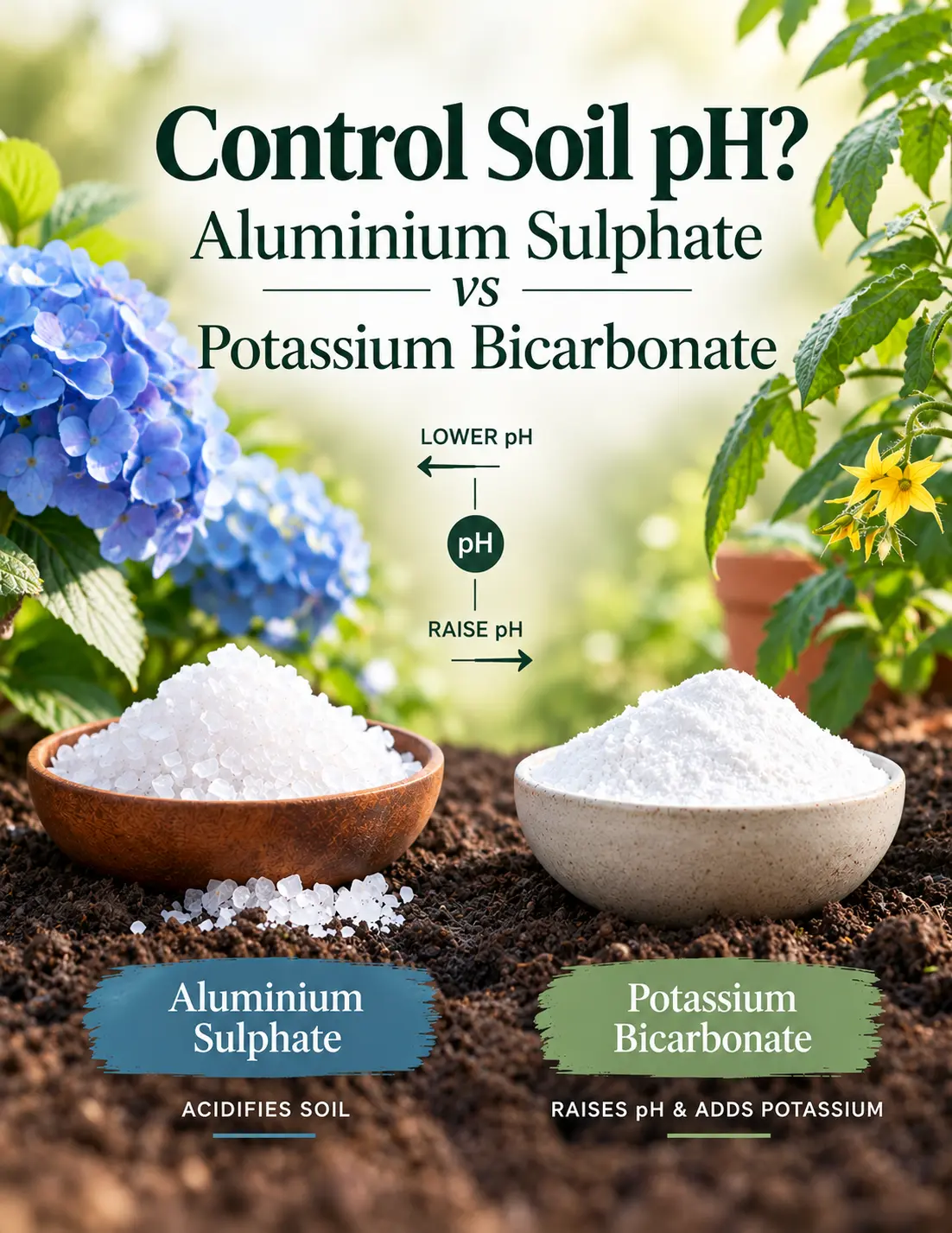
And whatever’s left in the bag won’t go to waste. Aluminium sulphate is a soil acidifier rather than a fertilizer, and it’s what gardeners use to turn pink hydrangeas blue: our guide to turning hydrangeas blue shows how, and the instruction guide covers azaleas, camellias and the other acid-lovers. Our aluminium sulphate comes in 500 g and 5 kg packs, with free shipping Australia-wide.
Sources and further reading
- Green Pick. Aluminium Sulphate: product details.
- Green Pick. Your essential guide to aluminium sulphate: garden, pond and water rates.
- Green Pick. Why are my hydrangeas pink? How to turn them blue.
- Zodiac Pool Care Australia. Pure Perfection Granular Flocculant: label directions.
- Zodiac Pool Care Australia. Pure Balance Alkalinity Up: label directions.
- Zodiac Pool Care Australia. How to fix a green pool.
- AstralPool Australia. Restoring pool health after intense bushfires.
- AstralPool Australia. Restoring your pool after floods and storms.
- Swim University. Pool clarifier vs. flocculant.
- In The Swim. How to use alum flocculant in pools.
- NHMRC. Australian Drinking Water Guidelines: aluminium sulfate (alum).
- NHMRC. Australian Drinking Water Guidelines: aluminium.
- AguaClara, Cornell University. Chemistry of coagulant nanoparticles.
- Chem-Supply. Aluminium sulfate safety data sheet (PDF).
- Queensland Health. Swimming pool safety after a disaster.
- Agriculture Victoria. How much water is in my dam?.
- Agriculture Victoria. Managing farm dams: sediment and stock.
- Department of Primary Industries and Regional Development, WA. Clearing cloudy or coloured water on farms in Western Australia.
- PIRSA, EP Farm Water Security project. Managing turbidity, cloudiness and algae (PDF).
- Mississippi State University Extension. Muddy water.
- Iowa State University. Jar test laboratory method (PDF).
- Lower Murray Water. Swimming pool backwash.
- Water Corporation. Aquatic facilities: pool backwash and drainage.