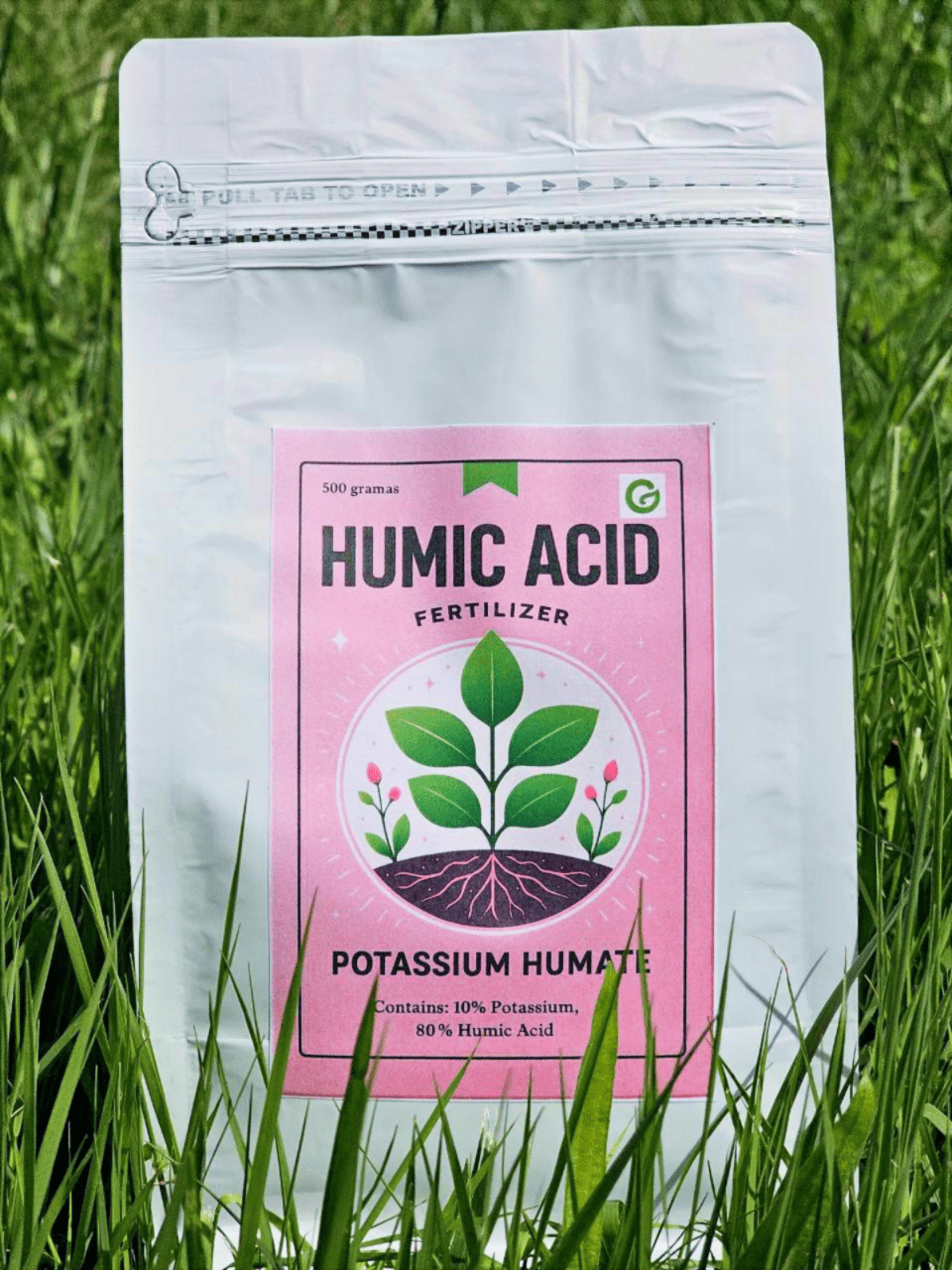

The Humic Iron Complex is 500 g of humic acid powder (potassium humate, 80%+ humic acid, 10% K₂O) and 500 g of iron chelate (6% iron as Fe-EDDHSA). Use it when new leaves come through yellow with green veins. Dissolve the humic acid first and the iron last, pour it onto moist soil, and water it in straight away.
80%+ Humic Acid6% Iron (Fe-EDDHSA)Works to pH 9Humic First, Iron LastWater It In
Our Humic Iron Complex pairs our Humic Acid Powder with our Iron Chelate. This guide shows you how to use humic acid and iron chelate together: when to reach for them, how much of each to mix for pots, beds, lawns and citrus, how to get both into one can safely, and a simple plan for the season.
The best time for a first dose is late winter to early spring, as new growth starts, and autumn is next best. In summer, a leaf spray of the iron on its own works faster.
Shop the Bundle See the Rates ↓
What’s in the Bundle
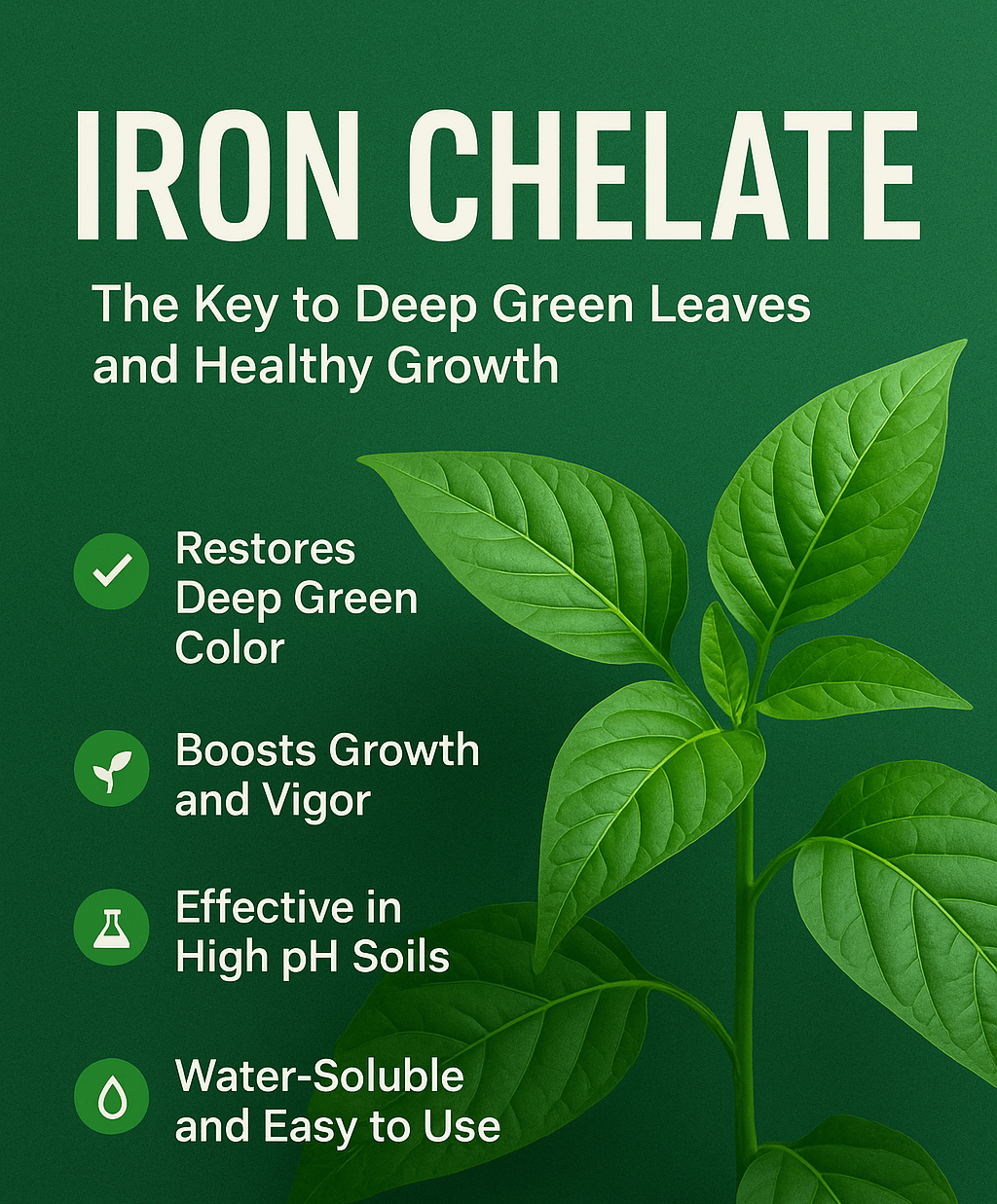
- Iron Chelate, 500 g. A dark reddish-brown powder with 6% iron, held by EDDHSA, a close relative of EDDHA. It keeps iron available from about pH 4 to 9, so it works in the alkaline, limey soil where ordinary iron gets locked up, and it dissolves fully. Our iron chelate guide covers it in detail.
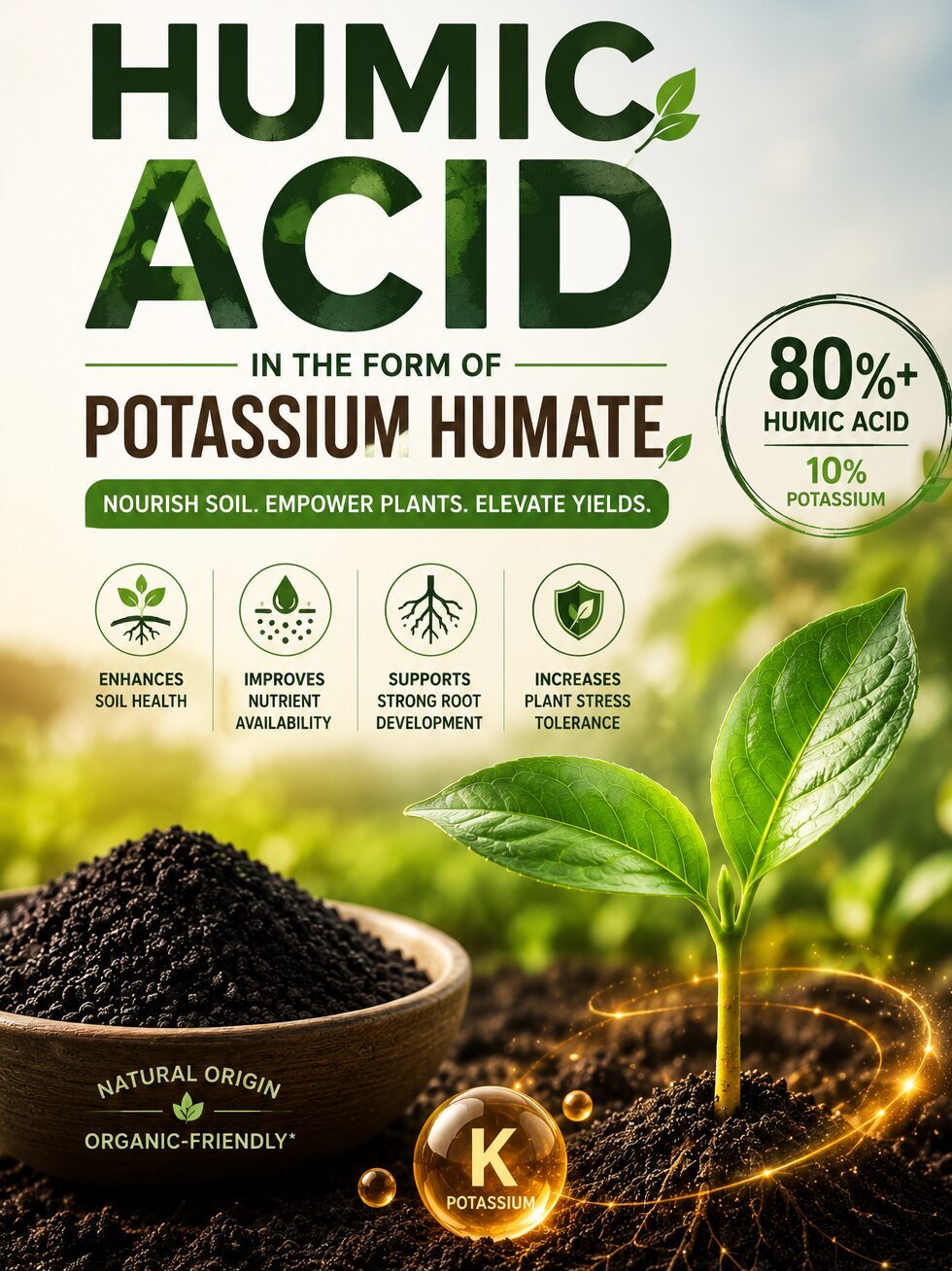
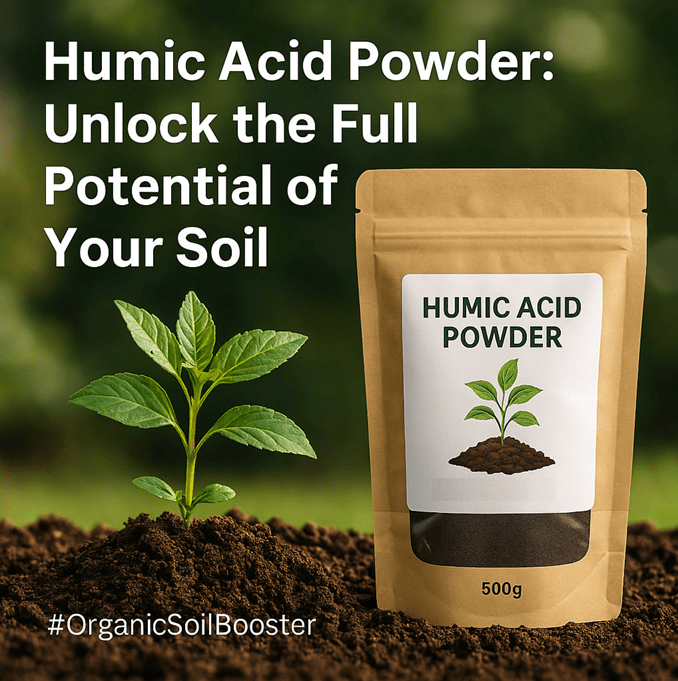
- Humic Acid Powder, 500 g. Potassium humate with at least 80% humic acid and 10% potassium (K₂O). It’s a soil conditioner rather than a fertiliser. It holds onto nutrients such as calcium, magnesium and iron, and at low rates it may help plants take up more of the nutrients you apply. Our humic acid guide has the details.
Humic acid holds iron partly by chelation, the same way an iron chelate does, though its grip is weaker than a synthetic chelate’s. In this bundle, the chelate supplies the iron and the humic acid backs it up.
There’s research behind the pairing. A review by Italian plant scientists found that humic substances can hold iron in forms roots can use and switch on the root’s own iron-uptake system, though most of that evidence comes from controlled experiments rather than real soil. And in a Spanish trial on lemon trees, mixing humic substances into Fe-EDDHA, the close relative of our EDDHSA, improved iron uptake compared with Fe-EDDHA alone, and improved fruit weight too.
When to Use It
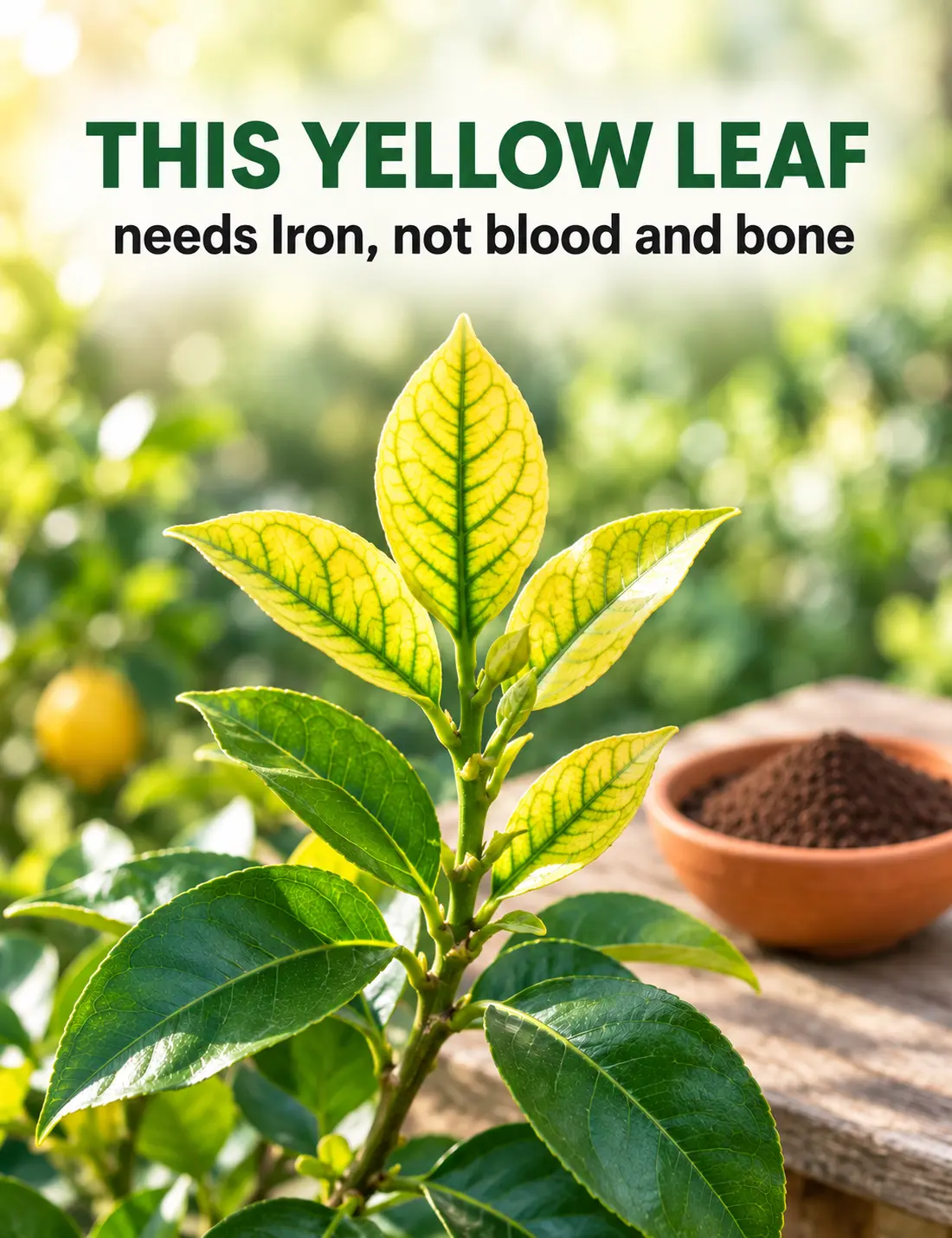
Iron shortage has a look of its own. New leaves come through pale yellow with green veins, while older leaves stay green. It’s most common in alkaline or limey soil, near concrete, with hard water, and in citrus and acid-lovers like azaleas and gardenias.
- Older leaves yellowing first? That usually points to magnesium, not iron. Our Magnesium Sulphate fixes it.
- Whole plant evenly pale? It’s usually short of nitrogen. Our urea guide covers that.
- Not sure? Our guide to yellow leaves with green veins walks you through it.
How Much Humic Acid and Iron Chelate to Use
⚠️ Note: More Iron won’t green plants any faster. Humic acid can go on more often, but not Iron. Halve both for seedlings, indoor plants and sensitive plants, and don’t go higher on trees.
| Use | Humic acid | Iron chelate | How to apply | How often |
|---|---|---|---|---|
| Pots & containers | 1.2 g per litre (12 g in a 10 litre can) | 2 g per litre (20 g in a 10 litre can) | Use it in place of a normal watering, enough to wet the whole pot | Both together in spring. Iron again after 4 to 6 weeks if new leaves are still pale. Humic acid alone every 2 weeks |
| Garden beds, roses & shrubs | 1.2 g per m² | 5 g per m² | A 9 litre can covers 2 m², with 2.4 g of humic acid and 10 g of iron chelate. Pour onto moist soil over the root zone, then hose it in | Both together in late winter or early spring. Iron again after 6 to 8 weeks if needed. Humic acid alone every 2 weeks |
| Lawns | 1.2 g per m² | 1 g per m² | A 9 litre can covers 10 m², with 12 g of humic acid and 10 g of iron chelate. Keep it off paving | Both together in spring and autumn, if new blades come through yellow. Humic acid alone every 2 to 4 weeks |
| Citrus & fruit trees | 1.2 g per m² of canopy (about 8.5 g for a tree 3 m across) | Young trees 5 to 10 g. Mature trees 50 to 100 g | Dissolve both in 10 to 20 litres of water, pour into a shallow trench or ring of holes around the drip line, then water in | Both together in late winter or early spring. Citrus can have a second iron dose in summer. Humic acid alone every 4 weeks, spring to autumn |
| Hydroponics | 2 to 6 g per 100 litres, added to the diluted solution, never to the calcium (A) tank | 3 to 5 g per 100 litres, usually in the A tank | Don’t combine them in one stock tank. Jar test first | Each fresh batch |
| Leaf spray | Leave it out | 1 g per litre, up to 1.5 g on fruit trees | Spray young leaves late in the afternoon, below 29 °C. Wet both sides and avoid ripening fruit | Every 2 to 3 weeks while new leaves are pale |
Water every dose in straight away. Sunlight breaks iron chelates down.
How much of each do you need?
Pick what you’re treating, then slide to your can, area or tree.
A 10 litre can: 12 g of humic acid and 20 g of iron chelate. Use it in place of a normal watering, enough to wet the whole pot.
Humic acid on its own every 2 weeks while plants are growing. Add the iron in spring, and again after 4 to 6 weeks if new leaves are still pale.
The 500 g of humic acid covers 41 doses this size.
Weigh a level teaspoon of each powder once on kitchen scales, and you’ll know how many spoons make a dose. Tree doses use canopy width, the spread of the branches. Halve both for seedlings and indoor plants.
| Use | Iron chelate (500 g) | Humic acid (500 g) |
|---|---|---|
| Pots | 25 cans of 10 litres | 41 cans of 10 litres |
| Garden beds | 100 m², once | About 400 m² |
| Lawns | 500 m², once | About 400 m² |
| Citrus & fruit trees | 5 to 10 mature trees | 58 doses for trees 3 m across |
Humic acid goes on more often, so on pots, beds and lawns it usually runs out before the iron. Both come separately in 500 g and 5 kg packs when you need a top-up.
Can They Go in the Same Can?
Yes. Both powders dissolve fully, and in the lemon trial above, Fe-EDDHA went on mixed with humic substances. The order matters, and our two guides agree on it: humic acid goes into the water first, before anything else, and iron chelate goes in last.
Mix it fresh, though. Potassium humate is alkaline, around pH 9 to 11 in solution, and one humate maker lists pH 10 to 11. Fe-EDDHSA is most stable near pH 7 and holds iron from about pH 4 to 9, and in strongly alkaline water, iron drops out as iron hydroxide. So make up each can just before you use it, pour it on straight away, and don’t store leftovers.
The first time, do a jar test. Mix both at the same strength in a clear jar of water, for example 1.2 g of humic acid and 2 g of iron chelate in a litre, then wait 30 minutes. If you see clumps, sludge or sediment, apply them separately: water the humic acid on first, then the iron in a second can.
Keep these out of the can:
- Calcium nitrate and other calcium fertilisers. Humic acid curdles with calcium.
- Strong acids, or anything at pH 4 or below. Humic acid curdles, and the chelate loses its grip on the iron.
- Pesticide concentrates and spray oils.
How to Apply It
- Water the soil first. Moist soil takes the mix evenly. Don’t apply it to bone-dry soil or wilting plants.
- Weigh both doses. Use kitchen scales, or weigh a level teaspoon of each powder once, so you know how many spoons make a dose.
- Dissolve the humic acid first. Fill the can most of the way and stir the humic acid in until it’s fully dissolved. The water turns dark brown, which is normal.
- Add the iron chelate last. Stir until it’s dissolved too.
- Pour it over the roots. Wet the whole pot, or cover the root zone of a bed. For trees, pour it into a shallow trench or ring of holes around the drip line, not at the trunk. On lawns, keep it off paving.
- Water it in straight away. Sunlight breaks iron chelates down, and watering carries both down to the roots.
- Rinse off splashes. Both can stain paving, tiles and concrete, so hose splashes off hard surfaces and leaves.
- Mix only what you need. Don’t store the mixed solution.
Wear gloves and eye protection when you handle the powders, as the iron chelate’s safety data sheet advises.
A Season With the Bundle
| When | What to apply | Notes |
|---|---|---|
| Late winter to early spring | Humic acid and iron chelate together | The best time for iron, as new growth starts |
| Spring to autumn | Humic acid on its own: every 2 weeks for pots and beds, 2 to 4 weeks for lawns, 4 weeks for trees | No iron unless new leaves turn pale |
| 4 to 8 weeks after the first dose | Iron again, with that round’s humic acid, if new leaves are still pale | After 4 to 6 weeks for pots, 6 to 8 weeks for beds |
| Summer | A second iron dose for citrus | For a faster fix on any plant, spray the iron on its own |
| Autumn | Iron for lawns, if new blades come through yellow | The next best time for iron after spring |
| Winter | Nothing | Wait for new growth before the next dose |
Limey soil, concrete and hard water keep locking iron up, so plants growing near them may need a dose every spring.
Not Greening Up?
- Look at the new leaves. Iron applied to the soil shows in new growth first, not in old leaves. Fast growers often green up in 1 to 2 weeks, and slow growers like gardenias and azaleas can take 6 weeks or more.
- Check the drainage. Waterlogged or cold roots can’t take up iron. Fix drainage, let pots dry between waterings, and wait for warmer soil.
- Check the rest of the feeding. Natives given high-phosphorus fertiliser often turn yellow. Switch to a low-phosphorus native fertiliser.
- Give the humic acid a season. Its effects are gradual and show most in poor or stressed soil.
Frequently Asked Questions
Can I mix humic acid and iron chelate in the same can?
Do I use both every time?
How long until I see a difference?
Can I spray it on the leaves?
Is it safe on lawns?
Is this bundle a fertilizer?
Can I use it in hydroponics?
How should I store it?
Shop the Humic Iron Complex
The bundle gives you 500 g of Humic Acid Powder and 500 g of Iron Chelate (6% Fe) in resealable packs. It suits lawns, garden beds, vegetables and herbs, fruit trees and citrus, and pot plants.
🚚 Free shipping Australia-wide · 🔒 Secure checkout · 🌱 For home gardens and commercial growers
Shop the Bundle Humic Acid Guide Iron Chelate Guide
Sources and further reading
- Green Pick. Humic acid powder: how much to use and how to apply it.
- Green Pick. Iron chelate: how much to use and how to apply it.
- Green Pick. Why high-purity potassium humate matters.
- Green Pick. Iron Chelate 6% safety data sheet (PDF).
- Zanin L., Tomasi N., Cesco S., Varanini Z. and Pinton R. (2019). Humic substances contribute to plant iron nutrition acting as chelators and biostimulants. Frontiers in Plant Science 10: 675.
- Sánchez-Sánchez A., Sánchez-Andreu J., Juárez M., Jordá J. and Bermúdez D., University of Alicante (2002). Humic substances and amino acids improve effectiveness of chelate FeEDDHA in lemon trees. Journal of Plant Nutrition 25: 2433 to 2442.
- Klem-Marciniak E., Huculak-Mączka M., Marecka K., Hoffmann K. and Hoffmann J. (2021). Chemical stability of the fertilizer chelates Fe-EDDHA and Fe-EDDHSA over time. Molecules 26: 1933.
- Humintech. PowHumus WSG 85 product information (PDF).