
Potassium Sulphate (SOP) Fertiliser: The Complete Guide for Australian Growers
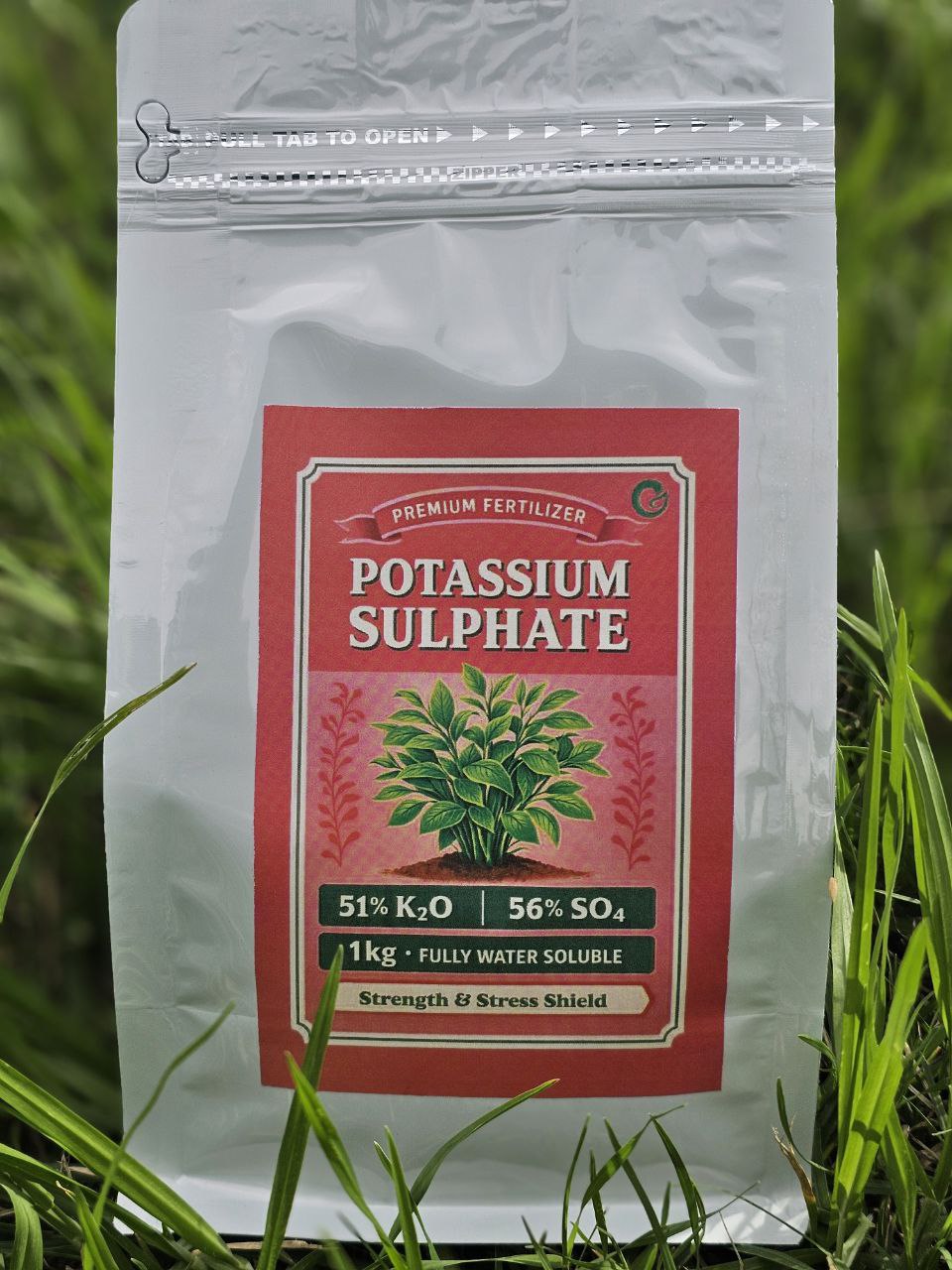
Welcome to your guide on Potassium Sulphate (Sulphate of Potash, SOP), a premium potassium fertiliser used by growers who want stronger plants, better fruit quality and healthier soils without the risk of chloride build-up.
Potassium is one of the three essential macronutrients plants need to thrive, playing a key role in flowering, fruit development, water regulation and overall plant strength. Our Potassium Sulphate is a fine, water-soluble powder that delivers high-quality, low-chloride potassium, making it especially valuable for sensitive crops such as fruit, vegetables, berries and ornamentals.
In this guide, we’ll explore why potassium matters, when to use Potassium Sulphate, and how to apply it correctly for the best results.
Why Choose Potassium Sulphate?
Potassium Sulphate supplies two nutrients in one product: potassium, for fruit quality and plant strength, and sulphur, an essential secondary nutrient that supports enzyme activity, protein formation and plant metabolism.
| Nutrient | Content | What It Does |
|---|---|---|
| Potash (K2O) | ≥51% | Supports flowering, fruit size, sugar content, colour and firmness, and helps plants regulate water |
| Sulphur (S) | ~18% | Supports enzyme activity, protein formation and flavour compounds in crops such as onions, garlic and brassicas |
| Chloride (Cl) | Very low | Safe for chloride-sensitive crops and soils where salt build-up is a concern |
Unlike muriate of potash (MOP, potassium chloride), Potassium Sulphate is very low in chloride, making it the preferred choice for chloride-sensitive crops and for soils or irrigation water that already carry salt.
Key Benefits
- ●High Potassium for Stronger Plants: Potassium strengthens cell walls and improves stem rigidity, helping plants stand up to wind, heavy crops and stress.
- ●Better Flowers & Fruit Quality: Adequate potassium supports better-flavoured fruit with good colour, firmer skins and longer shelf life.
- ●Low Chloride, Safe for Sensitive Crops: Ideal for potatoes, tomatoes, berries, citrus, grapes, avocados and greenhouse crops.
- ●Highly Water-Soluble Powder: ~99% water-soluble, so it can be scattered dry and watered in, dissolved for liquid feeding, or used in fertigation and foliar sprays.
- ●Improved Stress Tolerance: Potassium regulates the pores on leaves that control water loss, so well-fed plants handle heat and dry spells better than potassium-deficient ones.
- ●Phosphorus-Free: Contains no phosphorus, so it is suitable for phosphorus-sensitive Australian natives such as banksias, grevilleas and waratahs when they need extra potassium.
When to Use Potassium Sulphate
Potassium Sulphate is most beneficial during flowering, fruiting and fruit fill, when a plant’s potassium demand peaks. It is particularly useful for:
- ●Fruit Trees: Supports fruit development, sweetness and shelf life in citrus, stone fruit, apples, mangoes and avocados.
- ●Vegetables: Excellent for tomatoes, capsicums, cucumbers, potatoes, onions and root crops.
- ●Flowering Plants: Supports flowering and stronger stems.
- ●Berry Crops & Grapes: Supports fruit size, colour and flavour.
- ●Correcting Potassium Deficiency: Recommended when plants show yellowing, then browning, along the edges of older leaves, weak stems, poor fruit set or reduced yields. A soil or leaf test confirms it.
How to Apply Potassium Sulphate
⚠️ Note: Application rates vary with soil fertility, crop type and growth stage. Start at the lower end and adjust based on your plants’ response. Always water in well after applying dry powder.
Home Gardens
| Use | Rate | Application | Frequency |
|---|---|---|---|
| Potted plants & small gardens | Dissolve 5–10 g (1–2 level tsp) in 4 L of water (1.25–2.5 g/L). | Water onto moist potting mix around the base of the plant. Avoid wetting leaves unless using the foliar rate below. | Every 2–3 weeks during flowering and fruiting. |
| Vegetable gardens & flower beds | Dry: 20–30 g per m². Liquid: 20 g in 10 L of water (2 g/L). |
Scatter evenly around plants, keeping powder off leaves, and water in well. Or apply the liquid mix at 2–5 L per m². | Every 3–4 weeks during active growth and fruiting. |
| Fruit trees & citrus | Young trees (1–3 yrs): 50–100 g per tree. Mature trees: 150–200 g per tree. |
Spread evenly under the canopy out to the drip line, about 30 cm away from the trunk, and water in well. | 2–3 times a season: at flowering, at fruit set and during fruit fill. |
| Berries & grapes | 20–30 g per m². | Scatter along the row or around each plant and water in well. | 1–2 times: at early fruit development and again 3–4 weeks later. |
| Foliar spray (any of the above) | 10–20 g per litre of water (1–2%). | Mist leaves until just wet, early morning or late afternoon. Use the lower rate for vegetables and soft-leaved plants. | Every 10–14 days during fruiting, up to 3–4 sprays. |
Tip: Dissolve the powder in lukewarm water and stir for a minute or two until clear. For foliar sprays, test on a few leaves first and avoid spraying in temperatures above 30°C or on drought-stressed plants.
Large-Scale Farms & Orchards
| Method | Typical Rate (per application) | Timing & Notes |
|---|---|---|
| Soil application (broadcast or banded) | 40–80 kg/ha, depending on soil potassium levels. | At planting or before flowering, then again during fruit fill if needed. Base the total seasonal rate on a soil test. |
| Fertigation (drip or sprinkler) | 5–15 kg/ha per application, at up to 1 g/L in the final irrigation water. | From flowering to fruit fill, every 7–14 days. Use the upper end for heavy-cropping citrus, avocados, grapes and potatoes. |
| Foliar spray | 1–2% solution (10–20 g per litre), about 3–10 kg/ha in 300–500 L of water. | From fruit set to colour change, every 10–14 days, 2–4 applications. Use 1% on vegetables and up to 2% on tree crops and vines. |
Mixing for Fertigation
- ●Stock solution strength: dissolve no more than about 8–10 kg per 100 L of water (80–100 g/L). Stronger mixes may not fully dissolve, especially in cold water.
- ●Example: a 10% stock (10 kg in 100 L) injected at 1:100 delivers 1 g/L to your crop.
- ●Keep it away from calcium: do not mix Potassium Sulphate with calcium nitrate or other calcium products in the same stock tank. They form gypsum, which can block drippers. Use separate A and B tanks.
For a more detailed dosage per plant and in different conditions, please use our Smart Fertigation Planner.
Why Growers Trust Potassium Sulphate
- ✔High potassium content (≥51% K2O)
- ✔Supplies essential sulphur (~18% S) for plant metabolism
- ✔Low chloride, safe for sensitive crops
- ✔Highly water-soluble powder (~99%)
- ✔Phosphorus-free, suitable for Australian natives
- ✔Suitable for dry soil application, fertigation and foliar feeding
Frequently Asked Questions
What makes Potassium Sulphate better than other potassium fertilisers?
Can I use it for tomatoes and potatoes?
Is it safe for potted plants?
Can I use it on Australian native plants?
Does it dissolve in water?
Can I mix it with other fertilisers?
What pack sizes are available?
Shop Potassium Sulphate Today
Give your plants the potassium they need for stronger growth, better flowering and higher-quality harvests. Premium Potassium Sulphate (SOP) with FREE Australia-wide shipping. 🌱