
High-Concentration Zinc for Agriculture, Feedstock & Industrial Applications
⚠️ NOT FOR HUMAN CONSUMPTION OR MEDICAL USE. This product is intended strictly for agricultural, livestock feedstock, and industrial applications only.
⚠️ Feedstock formulations must be prepared by qualified nutritionists or livestock specialists. Zinc is a trace mineral, and incorrect dosage levels may be harmful or potentially dangerous to animals, particularly in concentrated feed applications.
🌱 Agricultural Use Guide & Typical Application Rates
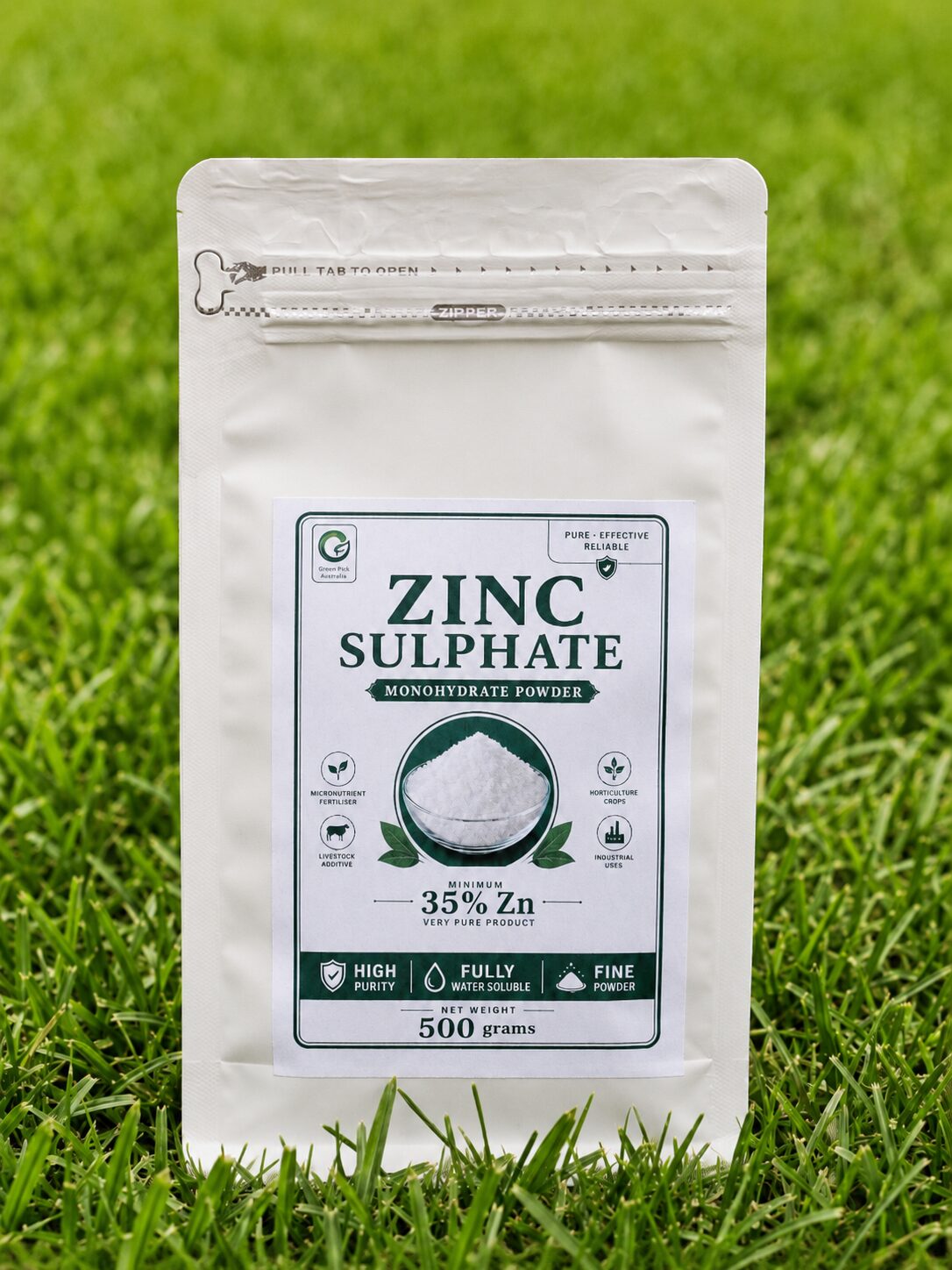
Because Zinc Sulphate Monohydrate is a highly concentrated zinc source (~35.5% Zn), only small amounts are generally required for effective correction and maintenance.
Below are general-use examples commonly used in horticulture and agriculture.
⚠️ Application rates vary depending on crop type, soil conditions, deficiency severity, pH, and local agronomic recommendations.
🪴 Potted Plants & Indoor Plants
General Maintenance
- 0.5–1 gram per litre of water
- Apply every 4–8 weeks during active growth
Zinc Deficiency Correction
- Up to 2 grams per litre
- Apply once, then reassess plant response after 2–3 weeks
⚠️ Avoid over-application in pots, as excess zinc can build up quickly in confined growing media.
🌿 Vegetable Gardens & Raised Beds
Soil Application
- 5-15 grams per square metre
- Apply before planting or during soil preparation
Foliar Spray
- 1–2 grams per litre
- Spray every 2–4 weeks if deficiency symptoms appear
Suitable for:
✔ Tomatoes
✔ Cucumbers
✔ Capsicums
✔ Leafy greens
✔ Beans and legumes
🌳 Fruit Trees & Citrus
Young Trees
- 25–50 grams per tree (depending on the tree)
- Apply around the drip line 1–2 times annually
Mature Trees
- 100–250 grams per tree (depending on the tree)
- Typically applied once annually or according to soil test recommendations
Foliar Correction
- 1–4 grams per litre (depending on the tree)
- Apply during active growth flushes
Commonly used for:
✔ Citrus
✔ Avocado
✔ Stone fruit
✔ Apples and pears
✔ Mango and tropical fruit trees
🌱 Lawns & Turf
Granular Soil Application
- 10-15 grams per square metre
- Apply every 3–6 months if deficiency is present
Foliar Application
- 1–2 grams per litre
- Light spray coverage during growing season
🚜 Broadacre Farming & Large-Scale Agriculture
Typical Soil Application Rates
- 5–10 kg per hectare
- Based on soil analysis and crop requirements
Foliar Programs
- 0.5–2 kg per hectare
- Applied during key growth stages
Suitable for:
✔ Wheat
✔ Barley
✔ Corn
✔ Canola
✔ Cotton
✔ Pasture systems
💧 Fertigation Systems
General Fertigation Range
- 0.5–2 kg per hectare per application
- Adjust according to irrigation volume and crop demand
Always ensure:
✔ Proper dilution
✔ System compatibility
✔ Even distribution
⚠️ Important Agricultural Notes
✔ Zinc availability is strongly affected by soil pH
✔ High-phosphorus soils may reduce zinc uptake
✔ Sandy and alkaline soils commonly require supplementation
✔ Excess zinc may cause nutrient imbalance or plant toxicity
For best results:
- Conduct soil or tissue analysis
- Use DTPA soil testing where appropriate
- Follow local agronomic guidance
🧪 Why Zinc Matters in Plant Growth
Zinc is essential for:
✔ Enzyme activity
✔ Root development
✔ Chlorophyll formation
✔ Growth hormone production
✔ Flowering and fruit set
✔ Overall plant vigour
Common Signs of Zinc Deficiency
- Stunted growth
- Small leaves
- Interveinal yellowing
- Poor root development
- Reduced flowering and yield
🐄 Livestock & Feedstock Applications
Zinc is an essential trace mineral in animal nutrition and plays an important role in (but make sure to get advice from a specialist, as a small amount of extra dose can be harmful to animals):
✔ Immune function
✔ Hoof and skin integrity
✔ Growth performance
✔ Reproduction
✔ Metabolic and enzyme activity
Suitable for:
- Cattle
- Sheep
- Swine
- Poultry
- Aquaculture
⚠️ IMPORTANT FEED SAFETY NOTICE
⚠️ This product is highly concentrated and for stock feeds must only be used in professionally formulated feed programs.
⚠️ Very small quantities can represent high zinc dosages for certain animal species. Incorrect inclusion rates may cause toxicity, health complications, or serious harm to livestock.
Always consult a qualified:
- Livestock nutritionist
- Feed compounder
- Veterinarian
- Agricultural specialist
before inclusion in feed formulations.
🏭 Industrial Applications
Zinc Sulphate Monohydrate is widely used in:
✔ Water treatment and algae control
✔ Electroplating operations
✔ Pigment manufacture
✔ Textile mordant applications
✔ Timber preservation treatments
📋 Product Specifications
| Specification | Details |
|---|---|
| Product Name | Zinc Sulphate Monohydrate |
| Appearance | White crystalline powder/granules |
| Zinc (Zn) Content | min. 35% |
| Sulphur | min. 17.5% |
| Chemical Form | Monohydrate |
| Solubility | Highly water soluble |
⚗️ Mixing & Compatibility
⚠️ Zinc Sulphate should not be directly mixed with concentrated phosphate fertilisers, as precipitation may occur.
✔ Always conduct a compatibility test before large-scale tank mixing.
❓ Frequently Asked Questions
Is this suitable for organic farming?
Organic certification requirements vary. Please confirm with your certification body before use.
Can excessive zinc application damage plants?
Yes. Over-application may cause toxicity or nutrient imbalance.
Why choose monohydrate over heptahydrate?
Monohydrate contains significantly higher zinc concentration, improving efficiency and reducing required application rates.
✅ Reliable Zinc Supply for Agriculture, Feedstock & Industry
Zinc Sulphate Monohydrate delivers a dependable, high-analysis zinc source trusted across agricultural, livestock, and industrial sectors.
Its:
✔ High zinc concentration
✔ Excellent solubility
✔ Efficient application rates
✔ Reliable performance
make it an ideal solution for professional growers, horticultural users, and industrial operations.