
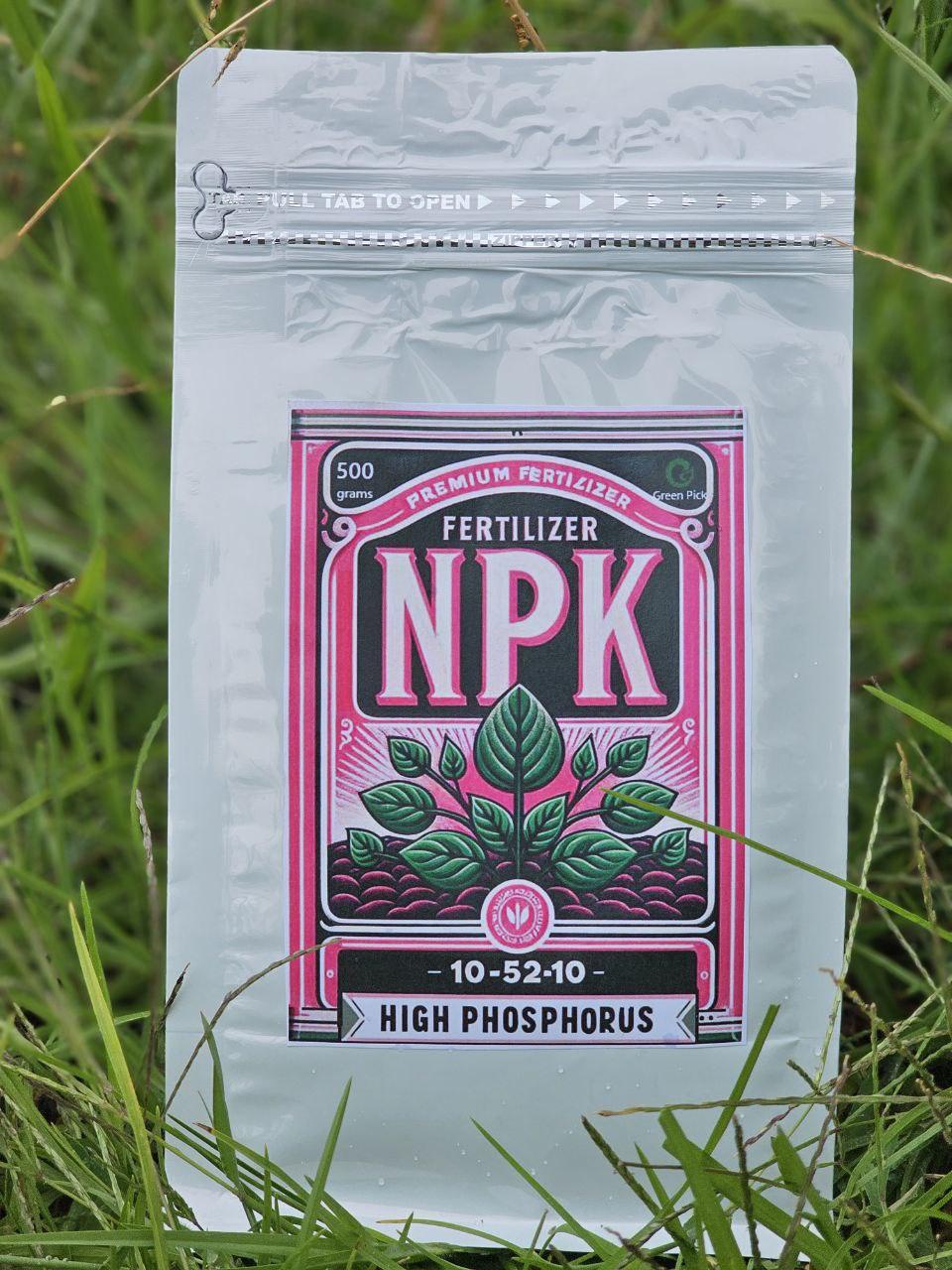

NPK 10-52-10 Fertiliser: A Guide to Targeted Phosphorus Application for Australian Gardeners and Growers
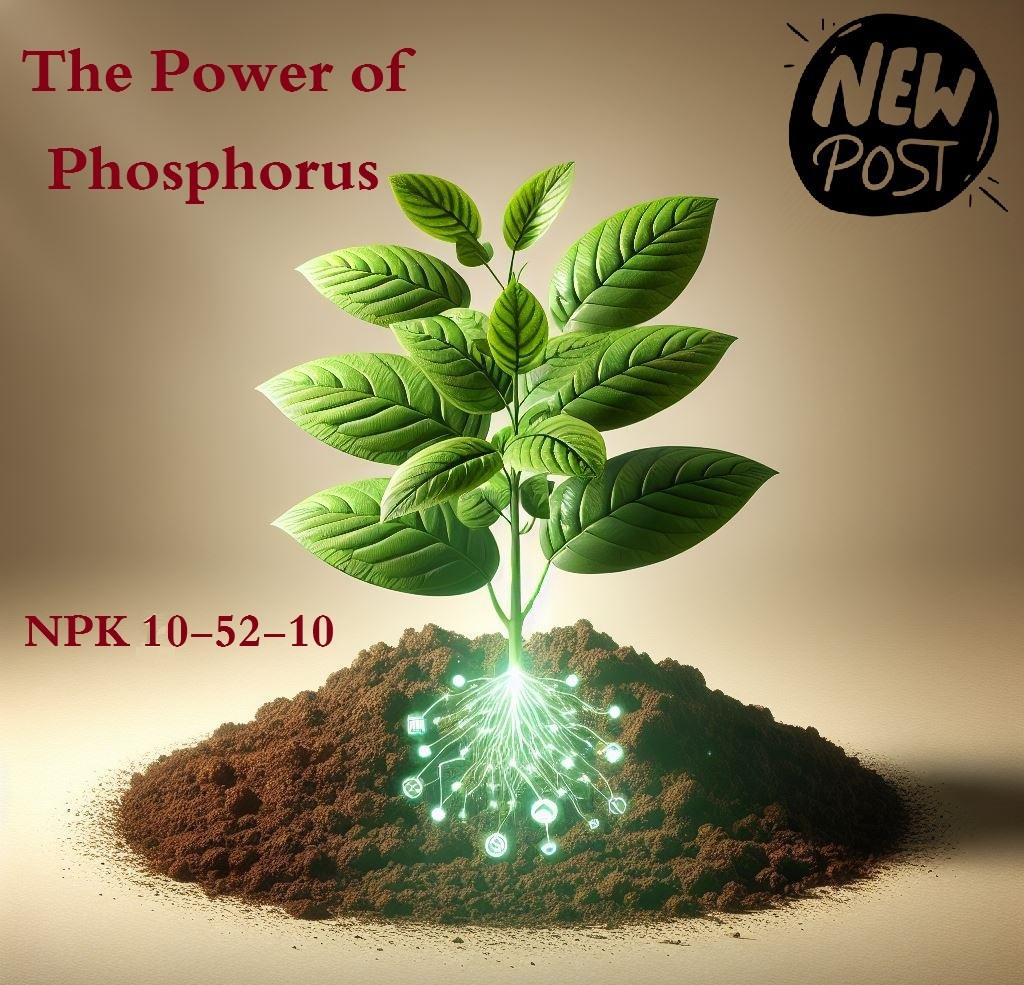
Welcome to the guide for NPK 10-52-10, a high-phosphorus, water-soluble fertiliser intended for situations where additional phosphorus is needed. Phosphorus supports energy transfer and root development, particularly during early plant establishment. It is not an all-purpose feed for every plant or soil: use it when crop requirements or a soil test indicate that extra phosphorus is appropriate. This guide explains its role, when to consider using it, and how to apply it at sensible rates in home gardens and on commercial farms.
Why Choose NPK 10-52-10 High-Phosphorus Fertiliser?
Plants require phosphorus for healthy growth, but the amount available varies considerably between soils. Many Australian soils are naturally low in phosphorus or “fix” it in forms that plants struggle to access. NPK 10-52-10 is a concentrated formulation containing 10% nitrogen (N), 52% phosphate (P2O5) and 10% potash (K2O). It may be useful during establishment or where soil or crop assessment indicates a phosphorus requirement. Applying extra phosphorus when soil levels are already adequate is unlikely to improve growth and may contribute to nutrient imbalances.
- ●Supports Root Development: Adequate phosphorus helps young plants build a strong root system, which supports establishment and nutrient uptake.
- ●Supports Plant Energy Processes: Phosphorus is involved in energy transfer, root development and normal plant growth. Additional phosphorus is beneficial only when the plant or soil actually requires it.
- ●Addresses Phosphorus Needs: Where a soil test or crop assessment identifies insufficient available phosphorus, an appropriate phosphorus fertiliser can help correct the deficiency.
NPK 10-52-10 is not a balanced all-purpose fertiliser. Its high phosphorus content makes it a targeted option for situations where additional phosphorus is required; it should not replace a complete crop nutrition programme.
When Is High Phosphorus Important?
Phosphorus is an essential macronutrient. Additional phosphorus may be useful when a soil test, crop assessment or recognised crop recommendation indicates a need:
- ●Early Establishment: Phosphorus supports root development in young plants. Use a high-phosphorus fertiliser at establishment only where soil conditions and crop requirements justify additional phosphorus.
- ●When a Deficiency Is Identified: Phosphorus is required throughout the plant’s life cycle, but extra phosphorus does not automatically increase flowering, fruit size or yield when adequate phosphorus is already available.
- ●Soil-Test-Based Nutrition: Consider additional phosphorus when soil or tissue testing, or reliable crop-specific advice, indicates that it is needed. It is not a general treatment for disease, transplant shock or environmental stress.
🌿 Not for phosphorus-sensitive Australian natives: Many native plants, especially the Proteaceae family (banksias, grevilleas, hakeas, waratahs, proteas and leucadendrons), are adapted to low-phosphorus soils and can be damaged or killed by high-phosphorus fertilisers. Do not use NPK 10-52-10 on these plants or in beds where they grow. Use a low-phosphorus native fertiliser instead.
Fully Water-Soluble and Easy to Use
If your supplied grade is labelled as fully water-soluble, it can be mixed with water for soil application, foliar sprays or suitable fertigation systems. Fill the tank or watering can halfway with clean water, add the measured fertiliser while stirring or agitating, then top up to the final volume. Check that the solution is fully dissolved before use. Avoid assuming that every formulation is suitable for every irrigation system or foliar application; always check the product label.
Usage Instructions for Home Gardens and Farms
⚠️ Important: NPK 10-52-10 is a concentrated, high-phosphorus fertiliser. The rates below are general starting points. Soil phosphorus levels, plant species, growing medium and the exact product formulation all affect the suitable rate. Always follow the product label if it gives a different rate, and never exceed the label maximum.
Home Gardens
| Use | Preparation | Application | Frequency |
|---|---|---|---|
| Small gardens & potted plants | Dissolve 5–10 g in 10 L of water (0.5–1 g/L). Use the lower rate for seedlings and sensitive plants. | Apply to moist potting mix or soil around the base of the plant. For pots, water evenly and allow excess to drain; avoid leaving pots standing in runoff. | Every 2–3 weeks during establishment; up to 3 applications, then return to a balanced fertiliser. |
| Vegetable gardens & flower beds | Dissolve 10–15 g in 10 L of water (1–1.5 g/L). | Apply evenly to moist soil around the root zone, about 2–5 L per m², rather than spraying foliage. | Every 2–3 weeks from transplanting to early flowering; up to 3 applications. |
| Backyard fruit trees | Dissolve 20–50 g in 10 L of water (2–5 g/L). Use the lower amount for trees under 3 years old. | Pour slowly over moist soil from about 30 cm out from the trunk to just beyond the canopy edge. | Once in early spring; repeat once after harvest only if a deficiency has been identified. |
Tip: Apply to moist soil in cool conditions, such as early morning or late afternoon. Avoid applying during extreme heat or when plants are drought-stressed. A level teaspoon holds roughly 5 g of powder, which is handy if you don’t have kitchen scales.
Large-Scale Farms and Orchards
The rates below are typical per-application ranges for water-soluble 10-52-10 products. Start at the lower end, use them only where soil or tissue testing shows a phosphorus requirement, and adjust with your agronomist for your crop, soil and water.
| Use | Method | Typical Rate (per application) | Timing & Notes |
|---|---|---|---|
| Field crops (wheat, barley, canola, etc.) | Foliar spray | 1–3 kg/ha in 100–200 L of water/ha. Keep the spray concentration at or below 1.5% (15 g/L). | From early tillering to early stem elongation. 1–2 applications, 10–14 days apart. Foliar sprays supplement, but do not replace, phosphorus applied at sowing. |
| Field crops (wheat, barley, canola, etc.) | Soil application (liquid starter / fluid band) | 20–40 kg/ha dissolved and applied as a liquid band or through irrigation. | At or just before sowing. Band beside or below the seed rather than in direct contact with it, as concentrated solutions can reduce germination. Count this phosphorus in your total seasonal budget. |
| Greenhouse crops (tomatoes, capsicums, cucumbers, etc.) | Foliar spray | 3–5 g/L (0.3–0.5%). Spray to even coverage without runoff. | During establishment and early flowering. Every 10–14 days, up to 3 applications. Test a few plants first and avoid spraying in hot, bright or windy conditions. |
| Greenhouse crops (tomatoes, capsicums, cucumbers, etc.) | Drip irrigation (fertigation) | 0.5–1.0 g/L in the final irrigation water. Example: a 10% stock solution (1 kg in 10 L) injected at 1:100 gives 1 g/L; at 1:200 it gives 0.5 g/L. | For the first 2–4 weeks after transplanting, then switch to a balanced or higher-potassium programme for fruiting. Monitor EC and pH. Use a separate tank from calcium products. |
| Orchards (fruit and nut trees) | Soil drench / deep soil application | Young trees (1–3 yrs): 50–100 g per tree in 10–20 L of water. Established trees (4+ yrs): 150–300 g per tree in 20–40 L of water. |
At planting, in late winter to early spring, or after harvest. 1–2 applications per season. Apply within the active root zone (drip line), away from direct contact with the trunk. |
| Vineyards | Soil drench / fertigation | 20–50 g per vine, or 5–10 kg/ha through drip irrigation. | From budburst to flowering, or after harvest while roots are active. Split into 2–3 smaller applications for drip systems. |
| Orchards & vineyards | Foliar application | 2–5 kg/ha, sprayed at 3–5 g/L (0.3–0.5%) in enough water for full canopy coverage. | Pre-bloom, petal fall and/or post-harvest. 2–3 applications, 10–14 days apart. Avoid spraying open flowers and test a small area before wider use. |
How to Work Out Your Tank Mix
A spray concentration of 1% means 10 g of fertiliser per litre of water. To check a per-hectare rate, divide the amount of fertiliser by the water volume:
- ●Example 1: 2 kg/ha in 200 L/ha = 10 g/L = 1% concentration.
- ●Example 2: To treat 5 ha at 2 kg/ha, you need 10 kg of fertiliser. With a 1,000 L tank sprayed at 200 L/ha, each tank covers 5 ha, so add 10 kg per tank.
- ●Example 3: For 40 established fruit trees at 200 g per tree, you need 8 kg in total.
Commercial growers: The best rate for your property depends on crop, growth stage, soil phosphorus (for example, Colwell P and PBI results), irrigation-water quality and the exact fertiliser formulation. Use the ranges above as a starting point, and confirm a crop-specific programme with a qualified agronomist. For planning support, use our Smart Fertigation Planner.
Why Gardeners Trust NPK 10-52-10
- ●High-Phosphorus Formula: A targeted option where soil or crop assessment indicates an additional phosphorus requirement.
- ●Water-Soluble: Suitable for soil drenches, foliar sprays and fertigation when the product label confirms the intended use and dilution.
- ●Flexible Scale: Clear starting rates from a single pot plant through to broadacre crops, greenhouses and orchards.
- ●Soil-Test Guided: Check soil phosphorus and pH before applying, as phosphorus availability varies with soil conditions.
Frequently Asked Questions
Why is phosphorus so important?
Can I use NPK 10-52-10 on Australian native plants?
Can I mix NPK 10-52-10 with other fertilisers?
How often can I apply it?
What happens if I apply too much?
What package sizes are available?
Shop NPK 10-52-10 Today
Use NPK 10-52-10 when your plants or soil need additional phosphorus. Its concentrated formulation is intended for targeted use, guided by soil conditions, crop requirements and the product label. Choose the right fertiliser rate rather than assuming that more phosphorus will produce better growth.

What size can bag can you get as in 15 kg or 20 kg
Hi there,
Our big bags are 5kg, but if you need in 10, 15 or 20kg bags, we can sort it out for you. Please send your request to info@greenpick.com.au